Canadian Jesuits International

  • English
  • Who we are
    • Vision, mission and values
    • CJI history
    • The Society of Jesus (Jesuits)
    • CJI Board of Directors
    • CJI staff (some part-time)
    • A message from the Provincial of the Jesuits of Canada
    • Job opportunities
    • Tributes
  • International Programs
    • Right to Education
    • Ecology and Sustainability
    • Human Rights, Civic Participation, and Peacebuilding
    • Rights of Forcibly Displaced People; Humanitarian Assistance
    • Projects we support
    • Visit to International Partners
  • Outreach
    • Youth for Others
    • Y4O Advocacy Symposium
    • Community engagement
    • Advocacy
    • Catholic Social Teaching and Our Partners
    • Prayer
    • Your voices
  • Ways to give
    • Donate online
    • Donate via phone or mail
    • Monthly donations
    • Securities donations
    • Planned giving
    • Finances
    • CJI’s Privacy policy
  • Resources
    • Publications
      • Newsletters
      • Appeals
      • News
    • Multimedia
      • Video archive
      • Webinars
      • Lenten Reflections
    • Our Partners
      • Project Partners
      • Jesuit Organizations
Donate
  • Home
  • COVID-19
  • Covid-19 Response in Darjeeling Province

Covid-19 Response in Darjeeling Province

28 April 2020 / Published in COVID-19

Covid-19 Response in Darjeeling Province

As the coronavirus pandemic reached India, the federal government enforced a three-week lockdown from the midnight of March 23, giving the citizens barely four hours (8 pm to 12 midnight) to buy essential things, travel or make any arrangements, if at all they could. Almost everything was shut down from the 24th. It created a myriad of problems to millions of migrant workers, outstation students and teachers, daily wage earners, tea workers, fisher folk, transport and tourism related workers.  It took a few days for the vulnerable population to recover from the initial shock and feel the pinch of the forced isolation.

When the lockdown was extended by another 19 days, the pain of hunger and starvation began to manifest in different parts of the country including the areas that comprise Darjeeling province. In order to respond to the distress of the suffering people, Fr Provincial sent out a circular on April 7, 2020 asking each community and institution to reach out to the most needy people in their neighbourhood. At the province level, he commissioned Fr Pascal Xalxo (Director of HLDRC) and Fr Julius Kujur (Director of Jesu Ashram) and Fr Stanley in Darjeeling, to identify families who are in dire need so that we could reach out to them with relief work in the plains and  in the hills. He also allotted necessary funds for this purpose. Fathers Pascal and Julius are collaborating with the Bishop of Bagdogra diocese while Fr Paul D’Souza (Director of Hayden Hall) is coordinating relief activities with the Darjeeling Diocese. We are reaching out to those who don’t get government help because they don’t have government ration cards for various reasons, but often for lack of documents.

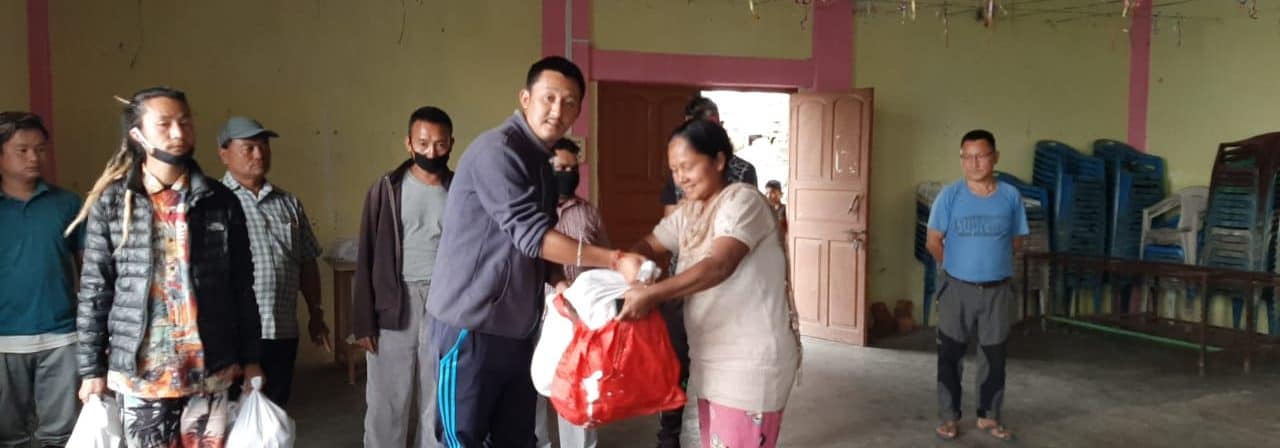
Since April 7, all our social centres, institutions and Jesuit Communities have been reaching out to the needy, mostly in tea gardens in North Bengal, with relief materials – rice, pulses, sanitizers, face masks, onions, cooking oil, soap, etc. So far we have supported well over 2000  families in the Hills and the Plains. There are more requests. The Province Treasurer is also trying to mobilize resources through the alumni of our age old institutions. The doctors and nurses from Jesu Ashram, the volunteers from HLDRC in the plains and the Jesuits, with staff members of St Joseph’s School at North Point and at Mungpoo, are working tirelessly in meeting the needs of the sick and the hungry.

So far, in the Darjeeling hills, we have helped the families most in need in Soom, Singla, Lepcha Busty, Dawaipani, Harsing Busty, Kainjaley, Tukvar, Pathebong tea gardens and Sittong; thanks to the Jesuits of St Joseph’s school, St Joseph’s College and Hayden Hall, Darjeeling. In the plains of Darjeeling district, we have reached out to Gangaram, Bhoj Narayan, Kamala, New Chamta, Puttingbari, Atal, Matigara and Hatighisa tea gardens and Patherghatta in Darjeeling district, and Balaigach, Manuaganj, Kheripara, Pabnikhadi, Kelabari, Dhumchipara, Dharnipur, Carron, Loksan and Totapara tea gardens of Jalpaiguri district. Tomorrow, there will be distribution of rations to 70 poor families in Gorubathan, Kalimpong district. And the efforts will continue, as long as our intervention is needed, to the best of our resources and ability.

Relief goods are distributed to families in need in Hatighisa, Darjeeling.
(Photo: Darjeeling Jesuit Province)

Relief goods are distributed to families in need in Soom, Darjeeling.
(Photo: Darjeeling Jesuit Province)

The situation in the projects supported by the CJI:

1. Hayden Hall:

All the staff members are safe and healthy. Their needs are taken care of. Though the institute is closed, a few staff members come to distribute basic medicine, masks and food materials to people in need in Darjeeling town assigned by the government as well as the rag pickers who are unemployed now. They also reach out to closed tea gardens, Kaleej valley and Dhateria, as well as the faraway Jesuit mission areas in the hills and plains. Fr Paul D’Souza, Director of Hayden Hall, is also coordinating the relief work on behalf of the diocese. So lots of work is going on here.

2. Gandhi Ashram:

As the school is closed due to lockdown, some study materials are put up online for the students to follow. The staff and students are not affected by the virus. Here, the local government and some NGOs are actively helping the needy people.

3. SASAC-I:

All the staff are fine. Some limited work is going on here. Relief work is done in a small scale with distribution of vegetables to the poor. More distribution is planned later this week. Since a doctor (a Sister) is stuck in her hometown, Kurseong, Fr Pramod is planning to organize a small medical camp for the local people and supply medicine free of cost for the poor.

4. SASAC-2:

All the staff are keeping well and safe. Very little work can be done here as most of the staff come from far away. So they take turns to attend to the essential work. Medical help is needed for the people as the hospital is practically closed. Morning Star Home has 10 students who could not go home. They are doing some studies and spend some time for prayer.

Fr Pascal’s relief works are sponsored by the province through HLDRC.

This pandemic and the lockdown have given us an opportunity to pause and reflect deeper on the meaning of our life – the fragility of humanity, inability to tame the invisible virus, the economic meltdown, felt-need to cherish human relations… in a way this great leveller has brought people closer, giving an opportunity to share our resources with the most needy ones in spite of the restrictions, risking one’s life to care for the afflicted… hopefully people are spending more time with God, the ultimate Healer of this wounded humanity. Each Jesuit community of our Province is holding an hour of adoration before the Blessed Sacrament every evening, praying for the whole world and for an end to this pandemic. Most of us made our personal or online retreat during this period, very well arranged by the Jesuit Conference of South Asia, New Delhi. Over 15,000 men and women from different parts of the world made this Lifeline retreat. The online retreat materials are still available in the website www.jcsaweb.org.

Thank you very much for your concern in our wellbeing, even as Canada is also affected by this disease. We pray that God will lead us all out of these difficulties.

No doubt, all of us experience darkness and in this darkness we tend to experience God concealed. Our hearts go out to all those who lost their lives and all those suffering in various ways due to this lockdown and loss of livelihood. But today we also see the transforming light of God through some generous people doing excellent humanitarian work and others, like Pope Francis, remarkably leading the people towards God and towards one another… we do not yet know how all this will unfold in the future. But we do know that the Risen Christ is here, walking with us on our way to Emmaus!

In solidarity with the suffering humanity,

– Fr Joe Victor SJ
Treasurer and Development Director
Darjeeling Jesuit Province

Author

  • Joe Victor Pitchai SJ  

    Fr Joseph Victor Pitchai SJ is the Treasurer and Development Director of the Darjeeling Jesuits.

    View all posts
Tagged under: Darjeeling, India

Planned Giving

Photo: Fe y Alegría Peru

Bridging Borders

Subscribe to our newsletter!

Ways to give

  • Donate online
  • One-time donations
  • Monthly donations
  • Securities donations
  • Planned giving

@canadianjesuitsinternational

See you in Montreal!  Register now: Click link in bio.

#Montreal #environment #ecology
See you in Montreal!  Register now: Click link in bio.

#Montreal #environment #ecology
•
Follow
See you in Montreal! Register now: Click link in bio. #Montreal #environment #ecology
2 days ago
View on Instagram |
1/9
On the National Day for Truth and Reconciliation Day, September 30, Canadian Jesuits International (CJI) expresses its solidarity with Indigenous peoples in Canada and honours residential school survivors, their families, and the children who were never able to return home. 
CJI recognizes the devastating and inter-generational  impacts of Canada’s residential school system and reaffirms its commitment to truth and reconciliation. It also joins calls for the full implementation of the UN Declaration on the Rights of Indigenous Peoples in Canada. 
As an international social justice organization, CJI supports projects in the Global South that support Indigenous peoples protect their lands, preserve their languages and cultures, and affirms their human rights, including self-determination. CJI also supports Indigenous-led peacebuilding efforts, and Indigenous women's leadership in Latin America, among others. 
Its Jesuit partners include the AC Indigenous Rights Centre (CEDIAC) in Chiapas, Mexico, which promotes conflict resolution through Indigenous reconciliation systems. 
 
CJI recognizes that Indigenous peoples hold traditional ecological knowledge critical to environmental protection. The Jesuit-based Solidarity Network of the Indigenous Apostolate helps protect our common home and supports Indigenous women leaders defending ancestral territories and cultures throughout Latin America. 

Photo by Tandem X Visuals on Unsplash/ Stuffed toys and shoes are laid out on the steps of Saskatchewan's Legislative Building in Regina to remember residential schools children who never made it back home.
•
Follow
On the National Day for Truth and Reconciliation Day, September 30, Canadian Jesuits International (CJI) expresses its solidarity with Indigenous peoples in Canada and honours residential school survivors, their families, and the children who were never able to return home. CJI recognizes the devastating and inter-generational impacts of Canada’s residential school system and reaffirms its commitment to truth and reconciliation. It also joins calls for the full implementation of the UN Declaration on the Rights of Indigenous Peoples in Canada. As an international social justice organization, CJI supports projects in the Global South that support Indigenous peoples protect their lands, preserve their languages and cultures, and affirms their human rights, including self-determination. CJI also supports Indigenous-led peacebuilding efforts, and Indigenous women's leadership in Latin America, among others. Its Jesuit partners include the AC Indigenous Rights Centre (CEDIAC) in Chiapas, Mexico, which promotes conflict resolution through Indigenous reconciliation systems. CJI recognizes that Indigenous peoples hold traditional ecological knowledge critical to environmental protection. The Jesuit-based Solidarity Network of the Indigenous Apostolate helps protect our common home and supports Indigenous women leaders defending ancestral territories and cultures throughout Latin America. Photo by Tandem X Visuals on Unsplash/ Stuffed toys and shoes are laid out on the steps of Saskatchewan's Legislative Building in Regina to remember residential schools children who never made it back home.
3 days ago
View on Instagram |
2/9
Around 40 Indigenous young people from Chile, Brazil, Paraguay, Bolivia, Peru, Ecuador, Guatemala and Mexico concluded their regional gathering in Cusco with a resolve to “build on the foundations” established by their ancestors and to “forge new paths towards ‘Buen Vivir’ (Good Living) in order to nurture and protect their communities and territories. 

CJI Outreach Coordinator Juan Camilo Poveda attended the assembly, which was organized by CJI Jesuit partners Indigenous Solidarity and Apostolate Network (RSAI) of the Conference of Jesuit Provincials in Latin America and the Caribbean (CPAL) and the Pan-Amazonian Jesuit Service (SJPAM). 

During the meeting held September 21 to 25, young people identified issues affecting them and their communities, including racism, discrimination and sexual violence; the devastating impact of hydroelectric power stations and extractive industries; the loss of language and culture; a lack of opportunities, and the effects of social media and AI. 

However, they also identified “seeds and fruits” that offer hope. CLICK LINK IN BIO to read full story.
Around 40 Indigenous young people from Chile, Brazil, Paraguay, Bolivia, Peru, Ecuador, Guatemala and Mexico concluded their regional gathering in Cusco with a resolve to “build on the foundations” established by their ancestors and to “forge new paths towards ‘Buen Vivir’ (Good Living) in order to nurture and protect their communities and territories. 

CJI Outreach Coordinator Juan Camilo Poveda attended the assembly, which was organized by CJI Jesuit partners Indigenous Solidarity and Apostolate Network (RSAI) of the Conference of Jesuit Provincials in Latin America and the Caribbean (CPAL) and the Pan-Amazonian Jesuit Service (SJPAM). 

During the meeting held September 21 to 25, young people identified issues affecting them and their communities, including racism, discrimination and sexual violence; the devastating impact of hydroelectric power stations and extractive industries; the loss of language and culture; a lack of opportunities, and the effects of social media and AI. 

However, they also identified “seeds and fruits” that offer hope. CLICK LINK IN BIO to read full story.
Around 40 Indigenous young people from Chile, Brazil, Paraguay, Bolivia, Peru, Ecuador, Guatemala and Mexico concluded their regional gathering in Cusco with a resolve to “build on the foundations” established by their ancestors and to “forge new paths towards ‘Buen Vivir’ (Good Living) in order to nurture and protect their communities and territories. 

CJI Outreach Coordinator Juan Camilo Poveda attended the assembly, which was organized by CJI Jesuit partners Indigenous Solidarity and Apostolate Network (RSAI) of the Conference of Jesuit Provincials in Latin America and the Caribbean (CPAL) and the Pan-Amazonian Jesuit Service (SJPAM). 

During the meeting held September 21 to 25, young people identified issues affecting them and their communities, including racism, discrimination and sexual violence; the devastating impact of hydroelectric power stations and extractive industries; the loss of language and culture; a lack of opportunities, and the effects of social media and AI. 

However, they also identified “seeds and fruits” that offer hope. CLICK LINK IN BIO to read full story.
Around 40 Indigenous young people from Chile, Brazil, Paraguay, Bolivia, Peru, Ecuador, Guatemala and Mexico concluded their regional gathering in Cusco with a resolve to “build on the foundations” established by their ancestors and to “forge new paths towards ‘Buen Vivir’ (Good Living) in order to nurture and protect their communities and territories. 

CJI Outreach Coordinator Juan Camilo Poveda attended the assembly, which was organized by CJI Jesuit partners Indigenous Solidarity and Apostolate Network (RSAI) of the Conference of Jesuit Provincials in Latin America and the Caribbean (CPAL) and the Pan-Amazonian Jesuit Service (SJPAM). 

During the meeting held September 21 to 25, young people identified issues affecting them and their communities, including racism, discrimination and sexual violence; the devastating impact of hydroelectric power stations and extractive industries; the loss of language and culture; a lack of opportunities, and the effects of social media and AI. 

However, they also identified “seeds and fruits” that offer hope. CLICK LINK IN BIO to read full story.
Around 40 Indigenous young people from Chile, Brazil, Paraguay, Bolivia, Peru, Ecuador, Guatemala and Mexico concluded their regional gathering in Cusco with a resolve to “build on the foundations” established by their ancestors and to “forge new paths towards ‘Buen Vivir’ (Good Living) in order to nurture and protect their communities and territories. 

CJI Outreach Coordinator Juan Camilo Poveda attended the assembly, which was organized by CJI Jesuit partners Indigenous Solidarity and Apostolate Network (RSAI) of the Conference of Jesuit Provincials in Latin America and the Caribbean (CPAL) and the Pan-Amazonian Jesuit Service (SJPAM). 

During the meeting held September 21 to 25, young people identified issues affecting them and their communities, including racism, discrimination and sexual violence; the devastating impact of hydroelectric power stations and extractive industries; the loss of language and culture; a lack of opportunities, and the effects of social media and AI. 

However, they also identified “seeds and fruits” that offer hope. CLICK LINK IN BIO to read full story.
Around 40 Indigenous young people from Chile, Brazil, Paraguay, Bolivia, Peru, Ecuador, Guatemala and Mexico concluded their regional gathering in Cusco with a resolve to “build on the foundations” established by their ancestors and to “forge new paths towards ‘Buen Vivir’ (Good Living) in order to nurture and protect their communities and territories. 

CJI Outreach Coordinator Juan Camilo Poveda attended the assembly, which was organized by CJI Jesuit partners Indigenous Solidarity and Apostolate Network (RSAI) of the Conference of Jesuit Provincials in Latin America and the Caribbean (CPAL) and the Pan-Amazonian Jesuit Service (SJPAM). 

During the meeting held September 21 to 25, young people identified issues affecting them and their communities, including racism, discrimination and sexual violence; the devastating impact of hydroelectric power stations and extractive industries; the loss of language and culture; a lack of opportunities, and the effects of social media and AI. 

However, they also identified “seeds and fruits” that offer hope. CLICK LINK IN BIO to read full story.
Around 40 Indigenous young people from Chile, Brazil, Paraguay, Bolivia, Peru, Ecuador, Guatemala and Mexico concluded their regional gathering in Cusco with a resolve to “build on the foundations” established by their ancestors and to “forge new paths towards ‘Buen Vivir’ (Good Living) in order to nurture and protect their communities and territories. 

CJI Outreach Coordinator Juan Camilo Poveda attended the assembly, which was organized by CJI Jesuit partners Indigenous Solidarity and Apostolate Network (RSAI) of the Conference of Jesuit Provincials in Latin America and the Caribbean (CPAL) and the Pan-Amazonian Jesuit Service (SJPAM). 

During the meeting held September 21 to 25, young people identified issues affecting them and their communities, including racism, discrimination and sexual violence; the devastating impact of hydroelectric power stations and extractive industries; the loss of language and culture; a lack of opportunities, and the effects of social media and AI. 

However, they also identified “seeds and fruits” that offer hope. CLICK LINK IN BIO to read full story.
Around 40 Indigenous young people from Chile, Brazil, Paraguay, Bolivia, Peru, Ecuador, Guatemala and Mexico concluded their regional gathering in Cusco with a resolve to “build on the foundations” established by their ancestors and to “forge new paths towards ‘Buen Vivir’ (Good Living) in order to nurture and protect their communities and territories. 

CJI Outreach Coordinator Juan Camilo Poveda attended the assembly, which was organized by CJI Jesuit partners Indigenous Solidarity and Apostolate Network (RSAI) of the Conference of Jesuit Provincials in Latin America and the Caribbean (CPAL) and the Pan-Amazonian Jesuit Service (SJPAM). 

During the meeting held September 21 to 25, young people identified issues affecting them and their communities, including racism, discrimination and sexual violence; the devastating impact of hydroelectric power stations and extractive industries; the loss of language and culture; a lack of opportunities, and the effects of social media and AI. 

However, they also identified “seeds and fruits” that offer hope. CLICK LINK IN BIO to read full story.
Around 40 Indigenous young people from Chile, Brazil, Paraguay, Bolivia, Peru, Ecuador, Guatemala and Mexico concluded their regional gathering in Cusco with a resolve to “build on the foundations” established by their ancestors and to “forge new paths towards ‘Buen Vivir’ (Good Living) in order to nurture and protect their communities and territories. 

CJI Outreach Coordinator Juan Camilo Poveda attended the assembly, which was organized by CJI Jesuit partners Indigenous Solidarity and Apostolate Network (RSAI) of the Conference of Jesuit Provincials in Latin America and the Caribbean (CPAL) and the Pan-Amazonian Jesuit Service (SJPAM). 

During the meeting held September 21 to 25, young people identified issues affecting them and their communities, including racism, discrimination and sexual violence; the devastating impact of hydroelectric power stations and extractive industries; the loss of language and culture; a lack of opportunities, and the effects of social media and AI. 

However, they also identified “seeds and fruits” that offer hope. CLICK LINK IN BIO to read full story.
Around 40 Indigenous young people from Chile, Brazil, Paraguay, Bolivia, Peru, Ecuador, Guatemala and Mexico concluded their regional gathering in Cusco with a resolve to “build on the foundations” established by their ancestors and to “forge new paths towards ‘Buen Vivir’ (Good Living) in order to nurture and protect their communities and territories. 

CJI Outreach Coordinator Juan Camilo Poveda attended the assembly, which was organized by CJI Jesuit partners Indigenous Solidarity and Apostolate Network (RSAI) of the Conference of Jesuit Provincials in Latin America and the Caribbean (CPAL) and the Pan-Amazonian Jesuit Service (SJPAM). 

During the meeting held September 21 to 25, young people identified issues affecting them and their communities, including racism, discrimination and sexual violence; the devastating impact of hydroelectric power stations and extractive industries; the loss of language and culture; a lack of opportunities, and the effects of social media and AI. 

However, they also identified “seeds and fruits” that offer hope. CLICK LINK IN BIO to read full story.
•
Follow
Around 40 Indigenous young people from Chile, Brazil, Paraguay, Bolivia, Peru, Ecuador, Guatemala and Mexico concluded their regional gathering in Cusco with a resolve to “build on the foundations” established by their ancestors and to “forge new paths towards ‘Buen Vivir’ (Good Living) in order to nurture and protect their communities and territories. CJI Outreach Coordinator Juan Camilo Poveda attended the assembly, which was organized by CJI Jesuit partners Indigenous Solidarity and Apostolate Network (RSAI) of the Conference of Jesuit Provincials in Latin America and the Caribbean (CPAL) and the Pan-Amazonian Jesuit Service (SJPAM). During the meeting held September 21 to 25, young people identified issues affecting them and their communities, including racism, discrimination and sexual violence; the devastating impact of hydroelectric power stations and extractive industries; the loss of language and culture; a lack of opportunities, and the effects of social media and AI. However, they also identified “seeds and fruits” that offer hope. CLICK LINK IN BIO to read full story.
4 days ago
View on Instagram |
3/9
On the International Day for Universal Access to Information, September 28, Canadian Jesuits International (CJI) stands behind the right of everyone to seek, receive and provide timely and accurate information that will enable them to participate fully in society. 
CJI highlights the role that ERIC-Radio Progreso, its Jesuit partner in Honduras, plays in empowering rural poor communities through research, reflection, and communication. ERIC-Radio Progreso’s slogan is “the voice that is with you.” It means being a voice “that does not replace the voice of the community, or of the people, but rather makes that voice be heard, and allows itself to be challenged,” said Fr. German Rosa, SJ, its director. 
ERIC-Radio Progreso has been a rare, independent voice for the poor and marginalized in Honduras, where powerful and vested interests control the media. It has helped educate Hondurans about their human rights and exposed corruption, electoral fraud, environmental threats, narco-trafficking, and militarization. 
As the result of their work, some staff have suffered grave consequences in the form of death threats; others have paid with their lives for their commitment to truth and democracy.
This year’s theme is “Universal Information Integrity in the Digital Age: The role of access to information in addressing information disorder.” It focuses on “how access to reliable official information, proactive disclosure, media and information literacy, credible data and digital technologies can contribute to a healthier information environment.” 
This day also recognizes the importance of freedom of the press and the critical role that credible news media play in informing the public about issues that affect them, their communities, and the larger world they live in.
•
Follow
On the International Day for Universal Access to Information, September 28, Canadian Jesuits International (CJI) stands behind the right of everyone to seek, receive and provide timely and accurate information that will enable them to participate fully in society. CJI highlights the role that ERIC-Radio Progreso, its Jesuit partner in Honduras, plays in empowering rural poor communities through research, reflection, and communication. ERIC-Radio Progreso’s slogan is “the voice that is with you.” It means being a voice “that does not replace the voice of the community, or of the people, but rather makes that voice be heard, and allows itself to be challenged,” said Fr. German Rosa, SJ, its director. ERIC-Radio Progreso has been a rare, independent voice for the poor and marginalized in Honduras, where powerful and vested interests control the media. It has helped educate Hondurans about their human rights and exposed corruption, electoral fraud, environmental threats, narco-trafficking, and militarization. As the result of their work, some staff have suffered grave consequences in the form of death threats; others have paid with their lives for their commitment to truth and democracy. This year’s theme is “Universal Information Integrity in the Digital Age: The role of access to information in addressing information disorder.” It focuses on “how access to reliable official information, proactive disclosure, media and information literacy, credible data and digital technologies can contribute to a healthier information environment.” This day also recognizes the importance of freedom of the press and the critical role that credible news media play in informing the public about issues that affect them, their communities, and the larger world they live in.
5 days ago
View on Instagram |
4/9
CJI Outreach Coordinator Juan Camilo Poveda captured some moments at the Regional Meeting of Young People from Indigenous Peoples of Latin America being held in Andahuaylillas, Cusco, Peru: 
We spent the day outside getting to know the territory that is welcoming us and learning about the rich history of the Incas and contemporary Quechua people. We visited some sacred historic sites like Chinchero and Pisaq.
I spent a lot of time with the group on the bus, listening to their stories. One young person from Ecuador said that he hadn’t realized there were Indigenous peoples outside his own country before coming to the gathering. There were lots of fun games.
I am learning a lot from the Brazilian delegation, with whom I am spending a lot of time talking and translating.
CJI Outreach Coordinator Juan Camilo Poveda captured some moments at the Regional Meeting of Young People from Indigenous Peoples of Latin America being held in Andahuaylillas, Cusco, Peru: 
We spent the day outside getting to know the territory that is welcoming us and learning about the rich history of the Incas and contemporary Quechua people. We visited some sacred historic sites like Chinchero and Pisaq.
I spent a lot of time with the group on the bus, listening to their stories. One young person from Ecuador said that he hadn’t realized there were Indigenous peoples outside his own country before coming to the gathering. There were lots of fun games.
I am learning a lot from the Brazilian delegation, with whom I am spending a lot of time talking and translating.
CJI Outreach Coordinator Juan Camilo Poveda captured some moments at the Regional Meeting of Young People from Indigenous Peoples of Latin America being held in Andahuaylillas, Cusco, Peru: 
We spent the day outside getting to know the territory that is welcoming us and learning about the rich history of the Incas and contemporary Quechua people. We visited some sacred historic sites like Chinchero and Pisaq.
I spent a lot of time with the group on the bus, listening to their stories. One young person from Ecuador said that he hadn’t realized there were Indigenous peoples outside his own country before coming to the gathering. There were lots of fun games.
I am learning a lot from the Brazilian delegation, with whom I am spending a lot of time talking and translating.
CJI Outreach Coordinator Juan Camilo Poveda captured some moments at the Regional Meeting of Young People from Indigenous Peoples of Latin America being held in Andahuaylillas, Cusco, Peru: 
We spent the day outside getting to know the territory that is welcoming us and learning about the rich history of the Incas and contemporary Quechua people. We visited some sacred historic sites like Chinchero and Pisaq.
I spent a lot of time with the group on the bus, listening to their stories. One young person from Ecuador said that he hadn’t realized there were Indigenous peoples outside his own country before coming to the gathering. There were lots of fun games.
I am learning a lot from the Brazilian delegation, with whom I am spending a lot of time talking and translating.
CJI Outreach Coordinator Juan Camilo Poveda captured some moments at the Regional Meeting of Young People from Indigenous Peoples of Latin America being held in Andahuaylillas, Cusco, Peru: 
We spent the day outside getting to know the territory that is welcoming us and learning about the rich history of the Incas and contemporary Quechua people. We visited some sacred historic sites like Chinchero and Pisaq.
I spent a lot of time with the group on the bus, listening to their stories. One young person from Ecuador said that he hadn’t realized there were Indigenous peoples outside his own country before coming to the gathering. There were lots of fun games.
I am learning a lot from the Brazilian delegation, with whom I am spending a lot of time talking and translating.
CJI Outreach Coordinator Juan Camilo Poveda captured some moments at the Regional Meeting of Young People from Indigenous Peoples of Latin America being held in Andahuaylillas, Cusco, Peru: 
We spent the day outside getting to know the territory that is welcoming us and learning about the rich history of the Incas and contemporary Quechua people. We visited some sacred historic sites like Chinchero and Pisaq.
I spent a lot of time with the group on the bus, listening to their stories. One young person from Ecuador said that he hadn’t realized there were Indigenous peoples outside his own country before coming to the gathering. There were lots of fun games.
I am learning a lot from the Brazilian delegation, with whom I am spending a lot of time talking and translating.
CJI Outreach Coordinator Juan Camilo Poveda captured some moments at the Regional Meeting of Young People from Indigenous Peoples of Latin America being held in Andahuaylillas, Cusco, Peru: 
We spent the day outside getting to know the territory that is welcoming us and learning about the rich history of the Incas and contemporary Quechua people. We visited some sacred historic sites like Chinchero and Pisaq.
I spent a lot of time with the group on the bus, listening to their stories. One young person from Ecuador said that he hadn’t realized there were Indigenous peoples outside his own country before coming to the gathering. There were lots of fun games.
I am learning a lot from the Brazilian delegation, with whom I am spending a lot of time talking and translating.
CJI Outreach Coordinator Juan Camilo Poveda captured some moments at the Regional Meeting of Young People from Indigenous Peoples of Latin America being held in Andahuaylillas, Cusco, Peru: 
We spent the day outside getting to know the territory that is welcoming us and learning about the rich history of the Incas and contemporary Quechua people. We visited some sacred historic sites like Chinchero and Pisaq.
I spent a lot of time with the group on the bus, listening to their stories. One young person from Ecuador said that he hadn’t realized there were Indigenous peoples outside his own country before coming to the gathering. There were lots of fun games.
I am learning a lot from the Brazilian delegation, with whom I am spending a lot of time talking and translating.
CJI Outreach Coordinator Juan Camilo Poveda captured some moments at the Regional Meeting of Young People from Indigenous Peoples of Latin America being held in Andahuaylillas, Cusco, Peru: 
We spent the day outside getting to know the territory that is welcoming us and learning about the rich history of the Incas and contemporary Quechua people. We visited some sacred historic sites like Chinchero and Pisaq.
I spent a lot of time with the group on the bus, listening to their stories. One young person from Ecuador said that he hadn’t realized there were Indigenous peoples outside his own country before coming to the gathering. There were lots of fun games.
I am learning a lot from the Brazilian delegation, with whom I am spending a lot of time talking and translating.
•
Follow
CJI Outreach Coordinator Juan Camilo Poveda captured some moments at the Regional Meeting of Young People from Indigenous Peoples of Latin America being held in Andahuaylillas, Cusco, Peru: We spent the day outside getting to know the territory that is welcoming us and learning about the rich history of the Incas and contemporary Quechua people. We visited some sacred historic sites like Chinchero and Pisaq. I spent a lot of time with the group on the bus, listening to their stories. One young person from Ecuador said that he hadn’t realized there were Indigenous peoples outside his own country before coming to the gathering. There were lots of fun games. I am learning a lot from the Brazilian delegation, with whom I am spending a lot of time talking and translating.
1 week ago
View on Instagram |
5/9
CJI Outreach Coordinator Juan Camilo Poveda shared the following account of his second day at the Regional Meeting of Young People from Indigenous Peoples of Latin America being held in Cusco, Peru: 

“The day started with a ritual led by the Guatemalan delegation, a Mayan Altar. 
The regional groups presented their group work from Monday - the challenges they experience but also the sources of strength; namely knowing their territories, languages and traditions.
There were two more rounds of group work.
The first was on a theme of “choice of vital importance.” Most groups chose to talk about defence of the territory; others discussed youth participation. Each group discussed what elders, adults, and young people say about their chosen themes, and what practices and values have empowered communities through generations. The groups also talked about the changes they have witnessed in their territories and how they have been affected by them. 
The second round invited groups to talk about a broader range of issues and asked for their input on ways their communities are addressing them and what still needs to be done. 
We closed the day of work with a Mayan prayer. 
We then had a cultural night, an “Abya Yala’s Got Talent” session, where people shared their talents, dances and songs.”
CJI Outreach Coordinator Juan Camilo Poveda shared the following account of his second day at the Regional Meeting of Young People from Indigenous Peoples of Latin America being held in Cusco, Peru: 

“The day started with a ritual led by the Guatemalan delegation, a Mayan Altar. 
The regional groups presented their group work from Monday - the challenges they experience but also the sources of strength; namely knowing their territories, languages and traditions.
There were two more rounds of group work.
The first was on a theme of “choice of vital importance.” Most groups chose to talk about defence of the territory; others discussed youth participation. Each group discussed what elders, adults, and young people say about their chosen themes, and what practices and values have empowered communities through generations. The groups also talked about the changes they have witnessed in their territories and how they have been affected by them. 
The second round invited groups to talk about a broader range of issues and asked for their input on ways their communities are addressing them and what still needs to be done. 
We closed the day of work with a Mayan prayer. 
We then had a cultural night, an “Abya Yala’s Got Talent” session, where people shared their talents, dances and songs.”
CJI Outreach Coordinator Juan Camilo Poveda shared the following account of his second day at the Regional Meeting of Young People from Indigenous Peoples of Latin America being held in Cusco, Peru: 

“The day started with a ritual led by the Guatemalan delegation, a Mayan Altar. 
The regional groups presented their group work from Monday - the challenges they experience but also the sources of strength; namely knowing their territories, languages and traditions.
There were two more rounds of group work.
The first was on a theme of “choice of vital importance.” Most groups chose to talk about defence of the territory; others discussed youth participation. Each group discussed what elders, adults, and young people say about their chosen themes, and what practices and values have empowered communities through generations. The groups also talked about the changes they have witnessed in their territories and how they have been affected by them. 
The second round invited groups to talk about a broader range of issues and asked for their input on ways their communities are addressing them and what still needs to be done. 
We closed the day of work with a Mayan prayer. 
We then had a cultural night, an “Abya Yala’s Got Talent” session, where people shared their talents, dances and songs.”
CJI Outreach Coordinator Juan Camilo Poveda shared the following account of his second day at the Regional Meeting of Young People from Indigenous Peoples of Latin America being held in Cusco, Peru: 

“The day started with a ritual led by the Guatemalan delegation, a Mayan Altar. 
The regional groups presented their group work from Monday - the challenges they experience but also the sources of strength; namely knowing their territories, languages and traditions.
There were two more rounds of group work.
The first was on a theme of “choice of vital importance.” Most groups chose to talk about defence of the territory; others discussed youth participation. Each group discussed what elders, adults, and young people say about their chosen themes, and what practices and values have empowered communities through generations. The groups also talked about the changes they have witnessed in their territories and how they have been affected by them. 
The second round invited groups to talk about a broader range of issues and asked for their input on ways their communities are addressing them and what still needs to be done. 
We closed the day of work with a Mayan prayer. 
We then had a cultural night, an “Abya Yala’s Got Talent” session, where people shared their talents, dances and songs.”
CJI Outreach Coordinator Juan Camilo Poveda shared the following account of his second day at the Regional Meeting of Young People from Indigenous Peoples of Latin America being held in Cusco, Peru: 

“The day started with a ritual led by the Guatemalan delegation, a Mayan Altar. 
The regional groups presented their group work from Monday - the challenges they experience but also the sources of strength; namely knowing their territories, languages and traditions.
There were two more rounds of group work.
The first was on a theme of “choice of vital importance.” Most groups chose to talk about defence of the territory; others discussed youth participation. Each group discussed what elders, adults, and young people say about their chosen themes, and what practices and values have empowered communities through generations. The groups also talked about the changes they have witnessed in their territories and how they have been affected by them. 
The second round invited groups to talk about a broader range of issues and asked for their input on ways their communities are addressing them and what still needs to be done. 
We closed the day of work with a Mayan prayer. 
We then had a cultural night, an “Abya Yala’s Got Talent” session, where people shared their talents, dances and songs.”
CJI Outreach Coordinator Juan Camilo Poveda shared the following account of his second day at the Regional Meeting of Young People from Indigenous Peoples of Latin America being held in Cusco, Peru: 

“The day started with a ritual led by the Guatemalan delegation, a Mayan Altar. 
The regional groups presented their group work from Monday - the challenges they experience but also the sources of strength; namely knowing their territories, languages and traditions.
There were two more rounds of group work.
The first was on a theme of “choice of vital importance.” Most groups chose to talk about defence of the territory; others discussed youth participation. Each group discussed what elders, adults, and young people say about their chosen themes, and what practices and values have empowered communities through generations. The groups also talked about the changes they have witnessed in their territories and how they have been affected by them. 
The second round invited groups to talk about a broader range of issues and asked for their input on ways their communities are addressing them and what still needs to be done. 
We closed the day of work with a Mayan prayer. 
We then had a cultural night, an “Abya Yala’s Got Talent” session, where people shared their talents, dances and songs.”
CJI Outreach Coordinator Juan Camilo Poveda shared the following account of his second day at the Regional Meeting of Young People from Indigenous Peoples of Latin America being held in Cusco, Peru: 

“The day started with a ritual led by the Guatemalan delegation, a Mayan Altar. 
The regional groups presented their group work from Monday - the challenges they experience but also the sources of strength; namely knowing their territories, languages and traditions.
There were two more rounds of group work.
The first was on a theme of “choice of vital importance.” Most groups chose to talk about defence of the territory; others discussed youth participation. Each group discussed what elders, adults, and young people say about their chosen themes, and what practices and values have empowered communities through generations. The groups also talked about the changes they have witnessed in their territories and how they have been affected by them. 
The second round invited groups to talk about a broader range of issues and asked for their input on ways their communities are addressing them and what still needs to be done. 
We closed the day of work with a Mayan prayer. 
We then had a cultural night, an “Abya Yala’s Got Talent” session, where people shared their talents, dances and songs.”
CJI Outreach Coordinator Juan Camilo Poveda shared the following account of his second day at the Regional Meeting of Young People from Indigenous Peoples of Latin America being held in Cusco, Peru: 

“The day started with a ritual led by the Guatemalan delegation, a Mayan Altar. 
The regional groups presented their group work from Monday - the challenges they experience but also the sources of strength; namely knowing their territories, languages and traditions.
There were two more rounds of group work.
The first was on a theme of “choice of vital importance.” Most groups chose to talk about defence of the territory; others discussed youth participation. Each group discussed what elders, adults, and young people say about their chosen themes, and what practices and values have empowered communities through generations. The groups also talked about the changes they have witnessed in their territories and how they have been affected by them. 
The second round invited groups to talk about a broader range of issues and asked for their input on ways their communities are addressing them and what still needs to be done. 
We closed the day of work with a Mayan prayer. 
We then had a cultural night, an “Abya Yala’s Got Talent” session, where people shared their talents, dances and songs.”
CJI Outreach Coordinator Juan Camilo Poveda shared the following account of his second day at the Regional Meeting of Young People from Indigenous Peoples of Latin America being held in Cusco, Peru: 

“The day started with a ritual led by the Guatemalan delegation, a Mayan Altar. 
The regional groups presented their group work from Monday - the challenges they experience but also the sources of strength; namely knowing their territories, languages and traditions.
There were two more rounds of group work.
The first was on a theme of “choice of vital importance.” Most groups chose to talk about defence of the territory; others discussed youth participation. Each group discussed what elders, adults, and young people say about their chosen themes, and what practices and values have empowered communities through generations. The groups also talked about the changes they have witnessed in their territories and how they have been affected by them. 
The second round invited groups to talk about a broader range of issues and asked for their input on ways their communities are addressing them and what still needs to be done. 
We closed the day of work with a Mayan prayer. 
We then had a cultural night, an “Abya Yala’s Got Talent” session, where people shared their talents, dances and songs.”
CJI Outreach Coordinator Juan Camilo Poveda shared the following account of his second day at the Regional Meeting of Young People from Indigenous Peoples of Latin America being held in Cusco, Peru: 

“The day started with a ritual led by the Guatemalan delegation, a Mayan Altar. 
The regional groups presented their group work from Monday - the challenges they experience but also the sources of strength; namely knowing their territories, languages and traditions.
There were two more rounds of group work.
The first was on a theme of “choice of vital importance.” Most groups chose to talk about defence of the territory; others discussed youth participation. Each group discussed what elders, adults, and young people say about their chosen themes, and what practices and values have empowered communities through generations. The groups also talked about the changes they have witnessed in their territories and how they have been affected by them. 
The second round invited groups to talk about a broader range of issues and asked for their input on ways their communities are addressing them and what still needs to be done. 
We closed the day of work with a Mayan prayer. 
We then had a cultural night, an “Abya Yala’s Got Talent” session, where people shared their talents, dances and songs.”
•
Follow
CJI Outreach Coordinator Juan Camilo Poveda shared the following account of his second day at the Regional Meeting of Young People from Indigenous Peoples of Latin America being held in Cusco, Peru: “The day started with a ritual led by the Guatemalan delegation, a Mayan Altar. The regional groups presented their group work from Monday - the challenges they experience but also the sources of strength; namely knowing their territories, languages and traditions. There were two more rounds of group work. The first was on a theme of “choice of vital importance.” Most groups chose to talk about defence of the territory; others discussed youth participation. Each group discussed what elders, adults, and young people say about their chosen themes, and what practices and values have empowered communities through generations. The groups also talked about the changes they have witnessed in their territories and how they have been affected by them. The second round invited groups to talk about a broader range of issues and asked for their input on ways their communities are addressing them and what still needs to be done. We closed the day of work with a Mayan prayer. We then had a cultural night, an “Abya Yala’s Got Talent” session, where people shared their talents, dances and songs.”
1 week ago
View on Instagram |
6/9
Last weekend, CJI Executive Director Jenny Cafiso and International Programs Coordinator Juan Emilio Hernandez crossed the border from Haiti into the Dominican Republic, where they were warmly welcomed by Fr. Osvaldo Concepción, SJ, director of Centro Montalvo, a Jesuit-led organization and CJI partner. 
In La Rosa, in the municipality of Restauración, they met Marimenda—a migrant leader supporting women’s and farmers’ groups, as well as a community greenhouse. She is also defending her territory against the proposed Neita mining project, linked to Canadian company. Community advocates warn that mining in this border region could threaten shared water systems, including the Artibonite River, with serious environmental, social, and public-health consequences. 
Jenny and Juan also visited a community living with the devastating impacts of mining waste. Residents described losing access to safe drinking water and facing harm to their health, animals, and land contamination. Their struggle, ongoing since 2011, remains a powerful example of community resistance against extractive industries.
They ended their visit to the Dominican Republic by meeting with the team at Centro Montalvo, whose work advances social justice, human rights, migration advocacy, environmental action, youth leadership, and community-based research. CJI is supporting a Centro Montalvo project, Climate Justice: Community Action Against Extractivism. 

Learn more about Centro Montalvo: Click link in bio.
Last weekend, CJI Executive Director Jenny Cafiso and International Programs Coordinator Juan Emilio Hernandez crossed the border from Haiti into the Dominican Republic, where they were warmly welcomed by Fr. Osvaldo Concepción, SJ, director of Centro Montalvo, a Jesuit-led organization and CJI partner. 
In La Rosa, in the municipality of Restauración, they met Marimenda—a migrant leader supporting women’s and farmers’ groups, as well as a community greenhouse. She is also defending her territory against the proposed Neita mining project, linked to Canadian company. Community advocates warn that mining in this border region could threaten shared water systems, including the Artibonite River, with serious environmental, social, and public-health consequences. 
Jenny and Juan also visited a community living with the devastating impacts of mining waste. Residents described losing access to safe drinking water and facing harm to their health, animals, and land contamination. Their struggle, ongoing since 2011, remains a powerful example of community resistance against extractive industries.
They ended their visit to the Dominican Republic by meeting with the team at Centro Montalvo, whose work advances social justice, human rights, migration advocacy, environmental action, youth leadership, and community-based research. CJI is supporting a Centro Montalvo project, Climate Justice: Community Action Against Extractivism. 

Learn more about Centro Montalvo: Click link in bio.
Last weekend, CJI Executive Director Jenny Cafiso and International Programs Coordinator Juan Emilio Hernandez crossed the border from Haiti into the Dominican Republic, where they were warmly welcomed by Fr. Osvaldo Concepción, SJ, director of Centro Montalvo, a Jesuit-led organization and CJI partner. 
In La Rosa, in the municipality of Restauración, they met Marimenda—a migrant leader supporting women’s and farmers’ groups, as well as a community greenhouse. She is also defending her territory against the proposed Neita mining project, linked to Canadian company. Community advocates warn that mining in this border region could threaten shared water systems, including the Artibonite River, with serious environmental, social, and public-health consequences. 
Jenny and Juan also visited a community living with the devastating impacts of mining waste. Residents described losing access to safe drinking water and facing harm to their health, animals, and land contamination. Their struggle, ongoing since 2011, remains a powerful example of community resistance against extractive industries.
They ended their visit to the Dominican Republic by meeting with the team at Centro Montalvo, whose work advances social justice, human rights, migration advocacy, environmental action, youth leadership, and community-based research. CJI is supporting a Centro Montalvo project, Climate Justice: Community Action Against Extractivism. 

Learn more about Centro Montalvo: Click link in bio.
Last weekend, CJI Executive Director Jenny Cafiso and International Programs Coordinator Juan Emilio Hernandez crossed the border from Haiti into the Dominican Republic, where they were warmly welcomed by Fr. Osvaldo Concepción, SJ, director of Centro Montalvo, a Jesuit-led organization and CJI partner. 
In La Rosa, in the municipality of Restauración, they met Marimenda—a migrant leader supporting women’s and farmers’ groups, as well as a community greenhouse. She is also defending her territory against the proposed Neita mining project, linked to Canadian company. Community advocates warn that mining in this border region could threaten shared water systems, including the Artibonite River, with serious environmental, social, and public-health consequences. 
Jenny and Juan also visited a community living with the devastating impacts of mining waste. Residents described losing access to safe drinking water and facing harm to their health, animals, and land contamination. Their struggle, ongoing since 2011, remains a powerful example of community resistance against extractive industries.
They ended their visit to the Dominican Republic by meeting with the team at Centro Montalvo, whose work advances social justice, human rights, migration advocacy, environmental action, youth leadership, and community-based research. CJI is supporting a Centro Montalvo project, Climate Justice: Community Action Against Extractivism. 

Learn more about Centro Montalvo: Click link in bio.
Last weekend, CJI Executive Director Jenny Cafiso and International Programs Coordinator Juan Emilio Hernandez crossed the border from Haiti into the Dominican Republic, where they were warmly welcomed by Fr. Osvaldo Concepción, SJ, director of Centro Montalvo, a Jesuit-led organization and CJI partner. 
In La Rosa, in the municipality of Restauración, they met Marimenda—a migrant leader supporting women’s and farmers’ groups, as well as a community greenhouse. She is also defending her territory against the proposed Neita mining project, linked to Canadian company. Community advocates warn that mining in this border region could threaten shared water systems, including the Artibonite River, with serious environmental, social, and public-health consequences. 
Jenny and Juan also visited a community living with the devastating impacts of mining waste. Residents described losing access to safe drinking water and facing harm to their health, animals, and land contamination. Their struggle, ongoing since 2011, remains a powerful example of community resistance against extractive industries.
They ended their visit to the Dominican Republic by meeting with the team at Centro Montalvo, whose work advances social justice, human rights, migration advocacy, environmental action, youth leadership, and community-based research. CJI is supporting a Centro Montalvo project, Climate Justice: Community Action Against Extractivism. 

Learn more about Centro Montalvo: Click link in bio.
Last weekend, CJI Executive Director Jenny Cafiso and International Programs Coordinator Juan Emilio Hernandez crossed the border from Haiti into the Dominican Republic, where they were warmly welcomed by Fr. Osvaldo Concepción, SJ, director of Centro Montalvo, a Jesuit-led organization and CJI partner. 
In La Rosa, in the municipality of Restauración, they met Marimenda—a migrant leader supporting women’s and farmers’ groups, as well as a community greenhouse. She is also defending her territory against the proposed Neita mining project, linked to Canadian company. Community advocates warn that mining in this border region could threaten shared water systems, including the Artibonite River, with serious environmental, social, and public-health consequences. 
Jenny and Juan also visited a community living with the devastating impacts of mining waste. Residents described losing access to safe drinking water and facing harm to their health, animals, and land contamination. Their struggle, ongoing since 2011, remains a powerful example of community resistance against extractive industries.
They ended their visit to the Dominican Republic by meeting with the team at Centro Montalvo, whose work advances social justice, human rights, migration advocacy, environmental action, youth leadership, and community-based research. CJI is supporting a Centro Montalvo project, Climate Justice: Community Action Against Extractivism. 

Learn more about Centro Montalvo: Click link in bio.
Last weekend, CJI Executive Director Jenny Cafiso and International Programs Coordinator Juan Emilio Hernandez crossed the border from Haiti into the Dominican Republic, where they were warmly welcomed by Fr. Osvaldo Concepción, SJ, director of Centro Montalvo, a Jesuit-led organization and CJI partner. 
In La Rosa, in the municipality of Restauración, they met Marimenda—a migrant leader supporting women’s and farmers’ groups, as well as a community greenhouse. She is also defending her territory against the proposed Neita mining project, linked to Canadian company. Community advocates warn that mining in this border region could threaten shared water systems, including the Artibonite River, with serious environmental, social, and public-health consequences. 
Jenny and Juan also visited a community living with the devastating impacts of mining waste. Residents described losing access to safe drinking water and facing harm to their health, animals, and land contamination. Their struggle, ongoing since 2011, remains a powerful example of community resistance against extractive industries.
They ended their visit to the Dominican Republic by meeting with the team at Centro Montalvo, whose work advances social justice, human rights, migration advocacy, environmental action, youth leadership, and community-based research. CJI is supporting a Centro Montalvo project, Climate Justice: Community Action Against Extractivism. 

Learn more about Centro Montalvo: Click link in bio.
Last weekend, CJI Executive Director Jenny Cafiso and International Programs Coordinator Juan Emilio Hernandez crossed the border from Haiti into the Dominican Republic, where they were warmly welcomed by Fr. Osvaldo Concepción, SJ, director of Centro Montalvo, a Jesuit-led organization and CJI partner. 
In La Rosa, in the municipality of Restauración, they met Marimenda—a migrant leader supporting women’s and farmers’ groups, as well as a community greenhouse. She is also defending her territory against the proposed Neita mining project, linked to Canadian company. Community advocates warn that mining in this border region could threaten shared water systems, including the Artibonite River, with serious environmental, social, and public-health consequences. 
Jenny and Juan also visited a community living with the devastating impacts of mining waste. Residents described losing access to safe drinking water and facing harm to their health, animals, and land contamination. Their struggle, ongoing since 2011, remains a powerful example of community resistance against extractive industries.
They ended their visit to the Dominican Republic by meeting with the team at Centro Montalvo, whose work advances social justice, human rights, migration advocacy, environmental action, youth leadership, and community-based research. CJI is supporting a Centro Montalvo project, Climate Justice: Community Action Against Extractivism. 

Learn more about Centro Montalvo: Click link in bio.
Last weekend, CJI Executive Director Jenny Cafiso and International Programs Coordinator Juan Emilio Hernandez crossed the border from Haiti into the Dominican Republic, where they were warmly welcomed by Fr. Osvaldo Concepción, SJ, director of Centro Montalvo, a Jesuit-led organization and CJI partner. 
In La Rosa, in the municipality of Restauración, they met Marimenda—a migrant leader supporting women’s and farmers’ groups, as well as a community greenhouse. She is also defending her territory against the proposed Neita mining project, linked to Canadian company. Community advocates warn that mining in this border region could threaten shared water systems, including the Artibonite River, with serious environmental, social, and public-health consequences. 
Jenny and Juan also visited a community living with the devastating impacts of mining waste. Residents described losing access to safe drinking water and facing harm to their health, animals, and land contamination. Their struggle, ongoing since 2011, remains a powerful example of community resistance against extractive industries.
They ended their visit to the Dominican Republic by meeting with the team at Centro Montalvo, whose work advances social justice, human rights, migration advocacy, environmental action, youth leadership, and community-based research. CJI is supporting a Centro Montalvo project, Climate Justice: Community Action Against Extractivism. 

Learn more about Centro Montalvo: Click link in bio.
•
Follow
Last weekend, CJI Executive Director Jenny Cafiso and International Programs Coordinator Juan Emilio Hernandez crossed the border from Haiti into the Dominican Republic, where they were warmly welcomed by Fr. Osvaldo Concepción, SJ, director of Centro Montalvo, a Jesuit-led organization and CJI partner. In La Rosa, in the municipality of Restauración, they met Marimenda—a migrant leader supporting women’s and farmers’ groups, as well as a community greenhouse. She is also defending her territory against the proposed Neita mining project, linked to Canadian company. Community advocates warn that mining in this border region could threaten shared water systems, including the Artibonite River, with serious environmental, social, and public-health consequences. Jenny and Juan also visited a community living with the devastating impacts of mining waste. Residents described losing access to safe drinking water and facing harm to their health, animals, and land contamination. Their struggle, ongoing since 2011, remains a powerful example of community resistance against extractive industries. They ended their visit to the Dominican Republic by meeting with the team at Centro Montalvo, whose work advances social justice, human rights, migration advocacy, environmental action, youth leadership, and community-based research. CJI is supporting a Centro Montalvo project, Climate Justice: Community Action Against Extractivism. Learn more about Centro Montalvo: Click link in bio.
2 weeks ago
View on Instagram |
7/9
The regional meeting of young people from Indigenous communities in Latin America, hosted by the Indigenous Solidarity and Apostolate Network (RSAI) of the 
Conference of Jesuit Provincials in Latin America and the Caribbean (CPAL), a CJI partner, is now underway in Cusco, Peru. 

CJI Outreach Coordinator Juan Camilo Poveda is attending the assembly, which aims to understand the current realities of Indigenous young people "through their own voices." The process of consultation will include moments and spaces for reflection, conversations and other forms of participation. 

"The purpose is to gather intergenerational perspectives on identity, cultural changes, community life, current challenges, and expectations about the future of the territories," said RSAI.
The regional meeting of young people from Indigenous communities in Latin America, hosted by the Indigenous Solidarity and Apostolate Network (RSAI) of the 
Conference of Jesuit Provincials in Latin America and the Caribbean (CPAL), a CJI partner, is now underway in Cusco, Peru. 

CJI Outreach Coordinator Juan Camilo Poveda is attending the assembly, which aims to understand the current realities of Indigenous young people "through their own voices." The process of consultation will include moments and spaces for reflection, conversations and other forms of participation. 

"The purpose is to gather intergenerational perspectives on identity, cultural changes, community life, current challenges, and expectations about the future of the territories," said RSAI.
The regional meeting of young people from Indigenous communities in Latin America, hosted by the Indigenous Solidarity and Apostolate Network (RSAI) of the 
Conference of Jesuit Provincials in Latin America and the Caribbean (CPAL), a CJI partner, is now underway in Cusco, Peru. 

CJI Outreach Coordinator Juan Camilo Poveda is attending the assembly, which aims to understand the current realities of Indigenous young people "through their own voices." The process of consultation will include moments and spaces for reflection, conversations and other forms of participation. 

"The purpose is to gather intergenerational perspectives on identity, cultural changes, community life, current challenges, and expectations about the future of the territories," said RSAI.
The regional meeting of young people from Indigenous communities in Latin America, hosted by the Indigenous Solidarity and Apostolate Network (RSAI) of the 
Conference of Jesuit Provincials in Latin America and the Caribbean (CPAL), a CJI partner, is now underway in Cusco, Peru. 

CJI Outreach Coordinator Juan Camilo Poveda is attending the assembly, which aims to understand the current realities of Indigenous young people "through their own voices." The process of consultation will include moments and spaces for reflection, conversations and other forms of participation. 

"The purpose is to gather intergenerational perspectives on identity, cultural changes, community life, current challenges, and expectations about the future of the territories," said RSAI.
The regional meeting of young people from Indigenous communities in Latin America, hosted by the Indigenous Solidarity and Apostolate Network (RSAI) of the 
Conference of Jesuit Provincials in Latin America and the Caribbean (CPAL), a CJI partner, is now underway in Cusco, Peru. 

CJI Outreach Coordinator Juan Camilo Poveda is attending the assembly, which aims to understand the current realities of Indigenous young people "through their own voices." The process of consultation will include moments and spaces for reflection, conversations and other forms of participation. 

"The purpose is to gather intergenerational perspectives on identity, cultural changes, community life, current challenges, and expectations about the future of the territories," said RSAI.
The regional meeting of young people from Indigenous communities in Latin America, hosted by the Indigenous Solidarity and Apostolate Network (RSAI) of the 
Conference of Jesuit Provincials in Latin America and the Caribbean (CPAL), a CJI partner, is now underway in Cusco, Peru. 

CJI Outreach Coordinator Juan Camilo Poveda is attending the assembly, which aims to understand the current realities of Indigenous young people "through their own voices." The process of consultation will include moments and spaces for reflection, conversations and other forms of participation. 

"The purpose is to gather intergenerational perspectives on identity, cultural changes, community life, current challenges, and expectations about the future of the territories," said RSAI.
•
Follow
The regional meeting of young people from Indigenous communities in Latin America, hosted by the Indigenous Solidarity and Apostolate Network (RSAI) of the Conference of Jesuit Provincials in Latin America and the Caribbean (CPAL), a CJI partner, is now underway in Cusco, Peru. CJI Outreach Coordinator Juan Camilo Poveda is attending the assembly, which aims to understand the current realities of Indigenous young people "through their own voices." The process of consultation will include moments and spaces for reflection, conversations and other forms of participation. "The purpose is to gather intergenerational perspectives on identity, cultural changes, community life, current challenges, and expectations about the future of the territories," said RSAI.
2 weeks ago
View on Instagram |
8/9
On the International Day of Peace, Canadian Jesuits International (CJI) highlights the role played by its Jesuit partners in promoting a culture of safety, dignity, respect for human rights, and cooperation.
In Chiapas, Mexico, the Indigenous Rights Centre (CEDIAC) is training Tseltal communities in Indigenous normative system and leadership to strengthen peace and stability their communities. This means following traditional practices of governance, including conflict resolution.
The CJI-supported initiative combines a diploma course in Indigenous normative system, coordinated meetings among social, political, and church actors, and youth-led actions to strengthen access to justice within the community. In a region deeply affected by violence and institutional breakdown, these efforts help restore the social fabric by reaffirming Tseltal values and traditions. 
Young participants describe the workshops as transformative, motivating them to take on leadership roles and share their knowledge. 
As  UN Secretary-General António Guterres reminds us in his message marking this day, “peace isn’t just built in conference rooms—it is shaped by everyone, everywhere, every day.”
This year’s theme, Invest in Peace: For Everyone, Everywhere, Every Day, “ honours the 'everyday architects of peace'—people driving local action, laying the groundwork for stability, and building a lasting peace from the ground up.”
On the International Day of Peace, Canadian Jesuits International (CJI) highlights the role played by its Jesuit partners in promoting a culture of safety, dignity, respect for human rights, and cooperation.
In Chiapas, Mexico, the Indigenous Rights Centre (CEDIAC) is training Tseltal communities in Indigenous normative system and leadership to strengthen peace and stability their communities. This means following traditional practices of governance, including conflict resolution.
The CJI-supported initiative combines a diploma course in Indigenous normative system, coordinated meetings among social, political, and church actors, and youth-led actions to strengthen access to justice within the community. In a region deeply affected by violence and institutional breakdown, these efforts help restore the social fabric by reaffirming Tseltal values and traditions. 
Young participants describe the workshops as transformative, motivating them to take on leadership roles and share their knowledge. 
As  UN Secretary-General António Guterres reminds us in his message marking this day, “peace isn’t just built in conference rooms—it is shaped by everyone, everywhere, every day.”
This year’s theme, Invest in Peace: For Everyone, Everywhere, Every Day, “ honours the 'everyday architects of peace'—people driving local action, laying the groundwork for stability, and building a lasting peace from the ground up.”
On the International Day of Peace, Canadian Jesuits International (CJI) highlights the role played by its Jesuit partners in promoting a culture of safety, dignity, respect for human rights, and cooperation.
In Chiapas, Mexico, the Indigenous Rights Centre (CEDIAC) is training Tseltal communities in Indigenous normative system and leadership to strengthen peace and stability their communities. This means following traditional practices of governance, including conflict resolution.
The CJI-supported initiative combines a diploma course in Indigenous normative system, coordinated meetings among social, political, and church actors, and youth-led actions to strengthen access to justice within the community. In a region deeply affected by violence and institutional breakdown, these efforts help restore the social fabric by reaffirming Tseltal values and traditions. 
Young participants describe the workshops as transformative, motivating them to take on leadership roles and share their knowledge. 
As  UN Secretary-General António Guterres reminds us in his message marking this day, “peace isn’t just built in conference rooms—it is shaped by everyone, everywhere, every day.”
This year’s theme, Invest in Peace: For Everyone, Everywhere, Every Day, “ honours the 'everyday architects of peace'—people driving local action, laying the groundwork for stability, and building a lasting peace from the ground up.”
On the International Day of Peace, Canadian Jesuits International (CJI) highlights the role played by its Jesuit partners in promoting a culture of safety, dignity, respect for human rights, and cooperation.
In Chiapas, Mexico, the Indigenous Rights Centre (CEDIAC) is training Tseltal communities in Indigenous normative system and leadership to strengthen peace and stability their communities. This means following traditional practices of governance, including conflict resolution.
The CJI-supported initiative combines a diploma course in Indigenous normative system, coordinated meetings among social, political, and church actors, and youth-led actions to strengthen access to justice within the community. In a region deeply affected by violence and institutional breakdown, these efforts help restore the social fabric by reaffirming Tseltal values and traditions. 
Young participants describe the workshops as transformative, motivating them to take on leadership roles and share their knowledge. 
As  UN Secretary-General António Guterres reminds us in his message marking this day, “peace isn’t just built in conference rooms—it is shaped by everyone, everywhere, every day.”
This year’s theme, Invest in Peace: For Everyone, Everywhere, Every Day, “ honours the 'everyday architects of peace'—people driving local action, laying the groundwork for stability, and building a lasting peace from the ground up.”
•
Follow
On the International Day of Peace, Canadian Jesuits International (CJI) highlights the role played by its Jesuit partners in promoting a culture of safety, dignity, respect for human rights, and cooperation. In Chiapas, Mexico, the Indigenous Rights Centre (CEDIAC) is training Tseltal communities in Indigenous normative system and leadership to strengthen peace and stability their communities. This means following traditional practices of governance, including conflict resolution. The CJI-supported initiative combines a diploma course in Indigenous normative system, coordinated meetings among social, political, and church actors, and youth-led actions to strengthen access to justice within the community. In a region deeply affected by violence and institutional breakdown, these efforts help restore the social fabric by reaffirming Tseltal values and traditions. Young participants describe the workshops as transformative, motivating them to take on leadership roles and share their knowledge. As UN Secretary-General António Guterres reminds us in his message marking this day, “peace isn’t just built in conference rooms—it is shaped by everyone, everywhere, every day.” This year’s theme, Invest in Peace: For Everyone, Everywhere, Every Day, “ honours the 'everyday architects of peace'—people driving local action, laying the groundwork for stability, and building a lasting peace from the ground up.”
2 weeks ago
View on Instagram |
9/9
Follow us on Instagram!
  • Who we are
  • International Programs
  • Outreach
  • Ways to give
  • Resources
Donate Now!

Follow us

Subscribe to our newsletter!


 Our Privacy Policy

Contact

Canadian Jesuits International

70 Saint Mary St
Toronto, ON
M5S 1J3
Canada

Tel: 416.465.1824
Toll Free (Canada and USA): 1.800.448.2148

Email: [email protected]

Registered Charitable No: 11883 3623 RR0002

© Canadian Jesuits International 2026

TOP
Accessibility by WAH
  • English