
Canadian Jesuits International

  • English
  • Who we are
    • Vision, mission and values
    • CJI history
    • The Society of Jesus (Jesuits)
    • CJI Board of Directors
    • CJI staff (some part-time)
    • A message from the Provincial of the Jesuits of Canada
    • Job opportunities
    • Tributes
  • International Programs
    • Right to Education
    • Ecology and Sustainability
    • Human Rights, Civic Participation, and Peacebuilding
    • Rights of Forcibly Displaced People; Humanitarian Assistance
    • Projects we support
    • Visit to International Partners
  • Outreach
    • Youth for Others
    • Y4O Advocacy Symposium
    • Community engagement
    • Advocacy
    • Catholic Social Teaching and Our Partners
    • Prayer
    • Your voices
  • Ways to give
    • Donate online
    • Donate via phone or mail
    • Monthly donations
    • Securities donations
    • Planned giving
    • Finances
    • CJI’s Privacy policy
  • Resources
    • Publications
      • Newsletters
      • Appeals
      • News
    • Multimedia
      • Video archive
      • Webinars
      • Lenten Reflections
    • Our Partners
      • Project Partners
      • Jesuit Organizations
Donate
  • Home
  • Tributes
  • RIP Fr Van Walleghem SJ

RIP Fr Van Walleghem SJ

01 June 2015 / Published in Tributes

RIP Fr Van Walleghem SJ

In memory of Fr Gerard Van Walleghem SJ

Links

The Darjeeling Chronicle
The Globe & Mail
The Times of India
Hindustan Times
Fr Kinley Tshering SJ

Obituary

Father Gerard Adhelson Van Walleghem SJ died on 1 June 2015 in Darjeeling, India, at the age of 88. He was a Jesuit for 70 years.

“Fr Van,” as he was known, was born in Winnipeg on 7 March 1927 into a large Belgian family, which ran a dairy business. He joined the Jesuits on 7 September 1944. After completing his early Jesuit training in Guelph and at Regis College, he went to Darjeeling in 1951 and was ordained on 19 March 1958.

Growing up, Gerard had seen many challenges. These experiences played a role in shaping his future as a Jesuit. He displayed great flexibility — a man ever ready to pitch in and help as needed. In the field of education, he taught, counselled and administered. His students invariably felt that he was someone who knew and loved each one of them. Given his talents, Fr Van was chosen repeatedly for leadership roles and filled many posts in virtually every part of the Darjeeling Mission, and even some beyond Darjeeling.

During his early days in Darjeeling, Fr Van worked directly with young people, teaching, camping, counselling, etc. As the years went by administrative responsibilities encroached on his time, but he never forgot the formative years of the many young people whose lives he touched. He cared little about status — the person was the focus of his attention. Young people returned the favour, giving him a permanent place in their hearts. Fr Van had a profound care for “the least of my brothers and sisters” (Mt 25:40). Whether it was acquiring a job, getting decent housing, gaining admission to one of the many schools he ran, he put the focus on the most disadvantaged.

Jesuit responsibilities were Fr Van’s constant companion. He fulfilled the role of novice master, rector, principal, teacher on demand. His legacy at St Joseph’s School, North Point, is permanent. Many visitors to North Point stand in awe at the beautiful mountainside below the school, now dotted with whitewashed homes and flowers of every description. His success in leading young men through Jesuit formation was awesome. One of his novitiate training sessions involved a 500 km walk from Kalimpong to Kolkatta begging for food and shelter. Memories of “the pilgrimage” are fully alive forty years later! In all these roles, Fr Van built strong bridges between faith and culture and service among the poor and disadvantaged.

As an octogenarian Fr Van still travelled the globe. Each stop was a reunion, an occasion to carry on his lifetime work. His great extended family and his network of alumni saw him through thick and thin. On his final visit to Canada in 2012, it became apparent his ability to travel solo and even to write letters was waning. Fr Van spent his final days at St Joseph’s, North Point. He breathed his last, ever so peacefully, on 1 June 2015.

Fr Van’s Funeral Mass will take place on Tuesday, 2 June 2015, at 1:30 pm in the chapel of St. Joseph’s School, North Point, Darjeeling, and the burial will take place in the school compound itself. He awaits the Resurrection with his Jesuit confreres.

Donations in Fr Van’s memory can be made to CJI online.

Homily delivered by Fr Kinley Tshering SJ

(A summary of the homily by the Jesuit Provincial of Darjeeling at the funeral of Fr Gerard Van Walleghem SJ — 1927-2015)

This afternoon, we have not come here to hurriedly bury Fr Van nor have we come to say our goodbyes. We have come together to celebrate the life of this man. To say “thank you Lord” for the gift of this wonderful man, a humble priest, a great teacher and a friend of all. To say “thank you Fr Van” for what you have been to the entire Society of Jesus and in a particular way to St. Joseph’s School, North Point, Darjeeling. After Fr Depelchin, the first founder, you were definitely the next pillar of North Point.

Fr Van and I have known each other for the last 50 years, since I was an 8 year old boy, as his student to now being his Provincial. In our many conversations we had come to a deal. If either of us were to die first, the other would be the homilist at the funeral. I am so happy that he died before me because it makes my job very easy today. I could write a book on him and the stories of his love, generosity, patience, understanding, compassion, trust, dedication, commitment would just flow. If he were to be the homilist, I am sure he had to be extra generous to me and would have done an equally good job!

From now on, Fr Van is not going to be walking the corridors of this quadrangle. He is not going to be in the counsellor’s room waiting for you, nor in the chapel, nor stooped over his Breviary basking in the sun nor attending all the functions of the school. However, you are going to find him now in your hearts, because he was truly a Master of the hearts. He knew how to listen, listen well to what perhaps we were not able to articulate, and that is why from bishops to priests, from nuns to youngsters, people from every walk of life came to make retreats under him or seek his wisdom.

For most us, he was the ideal, the hero, the legend and for all of us he was our Father and of late the grandfather. Like all our father-son relationships we had our share of misunderstandings, conflicts and reconciliations. He was a novice master for ten years in Darjeeling and most of the young priests owe what they are now to him. Many novice masters would have mercilessly dismissed several of us for our foibles, but Fr Van only saw the good and the future possibilities. His great qualities of listening, of generosity to a fault, honest to the core and his compassion which was Christ-like endeared him to all and sometimes a pain to the authorities who had to deal with him even when feeling annoyed and irritated by the demands on their kindness.

Finally what I have learnt from Fr Van are these two things to help me carry on his memory: Experience does not change a man, wisdom does. Time does not change a man, love does. Fr Van was a wise man full of wisdom and unconditional love. May his tribe increase! SURSUM CORDA.

Memorial service in Canada

A celebration for Fr Gerard Van Walleghem’s life was held on Tuesday, 9 June, 2015, with Mass at St. Ignatius Church, 255 Stafford Street, Winnipeg, MB, at 11:00 am, followed by a reception in the Parish hall.

Eulogy by John Van Walleghem

(Excerpts from the eulogy delivered by Fr Van’s nephew at St. Ignatius Church, Winnipeg, on 9 June 2015)

The facts of Uncle Gerard’s life … speak of a life well-lived, productive in the service of others, true to his God and his calling, steadfast in his commitment to being a man for others.

But when we look beyond the facts we recognize the great man. Of course, like the rest of the family in Canada and Belgium, I’m probably biased. And I suspect that bias extends to the parishioners of St. Ignatius and St. John Brebeuf and many other Winnipegers. We all tend to think of him as our gift to the larger world.

However, there is evidence from other sources. For instance, Indian and Canadian media have praised his work. Almost a year ago, an article in the Darjeeling Chronicle said:

During the 1968 landslide which had devastated pretty much all of Darjeeling, Fr. Van along with the late Fr. Edgar Burns worked tirelessly towards providing relief and rehabilitation to those who had lost everything. Later their efforts resulted in the formation of one of Darjeeling’s most iconic social-work organizations — Hayden Hall.

When war broke out between India and Pakistan in 1971, Fr. Van again tirelessly led the relief efforts in the refugee camps.

During the 1986-1989 Gorkhaland Andolan [civil unrest], Fr. Van again provided help to thousands of our brothers and sisters who suffered during the period.

In 2006, Fr. Van finally started to realize his long cherished dream of starting St. Joseph’s School at Mungpoo to provide quality affordable education to the children in rural Darjeeling, and he decided to use a very old and traditional building material — Bamboo.

That article reminds us of what a powerful contribution Gerard, along with his long-time best friend Father Edgar Burns, and their fellow Canadian Jesuits made in their adopted home.

Other evidence of Gerard’s greatness is seen in the titles he earned out of respect for who he was and how he impacted lives.

  • He was “Son,” “Nephew,” “Cousin,” “Uncle” and “Brother-in-law” to the family that knew him as a boy and young man and that grew in Canada while he was serving in India. Even though the farthest away, it was he who brought us closer together because of our relationship to him.
  • He was “Father” to an always growing legion of students, alumni, parishioners, and fellow religious in India and supporters in almost every other part of the world, including here in Winnipeg, especially in St. Ignatius and St. John Brebeuf Parishes where he and his Canadian confreres were the inspiration for the Darjeeling Mission Club.
  • After receiving the honorary doctorate, he was often referred to as “Father Doctor” in the Indian newspapers. He was clearly too important a person in the Darjeeling hills to be referred to by only one title at a time.

Uncle Gerard touched so many hearts. He created connections between Canada and a remote area of India, connections that have endured for over half a century and promise to continue well into the future. He helped us all feel good about helping others and then to realize that we were actually helping ourselves to be better people.

But Uncle Gerard would have been embarrassed if he knew I was saying that he was a great man. For all the accomplishments and all the accolades and all the honours, there was only one title that he truly valued. In our memories and in our hearts, he will always be simply … “Father Van.”

Funeral & burial photos from Darjeeling, India:
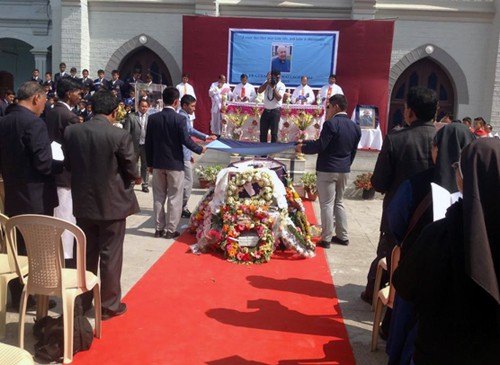
Funeral service for Fr Gerard Van Walleghem SJ

Mass for Fr Gerard Van Walleghem SJ

Funeral procession at North Point, Darjeeling
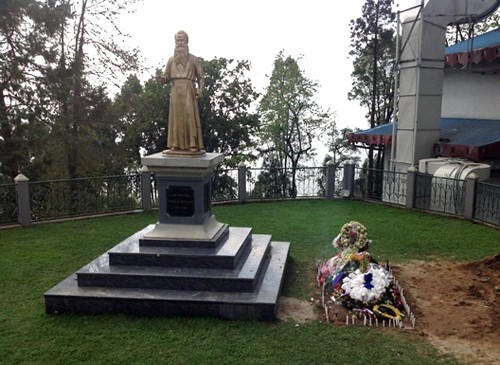
Final resting place of Fr Gerard Van Walleghem SJ


Author

  • Craig Hincks

    Craig Hincks was CJI's Communications Coordinator from 2015-2019.

    View all posts

Planned Giving

Photo: Fe y Alegría Peru

Bridging Borders

Subscribe to our newsletter!

Ways to give

  • Donate online
  • One-time donations
  • Monthly donations
  • Securities donations
  • Planned giving

@canadianjesuitsinternational

We're Hiring: Social Justice Animator ➡️ bit.ly/CJIAnimator

If you are passionate about social justice, education, advocacy and inspiring people to engage with a faith that helps to build a just world, then this is the role for you.

Canadian Jesuits International is looking for a Social Justice Animator to engage students, educators, schools, parishes, and organizations across Canada through impactful workshops, events, advocacy campaigns, and creative educational resources. 

In collaboration with Jesuit and mission-aligned partners nationwide, this role will help inspire deeper engagement with a faith that does justice and fosters meaningful social change.

A detailed job description and application process can be found here: https://bit.ly/CJIAnimator

Apply today by sending your resume and cover letter to: CANcjijobposting@jesuits.org

#Canada #jobs #Jesuit
•
Follow
We're Hiring: Social Justice Animator ➡️ bit.ly/CJIAnimator If you are passionate about social justice, education, advocacy and inspiring people to engage with a faith that helps to build a just world, then this is the role for you. Canadian Jesuits International is looking for a Social Justice Animator to engage students, educators, schools, parishes, and organizations across Canada through impactful workshops, events, advocacy campaigns, and creative educational resources. In collaboration with Jesuit and mission-aligned partners nationwide, this role will help inspire deeper engagement with a faith that does justice and fosters meaningful social change. A detailed job description and application process can be found here: https://bit.ly/CJIAnimator Apply today by sending your resume and cover letter to: [email protected] #Canada #jobs #Jesuit
5 days ago
View on Instagram |
1/9
In his essay, Solidarity in a Fractured World,  Fr. Daniel Mwamba Mutale, Executive Director at the Jesuit Centre for Theological Reflection (JCTR), reflects on what it means to truly care for others: Click link in bio, CJI Spring Summer newsletter.

a Canadian Jesuits International partner based in Zambia.
•
Follow
In his essay, Solidarity in a Fractured World, Fr. Daniel Mwamba Mutale, Executive Director at the Jesuit Centre for Theological Reflection (JCTR), reflects on what it means to truly care for others: Click link in bio, CJI Spring Summer newsletter. a Canadian Jesuits International partner based in Zambia.
1 week ago
View on Instagram |
2/9
CJI Executive Director Jenny Cafiso (fourth from left) and staff bade farewell to Fr. Ismael Matambura, SJ, Executive Director of the African Jesuit AIDS Network (AJAN) who finished his visit to Ontario yesterday. 

They thanked Fr. Matambura for raising awareness about the work of AJAN, a CJI partner, and about the HIV situation in Africa. During his visit, he met with CJI supporters and students in Toronto, Guelph and Parkhill. Read story here, #ICYMI: https://bit.ly/4tQE8rT
However, before heading back to Kenya, CJI supporters in Ottawa will have a chance to meet Fr. Matambura, who is in Canada to raise awareness about the work of AJAN, a CJI partner. CJI is co-organizing a public event tomorrow, May 27, from 5 p.m. to 6:30 p.m. (ET) at St. Basil's Church.
•
Follow
CJI Executive Director Jenny Cafiso (fourth from left) and staff bade farewell to Fr. Ismael Matambura, SJ, Executive Director of the African Jesuit AIDS Network (AJAN) who finished his visit to Ontario yesterday. They thanked Fr. Matambura for raising awareness about the work of AJAN, a CJI partner, and about the HIV situation in Africa. During his visit, he met with CJI supporters and students in Toronto, Guelph and Parkhill. Read story here, #ICYMI: https://bit.ly/4tQE8rT However, before heading back to Kenya, CJI supporters in Ottawa will have a chance to meet Fr. Matambura, who is in Canada to raise awareness about the work of AJAN, a CJI partner. CJI is co-organizing a public event tomorrow, May 27, from 5 p.m. to 6:30 p.m. (ET) at St. Basil's Church.
1 week ago
View on Instagram |
3/9
Thank you to the teachers and students at Cathedral High School in Hamilton, Ont, for giving Fr Ismael Matambura, SJ, a warm welcome. 

Fr. Matambura even made a cameo appearance on Cathedral High School TV! 

Fr. Matambura is a Jesuit priest from the Democratic Republic of the Congo and the Director of the African Jesuit AIDS Network (AJAN), a CJI partner. He is visiting Toronto to raise awareness of AJAN’s mission to prevent HIV infections, support people living with HIV, and empower women and vulnerable groups by providing education, livelihood projects and psychosocial support. 

Fr.  Matambura described the challenges of responding to the HIV/AIDS epidemic in Africa. He said that AJAN takes various approaches to raise awareness, including promoting youth leadership and running peer-to-peer information campaigns to prevent HIV infection, drug abuse, and violence among young people. 
AJAN also provides vulnerable people with income and hope through livelihood programmes.  One such program is Building Resilience in Women and Girls in Africa, which is supported by CJI. This program provides vulnerable women and girls, particularly those living with HIV, with training in financial literacy and business management, as well as start-up funding for a small business.
Thank you to the teachers and students at Cathedral High School in Hamilton, Ont, for giving Fr Ismael Matambura, SJ, a warm welcome. 

Fr. Matambura even made a cameo appearance on Cathedral High School TV! 

Fr. Matambura is a Jesuit priest from the Democratic Republic of the Congo and the Director of the African Jesuit AIDS Network (AJAN), a CJI partner. He is visiting Toronto to raise awareness of AJAN’s mission to prevent HIV infections, support people living with HIV, and empower women and vulnerable groups by providing education, livelihood projects and psychosocial support. 

Fr.  Matambura described the challenges of responding to the HIV/AIDS epidemic in Africa. He said that AJAN takes various approaches to raise awareness, including promoting youth leadership and running peer-to-peer information campaigns to prevent HIV infection, drug abuse, and violence among young people. 
AJAN also provides vulnerable people with income and hope through livelihood programmes.  One such program is Building Resilience in Women and Girls in Africa, which is supported by CJI. This program provides vulnerable women and girls, particularly those living with HIV, with training in financial literacy and business management, as well as start-up funding for a small business.
Thank you to the teachers and students at Cathedral High School in Hamilton, Ont, for giving Fr Ismael Matambura, SJ, a warm welcome. 

Fr. Matambura even made a cameo appearance on Cathedral High School TV! 

Fr. Matambura is a Jesuit priest from the Democratic Republic of the Congo and the Director of the African Jesuit AIDS Network (AJAN), a CJI partner. He is visiting Toronto to raise awareness of AJAN’s mission to prevent HIV infections, support people living with HIV, and empower women and vulnerable groups by providing education, livelihood projects and psychosocial support. 

Fr.  Matambura described the challenges of responding to the HIV/AIDS epidemic in Africa. He said that AJAN takes various approaches to raise awareness, including promoting youth leadership and running peer-to-peer information campaigns to prevent HIV infection, drug abuse, and violence among young people. 
AJAN also provides vulnerable people with income and hope through livelihood programmes.  One such program is Building Resilience in Women and Girls in Africa, which is supported by CJI. This program provides vulnerable women and girls, particularly those living with HIV, with training in financial literacy and business management, as well as start-up funding for a small business.
Thank you to the teachers and students at Cathedral High School in Hamilton, Ont, for giving Fr Ismael Matambura, SJ, a warm welcome. 

Fr. Matambura even made a cameo appearance on Cathedral High School TV! 

Fr. Matambura is a Jesuit priest from the Democratic Republic of the Congo and the Director of the African Jesuit AIDS Network (AJAN), a CJI partner. He is visiting Toronto to raise awareness of AJAN’s mission to prevent HIV infections, support people living with HIV, and empower women and vulnerable groups by providing education, livelihood projects and psychosocial support. 

Fr.  Matambura described the challenges of responding to the HIV/AIDS epidemic in Africa. He said that AJAN takes various approaches to raise awareness, including promoting youth leadership and running peer-to-peer information campaigns to prevent HIV infection, drug abuse, and violence among young people. 
AJAN also provides vulnerable people with income and hope through livelihood programmes.  One such program is Building Resilience in Women and Girls in Africa, which is supported by CJI. This program provides vulnerable women and girls, particularly those living with HIV, with training in financial literacy and business management, as well as start-up funding for a small business.
Thank you to the teachers and students at Cathedral High School in Hamilton, Ont, for giving Fr Ismael Matambura, SJ, a warm welcome. 

Fr. Matambura even made a cameo appearance on Cathedral High School TV! 

Fr. Matambura is a Jesuit priest from the Democratic Republic of the Congo and the Director of the African Jesuit AIDS Network (AJAN), a CJI partner. He is visiting Toronto to raise awareness of AJAN’s mission to prevent HIV infections, support people living with HIV, and empower women and vulnerable groups by providing education, livelihood projects and psychosocial support. 

Fr.  Matambura described the challenges of responding to the HIV/AIDS epidemic in Africa. He said that AJAN takes various approaches to raise awareness, including promoting youth leadership and running peer-to-peer information campaigns to prevent HIV infection, drug abuse, and violence among young people. 
AJAN also provides vulnerable people with income and hope through livelihood programmes.  One such program is Building Resilience in Women and Girls in Africa, which is supported by CJI. This program provides vulnerable women and girls, particularly those living with HIV, with training in financial literacy and business management, as well as start-up funding for a small business.
Thank you to the teachers and students at Cathedral High School in Hamilton, Ont, for giving Fr Ismael Matambura, SJ, a warm welcome. 

Fr. Matambura even made a cameo appearance on Cathedral High School TV! 

Fr. Matambura is a Jesuit priest from the Democratic Republic of the Congo and the Director of the African Jesuit AIDS Network (AJAN), a CJI partner. He is visiting Toronto to raise awareness of AJAN’s mission to prevent HIV infections, support people living with HIV, and empower women and vulnerable groups by providing education, livelihood projects and psychosocial support. 

Fr.  Matambura described the challenges of responding to the HIV/AIDS epidemic in Africa. He said that AJAN takes various approaches to raise awareness, including promoting youth leadership and running peer-to-peer information campaigns to prevent HIV infection, drug abuse, and violence among young people. 
AJAN also provides vulnerable people with income and hope through livelihood programmes.  One such program is Building Resilience in Women and Girls in Africa, which is supported by CJI. This program provides vulnerable women and girls, particularly those living with HIV, with training in financial literacy and business management, as well as start-up funding for a small business.
Thank you to the teachers and students at Cathedral High School in Hamilton, Ont, for giving Fr Ismael Matambura, SJ, a warm welcome. 

Fr. Matambura even made a cameo appearance on Cathedral High School TV! 

Fr. Matambura is a Jesuit priest from the Democratic Republic of the Congo and the Director of the African Jesuit AIDS Network (AJAN), a CJI partner. He is visiting Toronto to raise awareness of AJAN’s mission to prevent HIV infections, support people living with HIV, and empower women and vulnerable groups by providing education, livelihood projects and psychosocial support. 

Fr.  Matambura described the challenges of responding to the HIV/AIDS epidemic in Africa. He said that AJAN takes various approaches to raise awareness, including promoting youth leadership and running peer-to-peer information campaigns to prevent HIV infection, drug abuse, and violence among young people. 
AJAN also provides vulnerable people with income and hope through livelihood programmes.  One such program is Building Resilience in Women and Girls in Africa, which is supported by CJI. This program provides vulnerable women and girls, particularly those living with HIV, with training in financial literacy and business management, as well as start-up funding for a small business.
•
Follow
Thank you to the teachers and students at Cathedral High School in Hamilton, Ont, for giving Fr Ismael Matambura, SJ, a warm welcome. Fr. Matambura even made a cameo appearance on Cathedral High School TV! Fr. Matambura is a Jesuit priest from the Democratic Republic of the Congo and the Director of the African Jesuit AIDS Network (AJAN), a CJI partner. He is visiting Toronto to raise awareness of AJAN’s mission to prevent HIV infections, support people living with HIV, and empower women and vulnerable groups by providing education, livelihood projects and psychosocial support. Fr. Matambura described the challenges of responding to the HIV/AIDS epidemic in Africa. He said that AJAN takes various approaches to raise awareness, including promoting youth leadership and running peer-to-peer information campaigns to prevent HIV infection, drug abuse, and violence among young people. AJAN also provides vulnerable people with income and hope through livelihood programmes. One such program is Building Resilience in Women and Girls in Africa, which is supported by CJI. This program provides vulnerable women and girls, particularly those living with HIV, with training in financial literacy and business management, as well as start-up funding for a small business.
2 weeks ago
View on Instagram |
4/9
AIDS epidemic not over in Africa, says visiting Jesuit priest 

Fr. Ismael Matambura, Director of the African Jesuit AIDS Network (AJAN) on May 20 stressed the importance of supporting HIV-AIDS initiatives, saying that AIDS epidemic in Africa is not over. 

“HIV is still there,” Fr. Matambura said during a talk co-organized by Canadian Jesuits International (CJI) and the residents and staff at Presentation Manor, a non-profit, faith-based retirement residence in Scarborough, Ont. 

Earlier this year, UNAIDS noted that although West and Central Africa have made “notable progress” in their response to AIDS, this remained “insufficient to meet global targets to end AIDS as public health threat by 2030.” 

In 2025,  at least 124,000 people died in at least five countries in Central, North, and West Africa, and new HIV infections “continue to grow,” noted Susan Kasedde, UNAIDS Regional Director, West and Central Africa.  According to UNAIDS, more than 26.5 million people in Africa are living with HIV, representing65% of the global total. 

Experts have also expressed concern that cuts to USAID and other foreign aid have undermined progress and created serious gaps, particularly in HIV prevention and mobile health clinics. 

“It was a very brutal cut; mobile clinics that went to rural areas had to suspend work overnight,” said Fr. Matambura, who responded to a question from the audience about the impact of the USAID cuts in 2024. “The impact was felt all over the continent.” He also noted that bilateral agreements between the US and at least 10 African nations have been suspended. Zambia has accused the U.S. of tying health assistance to access to critical minerals and other resources. 

AJN provides services such as HIV care and treatment, psycho-social and spiritual support, awareness raising programs, particularly among the youth, and livelihood support for vulnerable women and girls, he said. 

The Building Resilience Among Women and Girls in Africa, a project being supported by CJI, provides women, particularly those living with HIV, with training in financial literacy and business management.

Learn more, visit the CJI website: Click link in bio.
AIDS epidemic not over in Africa, says visiting Jesuit priest 

Fr. Ismael Matambura, Director of the African Jesuit AIDS Network (AJAN) on May 20 stressed the importance of supporting HIV-AIDS initiatives, saying that AIDS epidemic in Africa is not over. 

“HIV is still there,” Fr. Matambura said during a talk co-organized by Canadian Jesuits International (CJI) and the residents and staff at Presentation Manor, a non-profit, faith-based retirement residence in Scarborough, Ont. 

Earlier this year, UNAIDS noted that although West and Central Africa have made “notable progress” in their response to AIDS, this remained “insufficient to meet global targets to end AIDS as public health threat by 2030.” 

In 2025,  at least 124,000 people died in at least five countries in Central, North, and West Africa, and new HIV infections “continue to grow,” noted Susan Kasedde, UNAIDS Regional Director, West and Central Africa.  According to UNAIDS, more than 26.5 million people in Africa are living with HIV, representing65% of the global total. 

Experts have also expressed concern that cuts to USAID and other foreign aid have undermined progress and created serious gaps, particularly in HIV prevention and mobile health clinics. 

“It was a very brutal cut; mobile clinics that went to rural areas had to suspend work overnight,” said Fr. Matambura, who responded to a question from the audience about the impact of the USAID cuts in 2024. “The impact was felt all over the continent.” He also noted that bilateral agreements between the US and at least 10 African nations have been suspended. Zambia has accused the U.S. of tying health assistance to access to critical minerals and other resources. 

AJN provides services such as HIV care and treatment, psycho-social and spiritual support, awareness raising programs, particularly among the youth, and livelihood support for vulnerable women and girls, he said. 

The Building Resilience Among Women and Girls in Africa, a project being supported by CJI, provides women, particularly those living with HIV, with training in financial literacy and business management.

Learn more, visit the CJI website: Click link in bio.
AIDS epidemic not over in Africa, says visiting Jesuit priest 

Fr. Ismael Matambura, Director of the African Jesuit AIDS Network (AJAN) on May 20 stressed the importance of supporting HIV-AIDS initiatives, saying that AIDS epidemic in Africa is not over. 

“HIV is still there,” Fr. Matambura said during a talk co-organized by Canadian Jesuits International (CJI) and the residents and staff at Presentation Manor, a non-profit, faith-based retirement residence in Scarborough, Ont. 

Earlier this year, UNAIDS noted that although West and Central Africa have made “notable progress” in their response to AIDS, this remained “insufficient to meet global targets to end AIDS as public health threat by 2030.” 

In 2025,  at least 124,000 people died in at least five countries in Central, North, and West Africa, and new HIV infections “continue to grow,” noted Susan Kasedde, UNAIDS Regional Director, West and Central Africa.  According to UNAIDS, more than 26.5 million people in Africa are living with HIV, representing65% of the global total. 

Experts have also expressed concern that cuts to USAID and other foreign aid have undermined progress and created serious gaps, particularly in HIV prevention and mobile health clinics. 

“It was a very brutal cut; mobile clinics that went to rural areas had to suspend work overnight,” said Fr. Matambura, who responded to a question from the audience about the impact of the USAID cuts in 2024. “The impact was felt all over the continent.” He also noted that bilateral agreements between the US and at least 10 African nations have been suspended. Zambia has accused the U.S. of tying health assistance to access to critical minerals and other resources. 

AJN provides services such as HIV care and treatment, psycho-social and spiritual support, awareness raising programs, particularly among the youth, and livelihood support for vulnerable women and girls, he said. 

The Building Resilience Among Women and Girls in Africa, a project being supported by CJI, provides women, particularly those living with HIV, with training in financial literacy and business management.

Learn more, visit the CJI website: Click link in bio.
AIDS epidemic not over in Africa, says visiting Jesuit priest 

Fr. Ismael Matambura, Director of the African Jesuit AIDS Network (AJAN) on May 20 stressed the importance of supporting HIV-AIDS initiatives, saying that AIDS epidemic in Africa is not over. 

“HIV is still there,” Fr. Matambura said during a talk co-organized by Canadian Jesuits International (CJI) and the residents and staff at Presentation Manor, a non-profit, faith-based retirement residence in Scarborough, Ont. 

Earlier this year, UNAIDS noted that although West and Central Africa have made “notable progress” in their response to AIDS, this remained “insufficient to meet global targets to end AIDS as public health threat by 2030.” 

In 2025,  at least 124,000 people died in at least five countries in Central, North, and West Africa, and new HIV infections “continue to grow,” noted Susan Kasedde, UNAIDS Regional Director, West and Central Africa.  According to UNAIDS, more than 26.5 million people in Africa are living with HIV, representing65% of the global total. 

Experts have also expressed concern that cuts to USAID and other foreign aid have undermined progress and created serious gaps, particularly in HIV prevention and mobile health clinics. 

“It was a very brutal cut; mobile clinics that went to rural areas had to suspend work overnight,” said Fr. Matambura, who responded to a question from the audience about the impact of the USAID cuts in 2024. “The impact was felt all over the continent.” He also noted that bilateral agreements between the US and at least 10 African nations have been suspended. Zambia has accused the U.S. of tying health assistance to access to critical minerals and other resources. 

AJN provides services such as HIV care and treatment, psycho-social and spiritual support, awareness raising programs, particularly among the youth, and livelihood support for vulnerable women and girls, he said. 

The Building Resilience Among Women and Girls in Africa, a project being supported by CJI, provides women, particularly those living with HIV, with training in financial literacy and business management.

Learn more, visit the CJI website: Click link in bio.
•
Follow
AIDS epidemic not over in Africa, says visiting Jesuit priest Fr. Ismael Matambura, Director of the African Jesuit AIDS Network (AJAN) on May 20 stressed the importance of supporting HIV-AIDS initiatives, saying that AIDS epidemic in Africa is not over. “HIV is still there,” Fr. Matambura said during a talk co-organized by Canadian Jesuits International (CJI) and the residents and staff at Presentation Manor, a non-profit, faith-based retirement residence in Scarborough, Ont. Earlier this year, UNAIDS noted that although West and Central Africa have made “notable progress” in their response to AIDS, this remained “insufficient to meet global targets to end AIDS as public health threat by 2030.” In 2025, at least 124,000 people died in at least five countries in Central, North, and West Africa, and new HIV infections “continue to grow,” noted Susan Kasedde, UNAIDS Regional Director, West and Central Africa. According to UNAIDS, more than 26.5 million people in Africa are living with HIV, representing65% of the global total. Experts have also expressed concern that cuts to USAID and other foreign aid have undermined progress and created serious gaps, particularly in HIV prevention and mobile health clinics. “It was a very brutal cut; mobile clinics that went to rural areas had to suspend work overnight,” said Fr. Matambura, who responded to a question from the audience about the impact of the USAID cuts in 2024. “The impact was felt all over the continent.” He also noted that bilateral agreements between the US and at least 10 African nations have been suspended. Zambia has accused the U.S. of tying health assistance to access to critical minerals and other resources. AJN provides services such as HIV care and treatment, psycho-social and spiritual support, awareness raising programs, particularly among the youth, and livelihood support for vulnerable women and girls, he said. The Building Resilience Among Women and Girls in Africa, a project being supported by CJI, provides women, particularly those living with HIV, with training in financial literacy and business management. Learn more, visit the CJI website: Click link in bio.
2 weeks ago
View on Instagram |
5/9
Helping displaced people is "a form of resistance against dehumanization," writes Alejandra Castellanos Breton, the Regional Director at Jesuit Refugee Service Latin America and the Caribbean, a CJI project partner. 

Read Alejandra's article:  Click link in bio, 2026 CJI Spring-Summer newsletter.

#Jesuits #migration
•
Follow
Helping displaced people is "a form of resistance against dehumanization," writes Alejandra Castellanos Breton, the Regional Director at Jesuit Refugee Service Latin America and the Caribbean, a CJI project partner. Read Alejandra's article: Click link in bio, 2026 CJI Spring-Summer newsletter. #Jesuits #migration
2 weeks ago
View on Instagram |
6/9
Looking for a fun and unique summer opportunity? @campmicahon is partnering with CJI and other organizations and individuals for Model Youth Justice. The two-night retreat, August 7 to 9, is for youth & young adults and will take place in New Hamburg, Ont..

Activities will include exploring social justice issues, leadership development training and sharing experiences. 

Both individuals and groups with accompanying adults are welcome to register!

Visit campmicah.ca/program for more information and to register. 

See you there!
•
Follow
Looking for a fun and unique summer opportunity? @campmicahon is partnering with CJI and other organizations and individuals for Model Youth Justice. The two-night retreat, August 7 to 9, is for youth & young adults and will take place in New Hamburg, Ont.. Activities will include exploring social justice issues, leadership development training and sharing experiences. Both individuals and groups with accompanying adults are welcome to register! Visit campmicah.ca/program for more information and to register. See you there!
2 weeks ago
View on Instagram |
7/9
We would like to thank  Fr. Vernon Boyd, SJ, Fr. Philip Shano, SJ,  and parishioners at Holy Rosary Church in Guelph, Ont., for the warm welcome they extended to Fr. Ismael Matambura, SJ, and CJI Donor Relations Coordinator Madeline Lunney on Sunday, May 17. 

Fr. Matambura, a Jesuit priest from the Democratic Republic of the Congo, is the Director of the African Jesuit AIDS Network (AJAN), a CJI partner. He is visiting Toronto to raise awareness of AJAN’s mission to prevent HIV infections, support people living with HIV, and empower women and vulnerable groups by providing education, livelihood projects and psychosocial support. 

During a discussion following a mass that he celebrated with parish priest Fr. Boyd, Fr. Matambura spoke about the need for solidarity. He described the challenges of responding to the HIV-AIDS epidemic in Africa, and emphasized the importance of reaching people at risk, including those in remote rural areas and prisons. He said that there is still stigma associated with the disease and that many people refuse to get tested. 

He said that AJAN has various approaches to spread awareness, including promoting youth leadership and running peer-to-peer information campaigns, and providing people with income and hope through  livelihood programs.  One such program is Building Resilience in Women and Girls in Africa, which is supported by CJI. It provides vulnerable women and girls, particularly those living with HIV, with training in financial literacy and business management, as well as start-up funding for a small business. 

Fr. Matambura showed photos of  recipients engaged in bread making, tailoring and other income-generation activities in Burkina Faso, Democratic Republic of Congo, Togo, Cameroon, Zambia and South Sudan. He also shared their testimonials to emphasize the life-changing impact of initiatives to which CJI donors are contributing. 

(With thanks to visiting Jesuit priest, Fr. Richard Ella, SJ, for taking the photos.)
We would like to thank  Fr. Vernon Boyd, SJ, Fr. Philip Shano, SJ,  and parishioners at Holy Rosary Church in Guelph, Ont., for the warm welcome they extended to Fr. Ismael Matambura, SJ, and CJI Donor Relations Coordinator Madeline Lunney on Sunday, May 17. 

Fr. Matambura, a Jesuit priest from the Democratic Republic of the Congo, is the Director of the African Jesuit AIDS Network (AJAN), a CJI partner. He is visiting Toronto to raise awareness of AJAN’s mission to prevent HIV infections, support people living with HIV, and empower women and vulnerable groups by providing education, livelihood projects and psychosocial support. 

During a discussion following a mass that he celebrated with parish priest Fr. Boyd, Fr. Matambura spoke about the need for solidarity. He described the challenges of responding to the HIV-AIDS epidemic in Africa, and emphasized the importance of reaching people at risk, including those in remote rural areas and prisons. He said that there is still stigma associated with the disease and that many people refuse to get tested. 

He said that AJAN has various approaches to spread awareness, including promoting youth leadership and running peer-to-peer information campaigns, and providing people with income and hope through  livelihood programs.  One such program is Building Resilience in Women and Girls in Africa, which is supported by CJI. It provides vulnerable women and girls, particularly those living with HIV, with training in financial literacy and business management, as well as start-up funding for a small business. 

Fr. Matambura showed photos of  recipients engaged in bread making, tailoring and other income-generation activities in Burkina Faso, Democratic Republic of Congo, Togo, Cameroon, Zambia and South Sudan. He also shared their testimonials to emphasize the life-changing impact of initiatives to which CJI donors are contributing. 

(With thanks to visiting Jesuit priest, Fr. Richard Ella, SJ, for taking the photos.)
We would like to thank  Fr. Vernon Boyd, SJ, Fr. Philip Shano, SJ,  and parishioners at Holy Rosary Church in Guelph, Ont., for the warm welcome they extended to Fr. Ismael Matambura, SJ, and CJI Donor Relations Coordinator Madeline Lunney on Sunday, May 17. 

Fr. Matambura, a Jesuit priest from the Democratic Republic of the Congo, is the Director of the African Jesuit AIDS Network (AJAN), a CJI partner. He is visiting Toronto to raise awareness of AJAN’s mission to prevent HIV infections, support people living with HIV, and empower women and vulnerable groups by providing education, livelihood projects and psychosocial support. 

During a discussion following a mass that he celebrated with parish priest Fr. Boyd, Fr. Matambura spoke about the need for solidarity. He described the challenges of responding to the HIV-AIDS epidemic in Africa, and emphasized the importance of reaching people at risk, including those in remote rural areas and prisons. He said that there is still stigma associated with the disease and that many people refuse to get tested. 

He said that AJAN has various approaches to spread awareness, including promoting youth leadership and running peer-to-peer information campaigns, and providing people with income and hope through  livelihood programs.  One such program is Building Resilience in Women and Girls in Africa, which is supported by CJI. It provides vulnerable women and girls, particularly those living with HIV, with training in financial literacy and business management, as well as start-up funding for a small business. 

Fr. Matambura showed photos of  recipients engaged in bread making, tailoring and other income-generation activities in Burkina Faso, Democratic Republic of Congo, Togo, Cameroon, Zambia and South Sudan. He also shared their testimonials to emphasize the life-changing impact of initiatives to which CJI donors are contributing. 

(With thanks to visiting Jesuit priest, Fr. Richard Ella, SJ, for taking the photos.)
We would like to thank  Fr. Vernon Boyd, SJ, Fr. Philip Shano, SJ,  and parishioners at Holy Rosary Church in Guelph, Ont., for the warm welcome they extended to Fr. Ismael Matambura, SJ, and CJI Donor Relations Coordinator Madeline Lunney on Sunday, May 17. 

Fr. Matambura, a Jesuit priest from the Democratic Republic of the Congo, is the Director of the African Jesuit AIDS Network (AJAN), a CJI partner. He is visiting Toronto to raise awareness of AJAN’s mission to prevent HIV infections, support people living with HIV, and empower women and vulnerable groups by providing education, livelihood projects and psychosocial support. 

During a discussion following a mass that he celebrated with parish priest Fr. Boyd, Fr. Matambura spoke about the need for solidarity. He described the challenges of responding to the HIV-AIDS epidemic in Africa, and emphasized the importance of reaching people at risk, including those in remote rural areas and prisons. He said that there is still stigma associated with the disease and that many people refuse to get tested. 

He said that AJAN has various approaches to spread awareness, including promoting youth leadership and running peer-to-peer information campaigns, and providing people with income and hope through  livelihood programs.  One such program is Building Resilience in Women and Girls in Africa, which is supported by CJI. It provides vulnerable women and girls, particularly those living with HIV, with training in financial literacy and business management, as well as start-up funding for a small business. 

Fr. Matambura showed photos of  recipients engaged in bread making, tailoring and other income-generation activities in Burkina Faso, Democratic Republic of Congo, Togo, Cameroon, Zambia and South Sudan. He also shared their testimonials to emphasize the life-changing impact of initiatives to which CJI donors are contributing. 

(With thanks to visiting Jesuit priest, Fr. Richard Ella, SJ, for taking the photos.)
We would like to thank  Fr. Vernon Boyd, SJ, Fr. Philip Shano, SJ,  and parishioners at Holy Rosary Church in Guelph, Ont., for the warm welcome they extended to Fr. Ismael Matambura, SJ, and CJI Donor Relations Coordinator Madeline Lunney on Sunday, May 17. 

Fr. Matambura, a Jesuit priest from the Democratic Republic of the Congo, is the Director of the African Jesuit AIDS Network (AJAN), a CJI partner. He is visiting Toronto to raise awareness of AJAN’s mission to prevent HIV infections, support people living with HIV, and empower women and vulnerable groups by providing education, livelihood projects and psychosocial support. 

During a discussion following a mass that he celebrated with parish priest Fr. Boyd, Fr. Matambura spoke about the need for solidarity. He described the challenges of responding to the HIV-AIDS epidemic in Africa, and emphasized the importance of reaching people at risk, including those in remote rural areas and prisons. He said that there is still stigma associated with the disease and that many people refuse to get tested. 

He said that AJAN has various approaches to spread awareness, including promoting youth leadership and running peer-to-peer information campaigns, and providing people with income and hope through  livelihood programs.  One such program is Building Resilience in Women and Girls in Africa, which is supported by CJI. It provides vulnerable women and girls, particularly those living with HIV, with training in financial literacy and business management, as well as start-up funding for a small business. 

Fr. Matambura showed photos of  recipients engaged in bread making, tailoring and other income-generation activities in Burkina Faso, Democratic Republic of Congo, Togo, Cameroon, Zambia and South Sudan. He also shared their testimonials to emphasize the life-changing impact of initiatives to which CJI donors are contributing. 

(With thanks to visiting Jesuit priest, Fr. Richard Ella, SJ, for taking the photos.)
We would like to thank  Fr. Vernon Boyd, SJ, Fr. Philip Shano, SJ,  and parishioners at Holy Rosary Church in Guelph, Ont., for the warm welcome they extended to Fr. Ismael Matambura, SJ, and CJI Donor Relations Coordinator Madeline Lunney on Sunday, May 17. 

Fr. Matambura, a Jesuit priest from the Democratic Republic of the Congo, is the Director of the African Jesuit AIDS Network (AJAN), a CJI partner. He is visiting Toronto to raise awareness of AJAN’s mission to prevent HIV infections, support people living with HIV, and empower women and vulnerable groups by providing education, livelihood projects and psychosocial support. 

During a discussion following a mass that he celebrated with parish priest Fr. Boyd, Fr. Matambura spoke about the need for solidarity. He described the challenges of responding to the HIV-AIDS epidemic in Africa, and emphasized the importance of reaching people at risk, including those in remote rural areas and prisons. He said that there is still stigma associated with the disease and that many people refuse to get tested. 

He said that AJAN has various approaches to spread awareness, including promoting youth leadership and running peer-to-peer information campaigns, and providing people with income and hope through  livelihood programs.  One such program is Building Resilience in Women and Girls in Africa, which is supported by CJI. It provides vulnerable women and girls, particularly those living with HIV, with training in financial literacy and business management, as well as start-up funding for a small business. 

Fr. Matambura showed photos of  recipients engaged in bread making, tailoring and other income-generation activities in Burkina Faso, Democratic Republic of Congo, Togo, Cameroon, Zambia and South Sudan. He also shared their testimonials to emphasize the life-changing impact of initiatives to which CJI donors are contributing. 

(With thanks to visiting Jesuit priest, Fr. Richard Ella, SJ, for taking the photos.)
•
Follow
We would like to thank Fr. Vernon Boyd, SJ, Fr. Philip Shano, SJ, and parishioners at Holy Rosary Church in Guelph, Ont., for the warm welcome they extended to Fr. Ismael Matambura, SJ, and CJI Donor Relations Coordinator Madeline Lunney on Sunday, May 17. Fr. Matambura, a Jesuit priest from the Democratic Republic of the Congo, is the Director of the African Jesuit AIDS Network (AJAN), a CJI partner. He is visiting Toronto to raise awareness of AJAN’s mission to prevent HIV infections, support people living with HIV, and empower women and vulnerable groups by providing education, livelihood projects and psychosocial support. During a discussion following a mass that he celebrated with parish priest Fr. Boyd, Fr. Matambura spoke about the need for solidarity. He described the challenges of responding to the HIV-AIDS epidemic in Africa, and emphasized the importance of reaching people at risk, including those in remote rural areas and prisons. He said that there is still stigma associated with the disease and that many people refuse to get tested. He said that AJAN has various approaches to spread awareness, including promoting youth leadership and running peer-to-peer information campaigns, and providing people with income and hope through livelihood programs. One such program is Building Resilience in Women and Girls in Africa, which is supported by CJI. It provides vulnerable women and girls, particularly those living with HIV, with training in financial literacy and business management, as well as start-up funding for a small business. Fr. Matambura showed photos of recipients engaged in bread making, tailoring and other income-generation activities in Burkina Faso, Democratic Republic of Congo, Togo, Cameroon, Zambia and South Sudan. He also shared their testimonials to emphasize the life-changing impact of initiatives to which CJI donors are contributing. (With thanks to visiting Jesuit priest, Fr. Richard Ella, SJ, for taking the photos.)
2 weeks ago
View on Instagram |
8/9
Grace Futi set up her bread business after receiving an entrepreneurial skills training and funding as part of a project by the African Jesuits AIDS Network, a CJI partner. 

Ever since she set up her  business with funds provided by AJAN, Grace said there has been a vast improvement in her well-being and that of her family. “Family conflicts have decreased…I am busy. I manage my money with joy. I no longer ask for money to buy my medication,” said Futi, who is living with HIV/AIDS. 

Futi was one of 295 women who received scholarships for entrepreneurial skills training and funding as part of AJAN’s project, Building Resilience in Women and Girls in Africa, which is supported by CJI.

The project was initially implemented in Burkina Faso, Togo, the Democratic Republic of the Congo, and Zimbabwe. This year, it is being scaled up to include four more countries:  Cameroon, Burundi, South Sudan, and Zambia. 

The AJAN project aims to foster economic self-reliance among vulnerable women and girls, especially those living with HIV, those who are internally displaced, orphaned, or widowed. They receive training in financial literacy and business management, after which they are given seed grants to purchase business supplies.

AJAN believes that equipping women and girls with the right economic skills can empower them to support themselves and their families. Running sustainable enterprises can also help to reduce stigma surrounding orphaned girls and people living with HIV. The project aims to restore their dignity and sense of purpose, enabling them to become catalysts for social change. 

Learn more about Grace's journey and about the CJI-supported project, Building resilience in women and girls in Africa : Click link in bio, 2026 CJI Spring-Summer newsletter 

#Jesuits #socialjustice #entrepreneur #EmpoweringWomenInBusiness
Grace Futi set up her bread business after receiving an entrepreneurial skills training and funding as part of a project by the African Jesuits AIDS Network, a CJI partner. 

Ever since she set up her  business with funds provided by AJAN, Grace said there has been a vast improvement in her well-being and that of her family. “Family conflicts have decreased…I am busy. I manage my money with joy. I no longer ask for money to buy my medication,” said Futi, who is living with HIV/AIDS. 

Futi was one of 295 women who received scholarships for entrepreneurial skills training and funding as part of AJAN’s project, Building Resilience in Women and Girls in Africa, which is supported by CJI.

The project was initially implemented in Burkina Faso, Togo, the Democratic Republic of the Congo, and Zimbabwe. This year, it is being scaled up to include four more countries:  Cameroon, Burundi, South Sudan, and Zambia. 

The AJAN project aims to foster economic self-reliance among vulnerable women and girls, especially those living with HIV, those who are internally displaced, orphaned, or widowed. They receive training in financial literacy and business management, after which they are given seed grants to purchase business supplies.

AJAN believes that equipping women and girls with the right economic skills can empower them to support themselves and their families. Running sustainable enterprises can also help to reduce stigma surrounding orphaned girls and people living with HIV. The project aims to restore their dignity and sense of purpose, enabling them to become catalysts for social change. 

Learn more about Grace's journey and about the CJI-supported project, Building resilience in women and girls in Africa : Click link in bio, 2026 CJI Spring-Summer newsletter 

#Jesuits #socialjustice #entrepreneur #EmpoweringWomenInBusiness
•
Follow
Grace Futi set up her bread business after receiving an entrepreneurial skills training and funding as part of a project by the African Jesuits AIDS Network, a CJI partner. Ever since she set up her business with funds provided by AJAN, Grace said there has been a vast improvement in her well-being and that of her family. “Family conflicts have decreased…I am busy. I manage my money with joy. I no longer ask for money to buy my medication,” said Futi, who is living with HIV/AIDS. Futi was one of 295 women who received scholarships for entrepreneurial skills training and funding as part of AJAN’s project, Building Resilience in Women and Girls in Africa, which is supported by CJI. The project was initially implemented in Burkina Faso, Togo, the Democratic Republic of the Congo, and Zimbabwe. This year, it is being scaled up to include four more countries: Cameroon, Burundi, South Sudan, and Zambia. The AJAN project aims to foster economic self-reliance among vulnerable women and girls, especially those living with HIV, those who are internally displaced, orphaned, or widowed. They receive training in financial literacy and business management, after which they are given seed grants to purchase business supplies. AJAN believes that equipping women and girls with the right economic skills can empower them to support themselves and their families. Running sustainable enterprises can also help to reduce stigma surrounding orphaned girls and people living with HIV. The project aims to restore their dignity and sense of purpose, enabling them to become catalysts for social change. Learn more about Grace's journey and about the CJI-supported project, Building resilience in women and girls in Africa : Click link in bio, 2026 CJI Spring-Summer newsletter #Jesuits #socialjustice #entrepreneur #EmpoweringWomenInBusiness
2 weeks ago
View on Instagram |
9/9
Follow us on Instagram!
  • Who we are
  • International Programs
  • Outreach
  • Ways to give
  • Resources
Donate Now!

Follow us

Subscribe to our newsletter!


 Our Privacy Policy

Contact

Canadian Jesuits International

70 Saint Mary St
Toronto, ON
M5S 1J3
Canada

Tel: 416.465.1824
Toll Free (Canada and USA): 1.800.448.2148

Email: [email protected]

© Canadian Jesuits International 2025

TOP
Accessibility by WAH
  • English