Canadian Jesuits International

  • English
  • Who we are
    • Vision, mission and values
    • CJI history
    • The Society of Jesus (Jesuits)
    • CJI Board of Directors
    • CJI staff (some part-time)
    • A message from the Provincial of the Jesuits of Canada
    • Job opportunities
    • Tributes
  • International Programs
    • Right to Education
    • Ecology and Sustainability
    • Human Rights, Civic Participation, and Peacebuilding
    • Rights of Forcibly Displaced People; Humanitarian Assistance
    • Projects we support
    • Visit to International Partners
  • Outreach
    • Youth for Others
    • Y4O Advocacy Symposium
    • Community engagement
    • Advocacy
    • Catholic Social Teaching and Our Partners
    • Prayer
    • Your voices
  • Ways to give
    • Donate online
    • Donate via phone or mail
    • Monthly donations
    • Securities donations
    • Planned giving
    • Finances
    • CJI’s Privacy policy
  • Resources
    • Publications
      • Newsletters
      • Appeals
      • News
    • Multimedia
      • Video archive
      • Webinars
      • Lenten Reflections
    • Our Partners
      • Project Partners
      • Jesuit Organizations
Donate
  • Home
  • CJI Youth Advocacy Symposium 2024
  • CJI Youth for Others Advocacy 2024, Day 2: Monday, April 22, 2024

CJI Youth for Others Advocacy 2024, Day 2: Monday, April 22, 2024

25 April 2024 / Published in CJI Youth Advocacy Symposium 2024

CJI Youth for Others Advocacy 2024, Day 2: Monday, April 22, 2024


Participants listen to Dr Evelyn Mayanja discuss “The Intersection of Resource Extraction and Girls’ Education.” Photo: T. Sison/CJI

‘Speak up for justice’

“Be the voice. Be a person for others. You have a lot of potential in you, don’t let it die. Speak up for justice,” Dr Evelyn Mayanja urged participants at CJI’s Youth for Others Advocacy Symposium in Ottawa.

Dr Mayanja urged students to think about the privileges they enjoy, including the ability to use and enjoy technology that uses minerals such as cobalt mined from places like the Democratic Republic of the Congo, where children work in toxic artisanal mines and are deprived of an education and a future.

Studies have shown that exposure to toxic materials leads to developmental disorders, she said. “Their brains shrink. They find it hard to think.”

Millions of Congolese have been forced off their land, pushed deeper into poverty, made ill by mining pollution, and denied access to necessities such as clean water, healthy food, and education for their children, she said. The Global North often “takes resources (from the Global South) without valuing their humanity,” she added.

Wars and conflicts that can involve child soldiers continue in resource-rich countries like the Democratic Republic of Congo because they protect mining companies operating in poor and marginalized communities, she said.

After asking the students how many of them watched television news or read newspapers and noting that only a few hands were raised, Dr. Mayanja encouraged them to think critically and be more aware of national and global events, saying, “TikTok is not news… Do the rigorous work of building your character.”

Dr. Mayanja, an Assistant Professor at Carleton University, spoke on “The Intersection of Resource Extraction and Girls’ Education. Learn more about the issue: https://www.canadianjesuitsinternational.ca/webinar-explores-root-causes-of-mining-misery-in-the-congo/


________________________________________

‘Not all girls will have the same level of access’
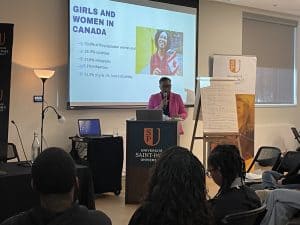
Dr Lerona Lewis discusses the challenges faced by racialized students in Canada. Photo: Tess Sison/CJI

Race, class, socioeconomic status, cultural capital and other factors can affect one’s ability to succeed, Dr Lerona Lewis told symposium participants, as she expounded on the theory of social and cultural reproduction.

Dr Lewis, a professor at the University of Ottawa, spoke about the “Challenges of inclusive education within the Canadian context.” She noted that while girls in the Global South face more barriers to getting an education, racialized girls and boys face their own challenges in Canada. “Not all girls will have the same level of access” and success, even when they are in Canada, she said. She cited the issue of anti-black racism, saying several studies have shown that black students are more likely to be expelled from school, are subject to lower expectations from their teachers, and seen as outsiders. Black girl students experience sexual advances from fellow students more since they are viewed as more mature than they are, she added. Black students often experience school differently in other areas such as curriculum, parental involvement, and police presence, she added. Parental involvement in education is often valued and is a form of cultural capital, and it can put racialized students at a disadvantage because “not all parents can participate,” because they often have to work multiple jobs or there are language barriers.

Dr. Lewis also noted the experiences of other racialized groups in Canada, saying that a girl wearing a hijab in Quebec would not be able to teach there because of Bill 21, which prohibits public servants, including teachers, from wearing religious symbols.

Dr. Lewis emphasized the need for race-based data on education in Canada to identify gaps and challenges faced by racialized students. Without evidence-based information, she said, it would be difficult to effect change.


________________________________________
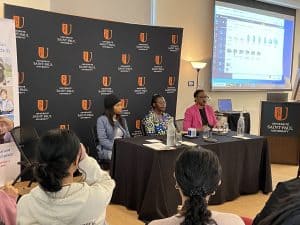
 

During a panel discussion, Noluthando Honono, Dr Lerona Lewis, and Dr Evelyn Mayanja encouraged students to use their education to serve others.

“Love thy neighbour means that it’s our responsibility to care for others and make sure that no one is excluded,” said Dr Lewis. She urged them to continue their studies and conduct their own research that can make a difference.

Dr Mayanja said that the green technology that is being touted as the answer to the climate crisis should not depend on the predatory exploitation of the resources of the Global South.

Honono discussed the importance of ensuring that access to education includes infrastructure development, education for children with diverse needs, and teacher training.


________________________________________
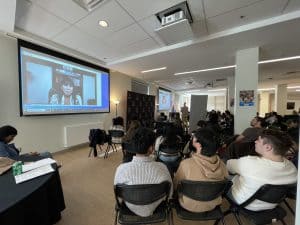
MP Leah Gazan (NDP, Winnipeg Centre) meets with youth participants via Zoom. Photo: T. Sison/CJI
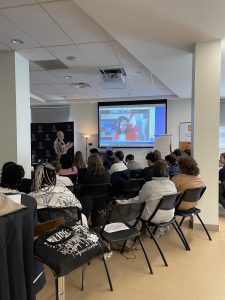
MP Heather McPherson (NDP, Edmonton Strathcona, meets with symposium participants via Zoom. Photo: T. Sison/CJI

MPs Leah Gazan (NDP, Winnipeg Centre; critic for women and gender equality) and Heather McPherson (NDP, Edmonton Strathcona; critic for foreign affairs and international development) met via Zoom with symposium participants.

Students asked about the progress of Bills 262 and 263, as well as Canada’s official development assistance as they relate to support for girls’ education.

McPherson, who tabled Bill 263, said she has seen firsthand the impact of Canadian mining in Nicaragua and found it “appalling” that people affected by it had no resource for justice.

Bill C-263 aims to give the Canadian Ombudsperson for Responsible Enterprise (CORE) the power to compel Canadian corporations to provide documents and testimonies in response to complaints about actions that violate human rights. Bill C-262 will require Canadian companies to exercise due diligence with respect to human and environmental rights throughout their global supply chains. As a member of the Canadian Network for Corporate Accountability, CJI has been advocating for the passage of these bills. Learn more here: https://www.canadianjesuitsinternational.ca/green-energy-transition-must-not-sacrifice-human-rights-says-jesuit-priest/

Gazan spoke about the impact of mining not just overseas but in Indigenous territories in Canada. She drew a connection between resource extraction and violence against Indigenous women.
Both McPherson and Gazan urged students to make their voices heard and to put pressure on the government to make good on its promise to pursue a feminist foreign policy agenda.


________________________________________
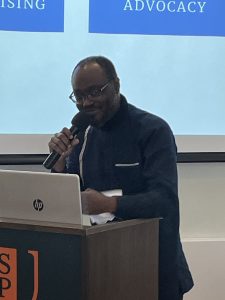


“What should I do? How can I use my privileges to change the world? What should I do for justice and equity? How can I fight for the rights of children in the Global South and the Global North?”

Fr William Tcheumtchoua Nzali, SJ, a Jesuit from Cameroon studying in Ottawa challenged  participants to reflect on what they have heard during the symposium by asking these questions.


________________________________________

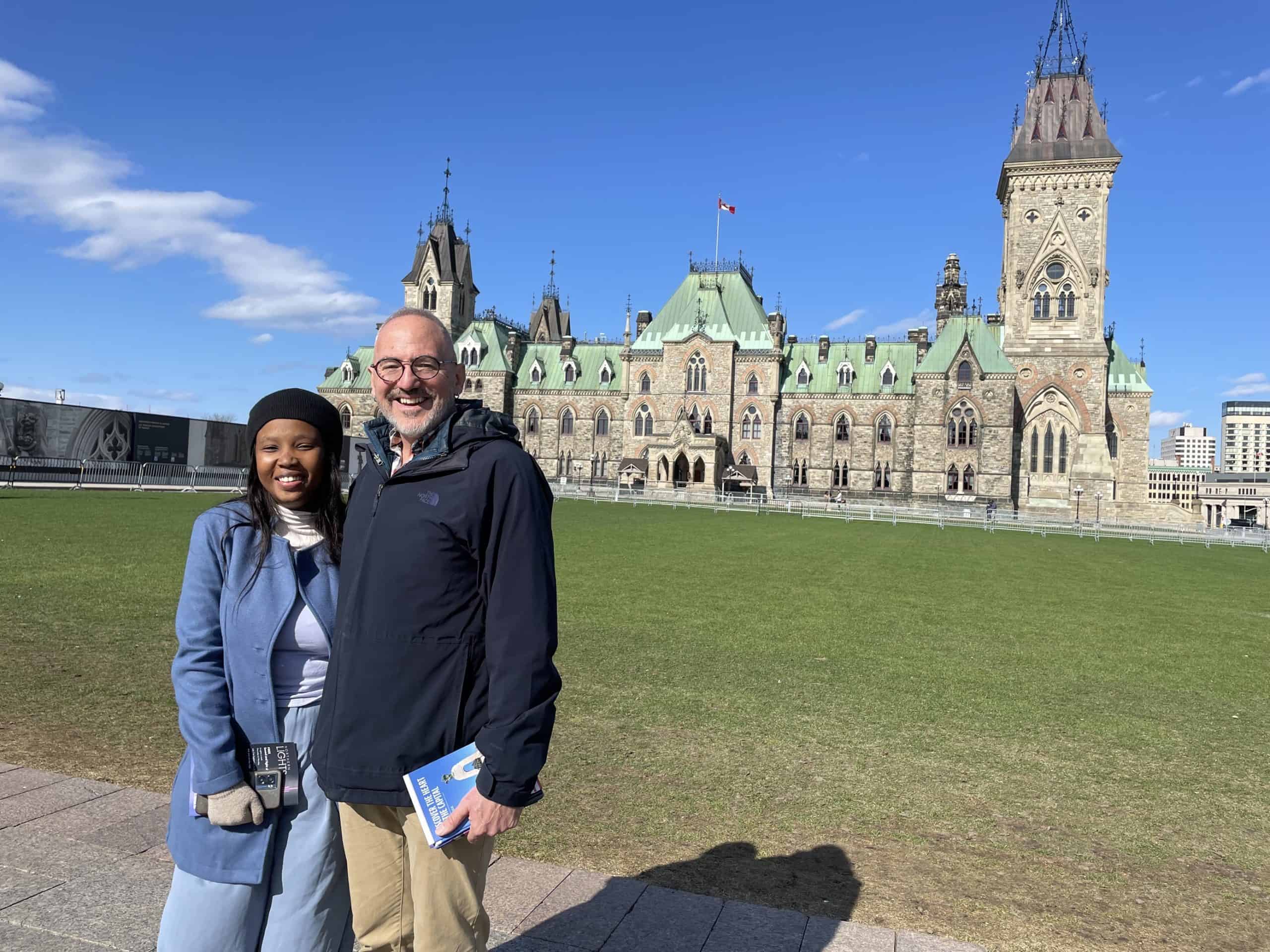
Youth for Others Advocacy Symposium participants visit Parliament Hill
Students from Loyola School, Montreal
Symposium keynote speaker Noluthando Honono and CJI Outreach Coordinator Pieter Niemeyer

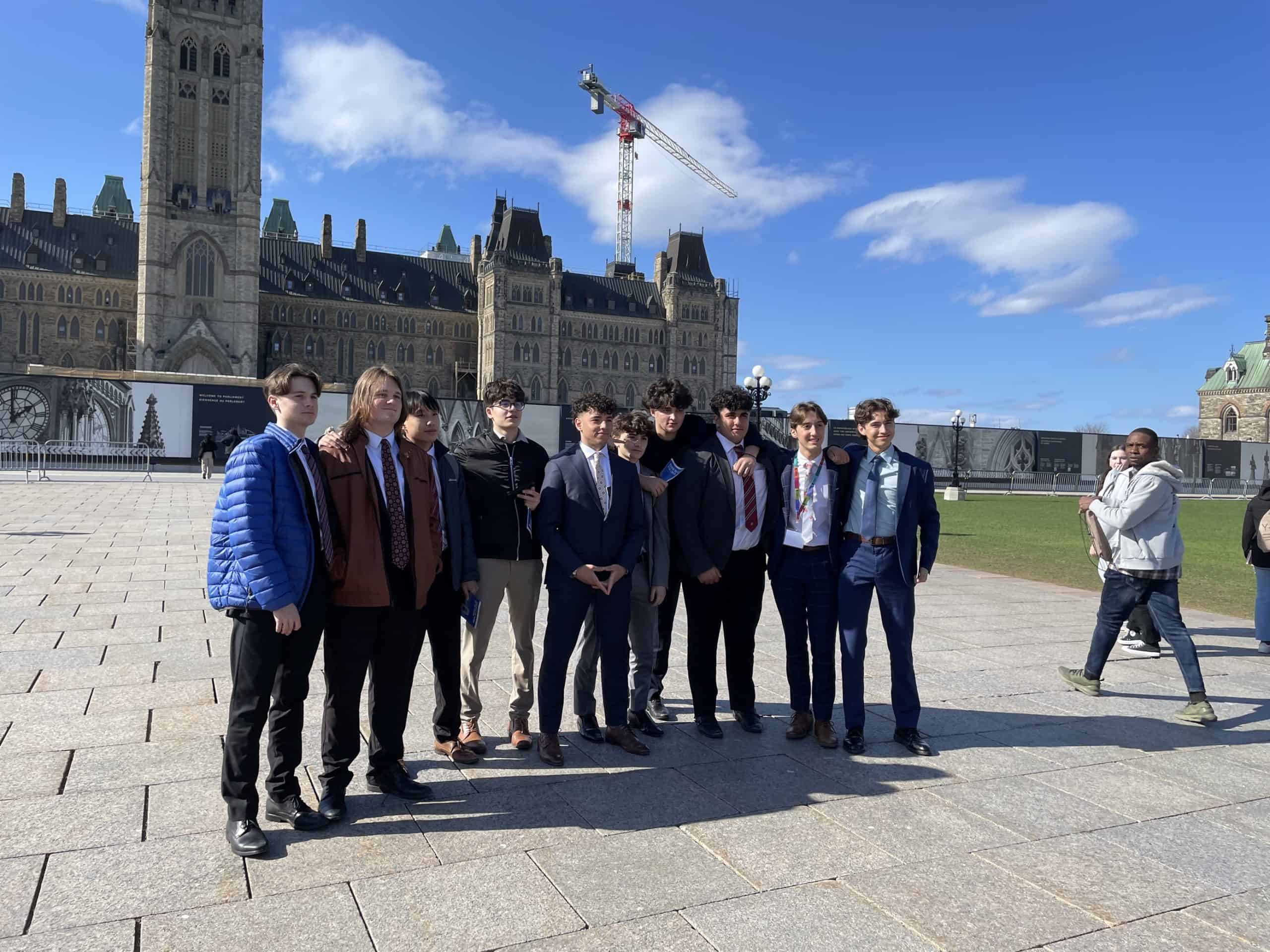
CJI Youth for Others Advocacy Symposium participants visited Parliament Hill.

Thanks to the office of MP Leah Gazan (NDP, Winnipeg Centre) for the warm welcome!

________________________________________
Noluthando Honono discusses the barriers to girls’ education at a CJI public event. Photo: Jenny Cafiso/CJI

At a public event during the symposium, Noluthando Honono dissected the impact of colonialism on girls and women in countries like South Africa. Colonialism “racialized people based on hue,” and it “gendered language,” she said. South Africans “didn’t really have he or she in our languages,” she said.

Colonialism developed a ranking system based on race, gender and class, with the White man at the top and the Black woman at the bottom, she said, noting that this system determined access to quality education and one’s ability to earn money.

Honono urged participants to “not be complacent in our privilege,” to “move away from the mindless rat race of capitalism,” and to create a world where education for all is “at the forefront of the vision of governments and decision-makers.”

Asked by a male student what role boys could play in promoting girls’ education, Honono said they should be part of advocacy efforts and could also help by creating safe spaces for girls, especially in co-ed schools.

Honono also urged students to “be realistic,” to think “less about the glitz and glamour” of advocacy and more about the “ability to find enough people to create change” within one’s space and to “build it from there.”

Author

  • CJI development
    CJI development
    View all posts
Tagged under: CJI, Ottawa, Youth Advocacy Symposium

Planned Giving

Photo: Fe y Alegría Peru

Bridging Borders

Subscribe to our newsletter!

Ways to give

  • Donate online
  • One-time donations
  • Monthly donations
  • Securities donations
  • Planned giving

@canadianjesuitsinternational

See you in Montreal!  Register now: Click link in bio.

#Montreal #environment #ecology
See you in Montreal!  Register now: Click link in bio.

#Montreal #environment #ecology
•
Follow
See you in Montreal! Register now: Click link in bio. #Montreal #environment #ecology
1 day ago
View on Instagram |
1/9
On the National Day for Truth and Reconciliation Day, September 30, Canadian Jesuits International (CJI) expresses its solidarity with Indigenous peoples in Canada and honours residential school survivors, their families, and the children who were never able to return home. 
CJI recognizes the devastating and inter-generational  impacts of Canada’s residential school system and reaffirms its commitment to truth and reconciliation. It also joins calls for the full implementation of the UN Declaration on the Rights of Indigenous Peoples in Canada. 
As an international social justice organization, CJI supports projects in the Global South that support Indigenous peoples protect their lands, preserve their languages and cultures, and affirms their human rights, including self-determination. CJI also supports Indigenous-led peacebuilding efforts, and Indigenous women's leadership in Latin America, among others. 
Its Jesuit partners include the AC Indigenous Rights Centre (CEDIAC) in Chiapas, Mexico, which promotes conflict resolution through Indigenous reconciliation systems. 
 
CJI recognizes that Indigenous peoples hold traditional ecological knowledge critical to environmental protection. The Jesuit-based Solidarity Network of the Indigenous Apostolate helps protect our common home and supports Indigenous women leaders defending ancestral territories and cultures throughout Latin America. 

Photo by Tandem X Visuals on Unsplash/ Stuffed toys and shoes are laid out on the steps of Saskatchewan's Legislative Building in Regina to remember residential schools children who never made it back home.
•
Follow
On the National Day for Truth and Reconciliation Day, September 30, Canadian Jesuits International (CJI) expresses its solidarity with Indigenous peoples in Canada and honours residential school survivors, their families, and the children who were never able to return home. CJI recognizes the devastating and inter-generational impacts of Canada’s residential school system and reaffirms its commitment to truth and reconciliation. It also joins calls for the full implementation of the UN Declaration on the Rights of Indigenous Peoples in Canada. As an international social justice organization, CJI supports projects in the Global South that support Indigenous peoples protect their lands, preserve their languages and cultures, and affirms their human rights, including self-determination. CJI also supports Indigenous-led peacebuilding efforts, and Indigenous women's leadership in Latin America, among others. Its Jesuit partners include the AC Indigenous Rights Centre (CEDIAC) in Chiapas, Mexico, which promotes conflict resolution through Indigenous reconciliation systems. CJI recognizes that Indigenous peoples hold traditional ecological knowledge critical to environmental protection. The Jesuit-based Solidarity Network of the Indigenous Apostolate helps protect our common home and supports Indigenous women leaders defending ancestral territories and cultures throughout Latin America. Photo by Tandem X Visuals on Unsplash/ Stuffed toys and shoes are laid out on the steps of Saskatchewan's Legislative Building in Regina to remember residential schools children who never made it back home.
2 days ago
View on Instagram |
2/9
Around 40 Indigenous young people from Chile, Brazil, Paraguay, Bolivia, Peru, Ecuador, Guatemala and Mexico concluded their regional gathering in Cusco with a resolve to “build on the foundations” established by their ancestors and to “forge new paths towards ‘Buen Vivir’ (Good Living) in order to nurture and protect their communities and territories. 

CJI Outreach Coordinator Juan Camilo Poveda attended the assembly, which was organized by CJI Jesuit partners Indigenous Solidarity and Apostolate Network (RSAI) of the Conference of Jesuit Provincials in Latin America and the Caribbean (CPAL) and the Pan-Amazonian Jesuit Service (SJPAM). 

During the meeting held September 21 to 25, young people identified issues affecting them and their communities, including racism, discrimination and sexual violence; the devastating impact of hydroelectric power stations and extractive industries; the loss of language and culture; a lack of opportunities, and the effects of social media and AI. 

However, they also identified “seeds and fruits” that offer hope. CLICK LINK IN BIO to read full story.
Around 40 Indigenous young people from Chile, Brazil, Paraguay, Bolivia, Peru, Ecuador, Guatemala and Mexico concluded their regional gathering in Cusco with a resolve to “build on the foundations” established by their ancestors and to “forge new paths towards ‘Buen Vivir’ (Good Living) in order to nurture and protect their communities and territories. 

CJI Outreach Coordinator Juan Camilo Poveda attended the assembly, which was organized by CJI Jesuit partners Indigenous Solidarity and Apostolate Network (RSAI) of the Conference of Jesuit Provincials in Latin America and the Caribbean (CPAL) and the Pan-Amazonian Jesuit Service (SJPAM). 

During the meeting held September 21 to 25, young people identified issues affecting them and their communities, including racism, discrimination and sexual violence; the devastating impact of hydroelectric power stations and extractive industries; the loss of language and culture; a lack of opportunities, and the effects of social media and AI. 

However, they also identified “seeds and fruits” that offer hope. CLICK LINK IN BIO to read full story.
Around 40 Indigenous young people from Chile, Brazil, Paraguay, Bolivia, Peru, Ecuador, Guatemala and Mexico concluded their regional gathering in Cusco with a resolve to “build on the foundations” established by their ancestors and to “forge new paths towards ‘Buen Vivir’ (Good Living) in order to nurture and protect their communities and territories. 

CJI Outreach Coordinator Juan Camilo Poveda attended the assembly, which was organized by CJI Jesuit partners Indigenous Solidarity and Apostolate Network (RSAI) of the Conference of Jesuit Provincials in Latin America and the Caribbean (CPAL) and the Pan-Amazonian Jesuit Service (SJPAM). 

During the meeting held September 21 to 25, young people identified issues affecting them and their communities, including racism, discrimination and sexual violence; the devastating impact of hydroelectric power stations and extractive industries; the loss of language and culture; a lack of opportunities, and the effects of social media and AI. 

However, they also identified “seeds and fruits” that offer hope. CLICK LINK IN BIO to read full story.
Around 40 Indigenous young people from Chile, Brazil, Paraguay, Bolivia, Peru, Ecuador, Guatemala and Mexico concluded their regional gathering in Cusco with a resolve to “build on the foundations” established by their ancestors and to “forge new paths towards ‘Buen Vivir’ (Good Living) in order to nurture and protect their communities and territories. 

CJI Outreach Coordinator Juan Camilo Poveda attended the assembly, which was organized by CJI Jesuit partners Indigenous Solidarity and Apostolate Network (RSAI) of the Conference of Jesuit Provincials in Latin America and the Caribbean (CPAL) and the Pan-Amazonian Jesuit Service (SJPAM). 

During the meeting held September 21 to 25, young people identified issues affecting them and their communities, including racism, discrimination and sexual violence; the devastating impact of hydroelectric power stations and extractive industries; the loss of language and culture; a lack of opportunities, and the effects of social media and AI. 

However, they also identified “seeds and fruits” that offer hope. CLICK LINK IN BIO to read full story.
Around 40 Indigenous young people from Chile, Brazil, Paraguay, Bolivia, Peru, Ecuador, Guatemala and Mexico concluded their regional gathering in Cusco with a resolve to “build on the foundations” established by their ancestors and to “forge new paths towards ‘Buen Vivir’ (Good Living) in order to nurture and protect their communities and territories. 

CJI Outreach Coordinator Juan Camilo Poveda attended the assembly, which was organized by CJI Jesuit partners Indigenous Solidarity and Apostolate Network (RSAI) of the Conference of Jesuit Provincials in Latin America and the Caribbean (CPAL) and the Pan-Amazonian Jesuit Service (SJPAM). 

During the meeting held September 21 to 25, young people identified issues affecting them and their communities, including racism, discrimination and sexual violence; the devastating impact of hydroelectric power stations and extractive industries; the loss of language and culture; a lack of opportunities, and the effects of social media and AI. 

However, they also identified “seeds and fruits” that offer hope. CLICK LINK IN BIO to read full story.
Around 40 Indigenous young people from Chile, Brazil, Paraguay, Bolivia, Peru, Ecuador, Guatemala and Mexico concluded their regional gathering in Cusco with a resolve to “build on the foundations” established by their ancestors and to “forge new paths towards ‘Buen Vivir’ (Good Living) in order to nurture and protect their communities and territories. 

CJI Outreach Coordinator Juan Camilo Poveda attended the assembly, which was organized by CJI Jesuit partners Indigenous Solidarity and Apostolate Network (RSAI) of the Conference of Jesuit Provincials in Latin America and the Caribbean (CPAL) and the Pan-Amazonian Jesuit Service (SJPAM). 

During the meeting held September 21 to 25, young people identified issues affecting them and their communities, including racism, discrimination and sexual violence; the devastating impact of hydroelectric power stations and extractive industries; the loss of language and culture; a lack of opportunities, and the effects of social media and AI. 

However, they also identified “seeds and fruits” that offer hope. CLICK LINK IN BIO to read full story.
Around 40 Indigenous young people from Chile, Brazil, Paraguay, Bolivia, Peru, Ecuador, Guatemala and Mexico concluded their regional gathering in Cusco with a resolve to “build on the foundations” established by their ancestors and to “forge new paths towards ‘Buen Vivir’ (Good Living) in order to nurture and protect their communities and territories. 

CJI Outreach Coordinator Juan Camilo Poveda attended the assembly, which was organized by CJI Jesuit partners Indigenous Solidarity and Apostolate Network (RSAI) of the Conference of Jesuit Provincials in Latin America and the Caribbean (CPAL) and the Pan-Amazonian Jesuit Service (SJPAM). 

During the meeting held September 21 to 25, young people identified issues affecting them and their communities, including racism, discrimination and sexual violence; the devastating impact of hydroelectric power stations and extractive industries; the loss of language and culture; a lack of opportunities, and the effects of social media and AI. 

However, they also identified “seeds and fruits” that offer hope. CLICK LINK IN BIO to read full story.
Around 40 Indigenous young people from Chile, Brazil, Paraguay, Bolivia, Peru, Ecuador, Guatemala and Mexico concluded their regional gathering in Cusco with a resolve to “build on the foundations” established by their ancestors and to “forge new paths towards ‘Buen Vivir’ (Good Living) in order to nurture and protect their communities and territories. 

CJI Outreach Coordinator Juan Camilo Poveda attended the assembly, which was organized by CJI Jesuit partners Indigenous Solidarity and Apostolate Network (RSAI) of the Conference of Jesuit Provincials in Latin America and the Caribbean (CPAL) and the Pan-Amazonian Jesuit Service (SJPAM). 

During the meeting held September 21 to 25, young people identified issues affecting them and their communities, including racism, discrimination and sexual violence; the devastating impact of hydroelectric power stations and extractive industries; the loss of language and culture; a lack of opportunities, and the effects of social media and AI. 

However, they also identified “seeds and fruits” that offer hope. CLICK LINK IN BIO to read full story.
Around 40 Indigenous young people from Chile, Brazil, Paraguay, Bolivia, Peru, Ecuador, Guatemala and Mexico concluded their regional gathering in Cusco with a resolve to “build on the foundations” established by their ancestors and to “forge new paths towards ‘Buen Vivir’ (Good Living) in order to nurture and protect their communities and territories. 

CJI Outreach Coordinator Juan Camilo Poveda attended the assembly, which was organized by CJI Jesuit partners Indigenous Solidarity and Apostolate Network (RSAI) of the Conference of Jesuit Provincials in Latin America and the Caribbean (CPAL) and the Pan-Amazonian Jesuit Service (SJPAM). 

During the meeting held September 21 to 25, young people identified issues affecting them and their communities, including racism, discrimination and sexual violence; the devastating impact of hydroelectric power stations and extractive industries; the loss of language and culture; a lack of opportunities, and the effects of social media and AI. 

However, they also identified “seeds and fruits” that offer hope. CLICK LINK IN BIO to read full story.
Around 40 Indigenous young people from Chile, Brazil, Paraguay, Bolivia, Peru, Ecuador, Guatemala and Mexico concluded their regional gathering in Cusco with a resolve to “build on the foundations” established by their ancestors and to “forge new paths towards ‘Buen Vivir’ (Good Living) in order to nurture and protect their communities and territories. 

CJI Outreach Coordinator Juan Camilo Poveda attended the assembly, which was organized by CJI Jesuit partners Indigenous Solidarity and Apostolate Network (RSAI) of the Conference of Jesuit Provincials in Latin America and the Caribbean (CPAL) and the Pan-Amazonian Jesuit Service (SJPAM). 

During the meeting held September 21 to 25, young people identified issues affecting them and their communities, including racism, discrimination and sexual violence; the devastating impact of hydroelectric power stations and extractive industries; the loss of language and culture; a lack of opportunities, and the effects of social media and AI. 

However, they also identified “seeds and fruits” that offer hope. CLICK LINK IN BIO to read full story.
•
Follow
Around 40 Indigenous young people from Chile, Brazil, Paraguay, Bolivia, Peru, Ecuador, Guatemala and Mexico concluded their regional gathering in Cusco with a resolve to “build on the foundations” established by their ancestors and to “forge new paths towards ‘Buen Vivir’ (Good Living) in order to nurture and protect their communities and territories. CJI Outreach Coordinator Juan Camilo Poveda attended the assembly, which was organized by CJI Jesuit partners Indigenous Solidarity and Apostolate Network (RSAI) of the Conference of Jesuit Provincials in Latin America and the Caribbean (CPAL) and the Pan-Amazonian Jesuit Service (SJPAM). During the meeting held September 21 to 25, young people identified issues affecting them and their communities, including racism, discrimination and sexual violence; the devastating impact of hydroelectric power stations and extractive industries; the loss of language and culture; a lack of opportunities, and the effects of social media and AI. However, they also identified “seeds and fruits” that offer hope. CLICK LINK IN BIO to read full story.
3 days ago
View on Instagram |
3/9
On the International Day for Universal Access to Information, September 28, Canadian Jesuits International (CJI) stands behind the right of everyone to seek, receive and provide timely and accurate information that will enable them to participate fully in society. 
CJI highlights the role that ERIC-Radio Progreso, its Jesuit partner in Honduras, plays in empowering rural poor communities through research, reflection, and communication. ERIC-Radio Progreso’s slogan is “the voice that is with you.” It means being a voice “that does not replace the voice of the community, or of the people, but rather makes that voice be heard, and allows itself to be challenged,” said Fr. German Rosa, SJ, its director. 
ERIC-Radio Progreso has been a rare, independent voice for the poor and marginalized in Honduras, where powerful and vested interests control the media. It has helped educate Hondurans about their human rights and exposed corruption, electoral fraud, environmental threats, narco-trafficking, and militarization. 
As the result of their work, some staff have suffered grave consequences in the form of death threats; others have paid with their lives for their commitment to truth and democracy.
This year’s theme is “Universal Information Integrity in the Digital Age: The role of access to information in addressing information disorder.” It focuses on “how access to reliable official information, proactive disclosure, media and information literacy, credible data and digital technologies can contribute to a healthier information environment.” 
This day also recognizes the importance of freedom of the press and the critical role that credible news media play in informing the public about issues that affect them, their communities, and the larger world they live in.
•
Follow
On the International Day for Universal Access to Information, September 28, Canadian Jesuits International (CJI) stands behind the right of everyone to seek, receive and provide timely and accurate information that will enable them to participate fully in society. CJI highlights the role that ERIC-Radio Progreso, its Jesuit partner in Honduras, plays in empowering rural poor communities through research, reflection, and communication. ERIC-Radio Progreso’s slogan is “the voice that is with you.” It means being a voice “that does not replace the voice of the community, or of the people, but rather makes that voice be heard, and allows itself to be challenged,” said Fr. German Rosa, SJ, its director. ERIC-Radio Progreso has been a rare, independent voice for the poor and marginalized in Honduras, where powerful and vested interests control the media. It has helped educate Hondurans about their human rights and exposed corruption, electoral fraud, environmental threats, narco-trafficking, and militarization. As the result of their work, some staff have suffered grave consequences in the form of death threats; others have paid with their lives for their commitment to truth and democracy. This year’s theme is “Universal Information Integrity in the Digital Age: The role of access to information in addressing information disorder.” It focuses on “how access to reliable official information, proactive disclosure, media and information literacy, credible data and digital technologies can contribute to a healthier information environment.” This day also recognizes the importance of freedom of the press and the critical role that credible news media play in informing the public about issues that affect them, their communities, and the larger world they live in.
4 days ago
View on Instagram |
4/9
CJI Outreach Coordinator Juan Camilo Poveda captured some moments at the Regional Meeting of Young People from Indigenous Peoples of Latin America being held in Andahuaylillas, Cusco, Peru: 
We spent the day outside getting to know the territory that is welcoming us and learning about the rich history of the Incas and contemporary Quechua people. We visited some sacred historic sites like Chinchero and Pisaq.
I spent a lot of time with the group on the bus, listening to their stories. One young person from Ecuador said that he hadn’t realized there were Indigenous peoples outside his own country before coming to the gathering. There were lots of fun games.
I am learning a lot from the Brazilian delegation, with whom I am spending a lot of time talking and translating.
CJI Outreach Coordinator Juan Camilo Poveda captured some moments at the Regional Meeting of Young People from Indigenous Peoples of Latin America being held in Andahuaylillas, Cusco, Peru: 
We spent the day outside getting to know the territory that is welcoming us and learning about the rich history of the Incas and contemporary Quechua people. We visited some sacred historic sites like Chinchero and Pisaq.
I spent a lot of time with the group on the bus, listening to their stories. One young person from Ecuador said that he hadn’t realized there were Indigenous peoples outside his own country before coming to the gathering. There were lots of fun games.
I am learning a lot from the Brazilian delegation, with whom I am spending a lot of time talking and translating.
CJI Outreach Coordinator Juan Camilo Poveda captured some moments at the Regional Meeting of Young People from Indigenous Peoples of Latin America being held in Andahuaylillas, Cusco, Peru: 
We spent the day outside getting to know the territory that is welcoming us and learning about the rich history of the Incas and contemporary Quechua people. We visited some sacred historic sites like Chinchero and Pisaq.
I spent a lot of time with the group on the bus, listening to their stories. One young person from Ecuador said that he hadn’t realized there were Indigenous peoples outside his own country before coming to the gathering. There were lots of fun games.
I am learning a lot from the Brazilian delegation, with whom I am spending a lot of time talking and translating.
CJI Outreach Coordinator Juan Camilo Poveda captured some moments at the Regional Meeting of Young People from Indigenous Peoples of Latin America being held in Andahuaylillas, Cusco, Peru: 
We spent the day outside getting to know the territory that is welcoming us and learning about the rich history of the Incas and contemporary Quechua people. We visited some sacred historic sites like Chinchero and Pisaq.
I spent a lot of time with the group on the bus, listening to their stories. One young person from Ecuador said that he hadn’t realized there were Indigenous peoples outside his own country before coming to the gathering. There were lots of fun games.
I am learning a lot from the Brazilian delegation, with whom I am spending a lot of time talking and translating.
CJI Outreach Coordinator Juan Camilo Poveda captured some moments at the Regional Meeting of Young People from Indigenous Peoples of Latin America being held in Andahuaylillas, Cusco, Peru: 
We spent the day outside getting to know the territory that is welcoming us and learning about the rich history of the Incas and contemporary Quechua people. We visited some sacred historic sites like Chinchero and Pisaq.
I spent a lot of time with the group on the bus, listening to their stories. One young person from Ecuador said that he hadn’t realized there were Indigenous peoples outside his own country before coming to the gathering. There were lots of fun games.
I am learning a lot from the Brazilian delegation, with whom I am spending a lot of time talking and translating.
CJI Outreach Coordinator Juan Camilo Poveda captured some moments at the Regional Meeting of Young People from Indigenous Peoples of Latin America being held in Andahuaylillas, Cusco, Peru: 
We spent the day outside getting to know the territory that is welcoming us and learning about the rich history of the Incas and contemporary Quechua people. We visited some sacred historic sites like Chinchero and Pisaq.
I spent a lot of time with the group on the bus, listening to their stories. One young person from Ecuador said that he hadn’t realized there were Indigenous peoples outside his own country before coming to the gathering. There were lots of fun games.
I am learning a lot from the Brazilian delegation, with whom I am spending a lot of time talking and translating.
CJI Outreach Coordinator Juan Camilo Poveda captured some moments at the Regional Meeting of Young People from Indigenous Peoples of Latin America being held in Andahuaylillas, Cusco, Peru: 
We spent the day outside getting to know the territory that is welcoming us and learning about the rich history of the Incas and contemporary Quechua people. We visited some sacred historic sites like Chinchero and Pisaq.
I spent a lot of time with the group on the bus, listening to their stories. One young person from Ecuador said that he hadn’t realized there were Indigenous peoples outside his own country before coming to the gathering. There were lots of fun games.
I am learning a lot from the Brazilian delegation, with whom I am spending a lot of time talking and translating.
CJI Outreach Coordinator Juan Camilo Poveda captured some moments at the Regional Meeting of Young People from Indigenous Peoples of Latin America being held in Andahuaylillas, Cusco, Peru: 
We spent the day outside getting to know the territory that is welcoming us and learning about the rich history of the Incas and contemporary Quechua people. We visited some sacred historic sites like Chinchero and Pisaq.
I spent a lot of time with the group on the bus, listening to their stories. One young person from Ecuador said that he hadn’t realized there were Indigenous peoples outside his own country before coming to the gathering. There were lots of fun games.
I am learning a lot from the Brazilian delegation, with whom I am spending a lot of time talking and translating.
CJI Outreach Coordinator Juan Camilo Poveda captured some moments at the Regional Meeting of Young People from Indigenous Peoples of Latin America being held in Andahuaylillas, Cusco, Peru: 
We spent the day outside getting to know the territory that is welcoming us and learning about the rich history of the Incas and contemporary Quechua people. We visited some sacred historic sites like Chinchero and Pisaq.
I spent a lot of time with the group on the bus, listening to their stories. One young person from Ecuador said that he hadn’t realized there were Indigenous peoples outside his own country before coming to the gathering. There were lots of fun games.
I am learning a lot from the Brazilian delegation, with whom I am spending a lot of time talking and translating.
•
Follow
CJI Outreach Coordinator Juan Camilo Poveda captured some moments at the Regional Meeting of Young People from Indigenous Peoples of Latin America being held in Andahuaylillas, Cusco, Peru: We spent the day outside getting to know the territory that is welcoming us and learning about the rich history of the Incas and contemporary Quechua people. We visited some sacred historic sites like Chinchero and Pisaq. I spent a lot of time with the group on the bus, listening to their stories. One young person from Ecuador said that he hadn’t realized there were Indigenous peoples outside his own country before coming to the gathering. There were lots of fun games. I am learning a lot from the Brazilian delegation, with whom I am spending a lot of time talking and translating.
1 week ago
View on Instagram |
5/9
CJI Outreach Coordinator Juan Camilo Poveda shared the following account of his second day at the Regional Meeting of Young People from Indigenous Peoples of Latin America being held in Cusco, Peru: 

“The day started with a ritual led by the Guatemalan delegation, a Mayan Altar. 
The regional groups presented their group work from Monday - the challenges they experience but also the sources of strength; namely knowing their territories, languages and traditions.
There were two more rounds of group work.
The first was on a theme of “choice of vital importance.” Most groups chose to talk about defence of the territory; others discussed youth participation. Each group discussed what elders, adults, and young people say about their chosen themes, and what practices and values have empowered communities through generations. The groups also talked about the changes they have witnessed in their territories and how they have been affected by them. 
The second round invited groups to talk about a broader range of issues and asked for their input on ways their communities are addressing them and what still needs to be done. 
We closed the day of work with a Mayan prayer. 
We then had a cultural night, an “Abya Yala’s Got Talent” session, where people shared their talents, dances and songs.”
CJI Outreach Coordinator Juan Camilo Poveda shared the following account of his second day at the Regional Meeting of Young People from Indigenous Peoples of Latin America being held in Cusco, Peru: 

“The day started with a ritual led by the Guatemalan delegation, a Mayan Altar. 
The regional groups presented their group work from Monday - the challenges they experience but also the sources of strength; namely knowing their territories, languages and traditions.
There were two more rounds of group work.
The first was on a theme of “choice of vital importance.” Most groups chose to talk about defence of the territory; others discussed youth participation. Each group discussed what elders, adults, and young people say about their chosen themes, and what practices and values have empowered communities through generations. The groups also talked about the changes they have witnessed in their territories and how they have been affected by them. 
The second round invited groups to talk about a broader range of issues and asked for their input on ways their communities are addressing them and what still needs to be done. 
We closed the day of work with a Mayan prayer. 
We then had a cultural night, an “Abya Yala’s Got Talent” session, where people shared their talents, dances and songs.”
CJI Outreach Coordinator Juan Camilo Poveda shared the following account of his second day at the Regional Meeting of Young People from Indigenous Peoples of Latin America being held in Cusco, Peru: 

“The day started with a ritual led by the Guatemalan delegation, a Mayan Altar. 
The regional groups presented their group work from Monday - the challenges they experience but also the sources of strength; namely knowing their territories, languages and traditions.
There were two more rounds of group work.
The first was on a theme of “choice of vital importance.” Most groups chose to talk about defence of the territory; others discussed youth participation. Each group discussed what elders, adults, and young people say about their chosen themes, and what practices and values have empowered communities through generations. The groups also talked about the changes they have witnessed in their territories and how they have been affected by them. 
The second round invited groups to talk about a broader range of issues and asked for their input on ways their communities are addressing them and what still needs to be done. 
We closed the day of work with a Mayan prayer. 
We then had a cultural night, an “Abya Yala’s Got Talent” session, where people shared their talents, dances and songs.”
CJI Outreach Coordinator Juan Camilo Poveda shared the following account of his second day at the Regional Meeting of Young People from Indigenous Peoples of Latin America being held in Cusco, Peru: 

“The day started with a ritual led by the Guatemalan delegation, a Mayan Altar. 
The regional groups presented their group work from Monday - the challenges they experience but also the sources of strength; namely knowing their territories, languages and traditions.
There were two more rounds of group work.
The first was on a theme of “choice of vital importance.” Most groups chose to talk about defence of the territory; others discussed youth participation. Each group discussed what elders, adults, and young people say about their chosen themes, and what practices and values have empowered communities through generations. The groups also talked about the changes they have witnessed in their territories and how they have been affected by them. 
The second round invited groups to talk about a broader range of issues and asked for their input on ways their communities are addressing them and what still needs to be done. 
We closed the day of work with a Mayan prayer. 
We then had a cultural night, an “Abya Yala’s Got Talent” session, where people shared their talents, dances and songs.”
CJI Outreach Coordinator Juan Camilo Poveda shared the following account of his second day at the Regional Meeting of Young People from Indigenous Peoples of Latin America being held in Cusco, Peru: 

“The day started with a ritual led by the Guatemalan delegation, a Mayan Altar. 
The regional groups presented their group work from Monday - the challenges they experience but also the sources of strength; namely knowing their territories, languages and traditions.
There were two more rounds of group work.
The first was on a theme of “choice of vital importance.” Most groups chose to talk about defence of the territory; others discussed youth participation. Each group discussed what elders, adults, and young people say about their chosen themes, and what practices and values have empowered communities through generations. The groups also talked about the changes they have witnessed in their territories and how they have been affected by them. 
The second round invited groups to talk about a broader range of issues and asked for their input on ways their communities are addressing them and what still needs to be done. 
We closed the day of work with a Mayan prayer. 
We then had a cultural night, an “Abya Yala’s Got Talent” session, where people shared their talents, dances and songs.”
CJI Outreach Coordinator Juan Camilo Poveda shared the following account of his second day at the Regional Meeting of Young People from Indigenous Peoples of Latin America being held in Cusco, Peru: 

“The day started with a ritual led by the Guatemalan delegation, a Mayan Altar. 
The regional groups presented their group work from Monday - the challenges they experience but also the sources of strength; namely knowing their territories, languages and traditions.
There were two more rounds of group work.
The first was on a theme of “choice of vital importance.” Most groups chose to talk about defence of the territory; others discussed youth participation. Each group discussed what elders, adults, and young people say about their chosen themes, and what practices and values have empowered communities through generations. The groups also talked about the changes they have witnessed in their territories and how they have been affected by them. 
The second round invited groups to talk about a broader range of issues and asked for their input on ways their communities are addressing them and what still needs to be done. 
We closed the day of work with a Mayan prayer. 
We then had a cultural night, an “Abya Yala’s Got Talent” session, where people shared their talents, dances and songs.”
CJI Outreach Coordinator Juan Camilo Poveda shared the following account of his second day at the Regional Meeting of Young People from Indigenous Peoples of Latin America being held in Cusco, Peru: 

“The day started with a ritual led by the Guatemalan delegation, a Mayan Altar. 
The regional groups presented their group work from Monday - the challenges they experience but also the sources of strength; namely knowing their territories, languages and traditions.
There were two more rounds of group work.
The first was on a theme of “choice of vital importance.” Most groups chose to talk about defence of the territory; others discussed youth participation. Each group discussed what elders, adults, and young people say about their chosen themes, and what practices and values have empowered communities through generations. The groups also talked about the changes they have witnessed in their territories and how they have been affected by them. 
The second round invited groups to talk about a broader range of issues and asked for their input on ways their communities are addressing them and what still needs to be done. 
We closed the day of work with a Mayan prayer. 
We then had a cultural night, an “Abya Yala’s Got Talent” session, where people shared their talents, dances and songs.”
CJI Outreach Coordinator Juan Camilo Poveda shared the following account of his second day at the Regional Meeting of Young People from Indigenous Peoples of Latin America being held in Cusco, Peru: 

“The day started with a ritual led by the Guatemalan delegation, a Mayan Altar. 
The regional groups presented their group work from Monday - the challenges they experience but also the sources of strength; namely knowing their territories, languages and traditions.
There were two more rounds of group work.
The first was on a theme of “choice of vital importance.” Most groups chose to talk about defence of the territory; others discussed youth participation. Each group discussed what elders, adults, and young people say about their chosen themes, and what practices and values have empowered communities through generations. The groups also talked about the changes they have witnessed in their territories and how they have been affected by them. 
The second round invited groups to talk about a broader range of issues and asked for their input on ways their communities are addressing them and what still needs to be done. 
We closed the day of work with a Mayan prayer. 
We then had a cultural night, an “Abya Yala’s Got Talent” session, where people shared their talents, dances and songs.”
CJI Outreach Coordinator Juan Camilo Poveda shared the following account of his second day at the Regional Meeting of Young People from Indigenous Peoples of Latin America being held in Cusco, Peru: 

“The day started with a ritual led by the Guatemalan delegation, a Mayan Altar. 
The regional groups presented their group work from Monday - the challenges they experience but also the sources of strength; namely knowing their territories, languages and traditions.
There were two more rounds of group work.
The first was on a theme of “choice of vital importance.” Most groups chose to talk about defence of the territory; others discussed youth participation. Each group discussed what elders, adults, and young people say about their chosen themes, and what practices and values have empowered communities through generations. The groups also talked about the changes they have witnessed in their territories and how they have been affected by them. 
The second round invited groups to talk about a broader range of issues and asked for their input on ways their communities are addressing them and what still needs to be done. 
We closed the day of work with a Mayan prayer. 
We then had a cultural night, an “Abya Yala’s Got Talent” session, where people shared their talents, dances and songs.”
CJI Outreach Coordinator Juan Camilo Poveda shared the following account of his second day at the Regional Meeting of Young People from Indigenous Peoples of Latin America being held in Cusco, Peru: 

“The day started with a ritual led by the Guatemalan delegation, a Mayan Altar. 
The regional groups presented their group work from Monday - the challenges they experience but also the sources of strength; namely knowing their territories, languages and traditions.
There were two more rounds of group work.
The first was on a theme of “choice of vital importance.” Most groups chose to talk about defence of the territory; others discussed youth participation. Each group discussed what elders, adults, and young people say about their chosen themes, and what practices and values have empowered communities through generations. The groups also talked about the changes they have witnessed in their territories and how they have been affected by them. 
The second round invited groups to talk about a broader range of issues and asked for their input on ways their communities are addressing them and what still needs to be done. 
We closed the day of work with a Mayan prayer. 
We then had a cultural night, an “Abya Yala’s Got Talent” session, where people shared their talents, dances and songs.”
•
Follow
CJI Outreach Coordinator Juan Camilo Poveda shared the following account of his second day at the Regional Meeting of Young People from Indigenous Peoples of Latin America being held in Cusco, Peru: “The day started with a ritual led by the Guatemalan delegation, a Mayan Altar. The regional groups presented their group work from Monday - the challenges they experience but also the sources of strength; namely knowing their territories, languages and traditions. There were two more rounds of group work. The first was on a theme of “choice of vital importance.” Most groups chose to talk about defence of the territory; others discussed youth participation. Each group discussed what elders, adults, and young people say about their chosen themes, and what practices and values have empowered communities through generations. The groups also talked about the changes they have witnessed in their territories and how they have been affected by them. The second round invited groups to talk about a broader range of issues and asked for their input on ways their communities are addressing them and what still needs to be done. We closed the day of work with a Mayan prayer. We then had a cultural night, an “Abya Yala’s Got Talent” session, where people shared their talents, dances and songs.”
1 week ago
View on Instagram |
6/9
Last weekend, CJI Executive Director Jenny Cafiso and International Programs Coordinator Juan Emilio Hernandez crossed the border from Haiti into the Dominican Republic, where they were warmly welcomed by Fr. Osvaldo Concepción, SJ, director of Centro Montalvo, a Jesuit-led organization and CJI partner. 
In La Rosa, in the municipality of Restauración, they met Marimenda—a migrant leader supporting women’s and farmers’ groups, as well as a community greenhouse. She is also defending her territory against the proposed Neita mining project, linked to Canadian company. Community advocates warn that mining in this border region could threaten shared water systems, including the Artibonite River, with serious environmental, social, and public-health consequences. 
Jenny and Juan also visited a community living with the devastating impacts of mining waste. Residents described losing access to safe drinking water and facing harm to their health, animals, and land contamination. Their struggle, ongoing since 2011, remains a powerful example of community resistance against extractive industries.
They ended their visit to the Dominican Republic by meeting with the team at Centro Montalvo, whose work advances social justice, human rights, migration advocacy, environmental action, youth leadership, and community-based research. CJI is supporting a Centro Montalvo project, Climate Justice: Community Action Against Extractivism. 

Learn more about Centro Montalvo: Click link in bio.
Last weekend, CJI Executive Director Jenny Cafiso and International Programs Coordinator Juan Emilio Hernandez crossed the border from Haiti into the Dominican Republic, where they were warmly welcomed by Fr. Osvaldo Concepción, SJ, director of Centro Montalvo, a Jesuit-led organization and CJI partner. 
In La Rosa, in the municipality of Restauración, they met Marimenda—a migrant leader supporting women’s and farmers’ groups, as well as a community greenhouse. She is also defending her territory against the proposed Neita mining project, linked to Canadian company. Community advocates warn that mining in this border region could threaten shared water systems, including the Artibonite River, with serious environmental, social, and public-health consequences. 
Jenny and Juan also visited a community living with the devastating impacts of mining waste. Residents described losing access to safe drinking water and facing harm to their health, animals, and land contamination. Their struggle, ongoing since 2011, remains a powerful example of community resistance against extractive industries.
They ended their visit to the Dominican Republic by meeting with the team at Centro Montalvo, whose work advances social justice, human rights, migration advocacy, environmental action, youth leadership, and community-based research. CJI is supporting a Centro Montalvo project, Climate Justice: Community Action Against Extractivism. 

Learn more about Centro Montalvo: Click link in bio.
Last weekend, CJI Executive Director Jenny Cafiso and International Programs Coordinator Juan Emilio Hernandez crossed the border from Haiti into the Dominican Republic, where they were warmly welcomed by Fr. Osvaldo Concepción, SJ, director of Centro Montalvo, a Jesuit-led organization and CJI partner. 
In La Rosa, in the municipality of Restauración, they met Marimenda—a migrant leader supporting women’s and farmers’ groups, as well as a community greenhouse. She is also defending her territory against the proposed Neita mining project, linked to Canadian company. Community advocates warn that mining in this border region could threaten shared water systems, including the Artibonite River, with serious environmental, social, and public-health consequences. 
Jenny and Juan also visited a community living with the devastating impacts of mining waste. Residents described losing access to safe drinking water and facing harm to their health, animals, and land contamination. Their struggle, ongoing since 2011, remains a powerful example of community resistance against extractive industries.
They ended their visit to the Dominican Republic by meeting with the team at Centro Montalvo, whose work advances social justice, human rights, migration advocacy, environmental action, youth leadership, and community-based research. CJI is supporting a Centro Montalvo project, Climate Justice: Community Action Against Extractivism. 

Learn more about Centro Montalvo: Click link in bio.
Last weekend, CJI Executive Director Jenny Cafiso and International Programs Coordinator Juan Emilio Hernandez crossed the border from Haiti into the Dominican Republic, where they were warmly welcomed by Fr. Osvaldo Concepción, SJ, director of Centro Montalvo, a Jesuit-led organization and CJI partner. 
In La Rosa, in the municipality of Restauración, they met Marimenda—a migrant leader supporting women’s and farmers’ groups, as well as a community greenhouse. She is also defending her territory against the proposed Neita mining project, linked to Canadian company. Community advocates warn that mining in this border region could threaten shared water systems, including the Artibonite River, with serious environmental, social, and public-health consequences. 
Jenny and Juan also visited a community living with the devastating impacts of mining waste. Residents described losing access to safe drinking water and facing harm to their health, animals, and land contamination. Their struggle, ongoing since 2011, remains a powerful example of community resistance against extractive industries.
They ended their visit to the Dominican Republic by meeting with the team at Centro Montalvo, whose work advances social justice, human rights, migration advocacy, environmental action, youth leadership, and community-based research. CJI is supporting a Centro Montalvo project, Climate Justice: Community Action Against Extractivism. 

Learn more about Centro Montalvo: Click link in bio.
Last weekend, CJI Executive Director Jenny Cafiso and International Programs Coordinator Juan Emilio Hernandez crossed the border from Haiti into the Dominican Republic, where they were warmly welcomed by Fr. Osvaldo Concepción, SJ, director of Centro Montalvo, a Jesuit-led organization and CJI partner. 
In La Rosa, in the municipality of Restauración, they met Marimenda—a migrant leader supporting women’s and farmers’ groups, as well as a community greenhouse. She is also defending her territory against the proposed Neita mining project, linked to Canadian company. Community advocates warn that mining in this border region could threaten shared water systems, including the Artibonite River, with serious environmental, social, and public-health consequences. 
Jenny and Juan also visited a community living with the devastating impacts of mining waste. Residents described losing access to safe drinking water and facing harm to their health, animals, and land contamination. Their struggle, ongoing since 2011, remains a powerful example of community resistance against extractive industries.
They ended their visit to the Dominican Republic by meeting with the team at Centro Montalvo, whose work advances social justice, human rights, migration advocacy, environmental action, youth leadership, and community-based research. CJI is supporting a Centro Montalvo project, Climate Justice: Community Action Against Extractivism. 

Learn more about Centro Montalvo: Click link in bio.
Last weekend, CJI Executive Director Jenny Cafiso and International Programs Coordinator Juan Emilio Hernandez crossed the border from Haiti into the Dominican Republic, where they were warmly welcomed by Fr. Osvaldo Concepción, SJ, director of Centro Montalvo, a Jesuit-led organization and CJI partner. 
In La Rosa, in the municipality of Restauración, they met Marimenda—a migrant leader supporting women’s and farmers’ groups, as well as a community greenhouse. She is also defending her territory against the proposed Neita mining project, linked to Canadian company. Community advocates warn that mining in this border region could threaten shared water systems, including the Artibonite River, with serious environmental, social, and public-health consequences. 
Jenny and Juan also visited a community living with the devastating impacts of mining waste. Residents described losing access to safe drinking water and facing harm to their health, animals, and land contamination. Their struggle, ongoing since 2011, remains a powerful example of community resistance against extractive industries.
They ended their visit to the Dominican Republic by meeting with the team at Centro Montalvo, whose work advances social justice, human rights, migration advocacy, environmental action, youth leadership, and community-based research. CJI is supporting a Centro Montalvo project, Climate Justice: Community Action Against Extractivism. 

Learn more about Centro Montalvo: Click link in bio.
Last weekend, CJI Executive Director Jenny Cafiso and International Programs Coordinator Juan Emilio Hernandez crossed the border from Haiti into the Dominican Republic, where they were warmly welcomed by Fr. Osvaldo Concepción, SJ, director of Centro Montalvo, a Jesuit-led organization and CJI partner. 
In La Rosa, in the municipality of Restauración, they met Marimenda—a migrant leader supporting women’s and farmers’ groups, as well as a community greenhouse. She is also defending her territory against the proposed Neita mining project, linked to Canadian company. Community advocates warn that mining in this border region could threaten shared water systems, including the Artibonite River, with serious environmental, social, and public-health consequences. 
Jenny and Juan also visited a community living with the devastating impacts of mining waste. Residents described losing access to safe drinking water and facing harm to their health, animals, and land contamination. Their struggle, ongoing since 2011, remains a powerful example of community resistance against extractive industries.
They ended their visit to the Dominican Republic by meeting with the team at Centro Montalvo, whose work advances social justice, human rights, migration advocacy, environmental action, youth leadership, and community-based research. CJI is supporting a Centro Montalvo project, Climate Justice: Community Action Against Extractivism. 

Learn more about Centro Montalvo: Click link in bio.
Last weekend, CJI Executive Director Jenny Cafiso and International Programs Coordinator Juan Emilio Hernandez crossed the border from Haiti into the Dominican Republic, where they were warmly welcomed by Fr. Osvaldo Concepción, SJ, director of Centro Montalvo, a Jesuit-led organization and CJI partner. 
In La Rosa, in the municipality of Restauración, they met Marimenda—a migrant leader supporting women’s and farmers’ groups, as well as a community greenhouse. She is also defending her territory against the proposed Neita mining project, linked to Canadian company. Community advocates warn that mining in this border region could threaten shared water systems, including the Artibonite River, with serious environmental, social, and public-health consequences. 
Jenny and Juan also visited a community living with the devastating impacts of mining waste. Residents described losing access to safe drinking water and facing harm to their health, animals, and land contamination. Their struggle, ongoing since 2011, remains a powerful example of community resistance against extractive industries.
They ended their visit to the Dominican Republic by meeting with the team at Centro Montalvo, whose work advances social justice, human rights, migration advocacy, environmental action, youth leadership, and community-based research. CJI is supporting a Centro Montalvo project, Climate Justice: Community Action Against Extractivism. 

Learn more about Centro Montalvo: Click link in bio.
Last weekend, CJI Executive Director Jenny Cafiso and International Programs Coordinator Juan Emilio Hernandez crossed the border from Haiti into the Dominican Republic, where they were warmly welcomed by Fr. Osvaldo Concepción, SJ, director of Centro Montalvo, a Jesuit-led organization and CJI partner. 
In La Rosa, in the municipality of Restauración, they met Marimenda—a migrant leader supporting women’s and farmers’ groups, as well as a community greenhouse. She is also defending her territory against the proposed Neita mining project, linked to Canadian company. Community advocates warn that mining in this border region could threaten shared water systems, including the Artibonite River, with serious environmental, social, and public-health consequences. 
Jenny and Juan also visited a community living with the devastating impacts of mining waste. Residents described losing access to safe drinking water and facing harm to their health, animals, and land contamination. Their struggle, ongoing since 2011, remains a powerful example of community resistance against extractive industries.
They ended their visit to the Dominican Republic by meeting with the team at Centro Montalvo, whose work advances social justice, human rights, migration advocacy, environmental action, youth leadership, and community-based research. CJI is supporting a Centro Montalvo project, Climate Justice: Community Action Against Extractivism. 

Learn more about Centro Montalvo: Click link in bio.
•
Follow
Last weekend, CJI Executive Director Jenny Cafiso and International Programs Coordinator Juan Emilio Hernandez crossed the border from Haiti into the Dominican Republic, where they were warmly welcomed by Fr. Osvaldo Concepción, SJ, director of Centro Montalvo, a Jesuit-led organization and CJI partner. In La Rosa, in the municipality of Restauración, they met Marimenda—a migrant leader supporting women’s and farmers’ groups, as well as a community greenhouse. She is also defending her territory against the proposed Neita mining project, linked to Canadian company. Community advocates warn that mining in this border region could threaten shared water systems, including the Artibonite River, with serious environmental, social, and public-health consequences. Jenny and Juan also visited a community living with the devastating impacts of mining waste. Residents described losing access to safe drinking water and facing harm to their health, animals, and land contamination. Their struggle, ongoing since 2011, remains a powerful example of community resistance against extractive industries. They ended their visit to the Dominican Republic by meeting with the team at Centro Montalvo, whose work advances social justice, human rights, migration advocacy, environmental action, youth leadership, and community-based research. CJI is supporting a Centro Montalvo project, Climate Justice: Community Action Against Extractivism. Learn more about Centro Montalvo: Click link in bio.
1 week ago
View on Instagram |
7/9
The regional meeting of young people from Indigenous communities in Latin America, hosted by the Indigenous Solidarity and Apostolate Network (RSAI) of the 
Conference of Jesuit Provincials in Latin America and the Caribbean (CPAL), a CJI partner, is now underway in Cusco, Peru. 

CJI Outreach Coordinator Juan Camilo Poveda is attending the assembly, which aims to understand the current realities of Indigenous young people "through their own voices." The process of consultation will include moments and spaces for reflection, conversations and other forms of participation. 

"The purpose is to gather intergenerational perspectives on identity, cultural changes, community life, current challenges, and expectations about the future of the territories," said RSAI.
The regional meeting of young people from Indigenous communities in Latin America, hosted by the Indigenous Solidarity and Apostolate Network (RSAI) of the 
Conference of Jesuit Provincials in Latin America and the Caribbean (CPAL), a CJI partner, is now underway in Cusco, Peru. 

CJI Outreach Coordinator Juan Camilo Poveda is attending the assembly, which aims to understand the current realities of Indigenous young people "through their own voices." The process of consultation will include moments and spaces for reflection, conversations and other forms of participation. 

"The purpose is to gather intergenerational perspectives on identity, cultural changes, community life, current challenges, and expectations about the future of the territories," said RSAI.
The regional meeting of young people from Indigenous communities in Latin America, hosted by the Indigenous Solidarity and Apostolate Network (RSAI) of the 
Conference of Jesuit Provincials in Latin America and the Caribbean (CPAL), a CJI partner, is now underway in Cusco, Peru. 

CJI Outreach Coordinator Juan Camilo Poveda is attending the assembly, which aims to understand the current realities of Indigenous young people "through their own voices." The process of consultation will include moments and spaces for reflection, conversations and other forms of participation. 

"The purpose is to gather intergenerational perspectives on identity, cultural changes, community life, current challenges, and expectations about the future of the territories," said RSAI.
The regional meeting of young people from Indigenous communities in Latin America, hosted by the Indigenous Solidarity and Apostolate Network (RSAI) of the 
Conference of Jesuit Provincials in Latin America and the Caribbean (CPAL), a CJI partner, is now underway in Cusco, Peru. 

CJI Outreach Coordinator Juan Camilo Poveda is attending the assembly, which aims to understand the current realities of Indigenous young people "through their own voices." The process of consultation will include moments and spaces for reflection, conversations and other forms of participation. 

"The purpose is to gather intergenerational perspectives on identity, cultural changes, community life, current challenges, and expectations about the future of the territories," said RSAI.
The regional meeting of young people from Indigenous communities in Latin America, hosted by the Indigenous Solidarity and Apostolate Network (RSAI) of the 
Conference of Jesuit Provincials in Latin America and the Caribbean (CPAL), a CJI partner, is now underway in Cusco, Peru. 

CJI Outreach Coordinator Juan Camilo Poveda is attending the assembly, which aims to understand the current realities of Indigenous young people "through their own voices." The process of consultation will include moments and spaces for reflection, conversations and other forms of participation. 

"The purpose is to gather intergenerational perspectives on identity, cultural changes, community life, current challenges, and expectations about the future of the territories," said RSAI.
The regional meeting of young people from Indigenous communities in Latin America, hosted by the Indigenous Solidarity and Apostolate Network (RSAI) of the 
Conference of Jesuit Provincials in Latin America and the Caribbean (CPAL), a CJI partner, is now underway in Cusco, Peru. 

CJI Outreach Coordinator Juan Camilo Poveda is attending the assembly, which aims to understand the current realities of Indigenous young people "through their own voices." The process of consultation will include moments and spaces for reflection, conversations and other forms of participation. 

"The purpose is to gather intergenerational perspectives on identity, cultural changes, community life, current challenges, and expectations about the future of the territories," said RSAI.
•
Follow
The regional meeting of young people from Indigenous communities in Latin America, hosted by the Indigenous Solidarity and Apostolate Network (RSAI) of the Conference of Jesuit Provincials in Latin America and the Caribbean (CPAL), a CJI partner, is now underway in Cusco, Peru. CJI Outreach Coordinator Juan Camilo Poveda is attending the assembly, which aims to understand the current realities of Indigenous young people "through their own voices." The process of consultation will include moments and spaces for reflection, conversations and other forms of participation. "The purpose is to gather intergenerational perspectives on identity, cultural changes, community life, current challenges, and expectations about the future of the territories," said RSAI.
2 weeks ago
View on Instagram |
8/9
On the International Day of Peace, Canadian Jesuits International (CJI) highlights the role played by its Jesuit partners in promoting a culture of safety, dignity, respect for human rights, and cooperation.
In Chiapas, Mexico, the Indigenous Rights Centre (CEDIAC) is training Tseltal communities in Indigenous normative system and leadership to strengthen peace and stability their communities. This means following traditional practices of governance, including conflict resolution.
The CJI-supported initiative combines a diploma course in Indigenous normative system, coordinated meetings among social, political, and church actors, and youth-led actions to strengthen access to justice within the community. In a region deeply affected by violence and institutional breakdown, these efforts help restore the social fabric by reaffirming Tseltal values and traditions. 
Young participants describe the workshops as transformative, motivating them to take on leadership roles and share their knowledge. 
As  UN Secretary-General António Guterres reminds us in his message marking this day, “peace isn’t just built in conference rooms—it is shaped by everyone, everywhere, every day.”
This year’s theme, Invest in Peace: For Everyone, Everywhere, Every Day, “ honours the 'everyday architects of peace'—people driving local action, laying the groundwork for stability, and building a lasting peace from the ground up.”
On the International Day of Peace, Canadian Jesuits International (CJI) highlights the role played by its Jesuit partners in promoting a culture of safety, dignity, respect for human rights, and cooperation.
In Chiapas, Mexico, the Indigenous Rights Centre (CEDIAC) is training Tseltal communities in Indigenous normative system and leadership to strengthen peace and stability their communities. This means following traditional practices of governance, including conflict resolution.
The CJI-supported initiative combines a diploma course in Indigenous normative system, coordinated meetings among social, political, and church actors, and youth-led actions to strengthen access to justice within the community. In a region deeply affected by violence and institutional breakdown, these efforts help restore the social fabric by reaffirming Tseltal values and traditions. 
Young participants describe the workshops as transformative, motivating them to take on leadership roles and share their knowledge. 
As  UN Secretary-General António Guterres reminds us in his message marking this day, “peace isn’t just built in conference rooms—it is shaped by everyone, everywhere, every day.”
This year’s theme, Invest in Peace: For Everyone, Everywhere, Every Day, “ honours the 'everyday architects of peace'—people driving local action, laying the groundwork for stability, and building a lasting peace from the ground up.”
On the International Day of Peace, Canadian Jesuits International (CJI) highlights the role played by its Jesuit partners in promoting a culture of safety, dignity, respect for human rights, and cooperation.
In Chiapas, Mexico, the Indigenous Rights Centre (CEDIAC) is training Tseltal communities in Indigenous normative system and leadership to strengthen peace and stability their communities. This means following traditional practices of governance, including conflict resolution.
The CJI-supported initiative combines a diploma course in Indigenous normative system, coordinated meetings among social, political, and church actors, and youth-led actions to strengthen access to justice within the community. In a region deeply affected by violence and institutional breakdown, these efforts help restore the social fabric by reaffirming Tseltal values and traditions. 
Young participants describe the workshops as transformative, motivating them to take on leadership roles and share their knowledge. 
As  UN Secretary-General António Guterres reminds us in his message marking this day, “peace isn’t just built in conference rooms—it is shaped by everyone, everywhere, every day.”
This year’s theme, Invest in Peace: For Everyone, Everywhere, Every Day, “ honours the 'everyday architects of peace'—people driving local action, laying the groundwork for stability, and building a lasting peace from the ground up.”
On the International Day of Peace, Canadian Jesuits International (CJI) highlights the role played by its Jesuit partners in promoting a culture of safety, dignity, respect for human rights, and cooperation.
In Chiapas, Mexico, the Indigenous Rights Centre (CEDIAC) is training Tseltal communities in Indigenous normative system and leadership to strengthen peace and stability their communities. This means following traditional practices of governance, including conflict resolution.
The CJI-supported initiative combines a diploma course in Indigenous normative system, coordinated meetings among social, political, and church actors, and youth-led actions to strengthen access to justice within the community. In a region deeply affected by violence and institutional breakdown, these efforts help restore the social fabric by reaffirming Tseltal values and traditions. 
Young participants describe the workshops as transformative, motivating them to take on leadership roles and share their knowledge. 
As  UN Secretary-General António Guterres reminds us in his message marking this day, “peace isn’t just built in conference rooms—it is shaped by everyone, everywhere, every day.”
This year’s theme, Invest in Peace: For Everyone, Everywhere, Every Day, “ honours the 'everyday architects of peace'—people driving local action, laying the groundwork for stability, and building a lasting peace from the ground up.”
•
Follow
On the International Day of Peace, Canadian Jesuits International (CJI) highlights the role played by its Jesuit partners in promoting a culture of safety, dignity, respect for human rights, and cooperation. In Chiapas, Mexico, the Indigenous Rights Centre (CEDIAC) is training Tseltal communities in Indigenous normative system and leadership to strengthen peace and stability their communities. This means following traditional practices of governance, including conflict resolution. The CJI-supported initiative combines a diploma course in Indigenous normative system, coordinated meetings among social, political, and church actors, and youth-led actions to strengthen access to justice within the community. In a region deeply affected by violence and institutional breakdown, these efforts help restore the social fabric by reaffirming Tseltal values and traditions. Young participants describe the workshops as transformative, motivating them to take on leadership roles and share their knowledge. As UN Secretary-General António Guterres reminds us in his message marking this day, “peace isn’t just built in conference rooms—it is shaped by everyone, everywhere, every day.” This year’s theme, Invest in Peace: For Everyone, Everywhere, Every Day, “ honours the 'everyday architects of peace'—people driving local action, laying the groundwork for stability, and building a lasting peace from the ground up.”
2 weeks ago
View on Instagram |
9/9
Follow us on Instagram!
  • Who we are
  • International Programs
  • Outreach
  • Ways to give
  • Resources
Donate Now!

Follow us

Subscribe to our newsletter!


 Our Privacy Policy

Contact

Canadian Jesuits International

70 Saint Mary St
Toronto, ON
M5S 1J3
Canada

Tel: 416.465.1824
Toll Free (Canada and USA): 1.800.448.2148

Email: [email protected]

Registered Charitable No: 11883 3623 RR0002

© Canadian Jesuits International 2026

TOP
Accessibility by WAH
  • English