
Canadian Jesuits International

  • English
  • Who we are
    • Vision, mission and values
    • CJI history
    • The Society of Jesus (Jesuits)
    • CJI Board of Directors
    • CJI staff (some part-time)
    • A message from the Provincial of the Jesuits of Canada
    • Job opportunities
    • Tributes
  • International Programs
    • Right to Education
    • Ecology and Sustainability
    • Human Rights, Civic Participation, and Peacebuilding
    • Rights of Forcibly Displaced People; Humanitarian Assistance
    • Projects we support
    • Visit to International Partners
  • Outreach
    • Youth for Others
    • Y4O Advocacy Symposium
    • Community engagement
    • Advocacy
    • Catholic Social Teaching and Our Partners
    • Prayer
    • Your voices
  • Ways to give
    • Donate online
    • Donate via phone or mail
    • Monthly donations
    • Securities donations
    • Planned giving
    • Finances
    • CJI’s Privacy policy
  • Resources
    • Publications
      • Newsletters
      • Appeals
      • News
    • Multimedia
      • Video archive
      • Webinars
      • Lenten Reflections
    • Our Partners
      • Project Partners
      • Jesuit Organizations
Donate
  • Home
  • News
  • Green transition risks repeating colonial extraction in Africa, warns Jesuit scholar

Green transition risks repeating colonial extraction in Africa, warns Jesuit scholar

13 May 2026 / Published in News, Video, Webinars

Green transition risks repeating colonial extraction in Africa, warns Jesuit scholar

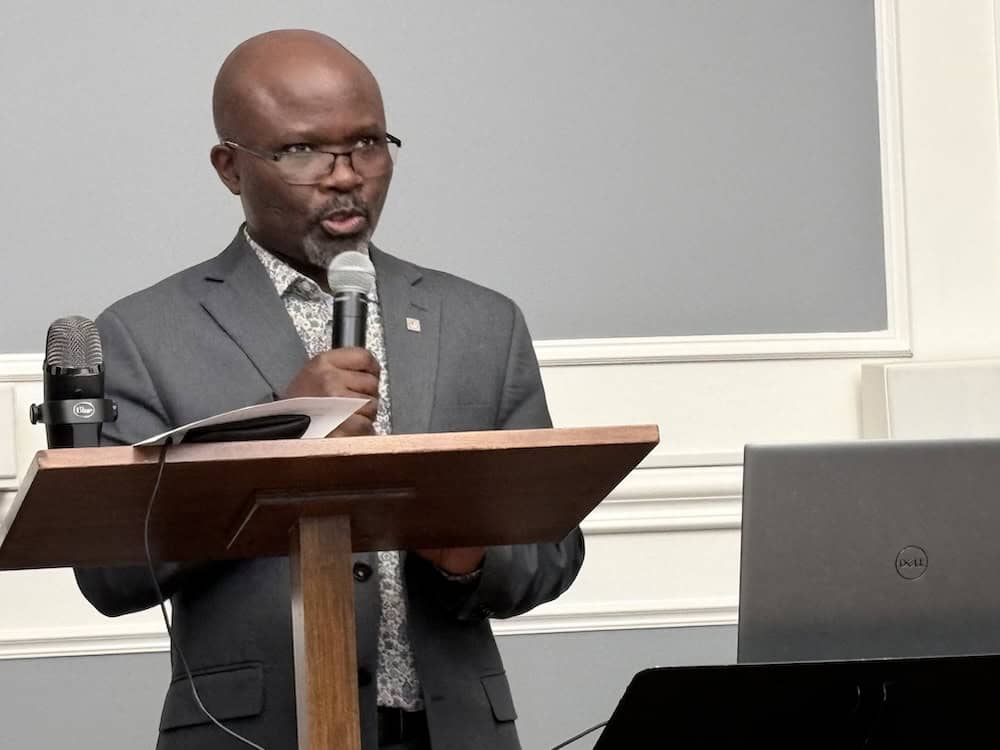
The question is not whether the world needs to transition to renewable energy but “under what conditions” it can be just, says Fr. Touissant Kafarhire Murhula, SJ, Director of the Arrupe Center for Research and Training (CARF) in the Democratic Republic of the Congo (DRC).  Photo: T. Sison/CJI

Watch the recording here.

The global shift toward renewable energy, far from being a universal benefit, risks repeating colonial patterns of extraction and inequality in the Global South, warned Fr. Touissant Kafarhire Murhula, SJ, Director of the Arrupe Center for Research and Training (CARF) in the Democratic Republic of the Congo (DRC).  

Africa holds much of the world’s critical minerals such as cobalt, lithium, copper, coltan and other rare earth elements, and yet its communities bear the environmental and human costs while economic benefits flow elsewhere, he said. Fr. Murhula was the guest speaker at a forum, Balancing Development and Ecological Justice in the Global South, which was co-hosted by Canadian Jesuits International (CJI), Regis College, and the University of St. Michael’s College at the University of Toronto and held in Toronto on May 12.  

Fr. Murhula noted that even though the DRC produces 70 to 75 per cent of the world’s cobalt, nearly 73% of Congolese live on less than $2.50 a day. Coltan, which is needed for producing phones and computer chips have been driving conflicts in Africa, he said. He also described the unsafe mining conditions, child labour, displacement of communities, and ecological destruction that result from the extraction of minerals. 

“Africa has once again been positioned to absorb the negative externalities of global technological transformation — not by accident, but because of the structures that have been set in place,” said Fr. Murhula.  

Multinational corporations, weak regulations, and unequal global economic systems continue to position Africa “as a reservoir of raw material” whose “environmental and human costs remain acceptable in the pursuit of prosperity elsewhere,” he said. The prevailing “extractives model” not only risks reproducing patterns of colonial dependency, it also results in ecological degradation and social injustice, he added. He noted that neoliberal globalization and structural adjustment programs imposed in the 1980s to the 1990s by institutions such as the International Monetary Fund  and World Bank further weakened the ability of African states to regulate corporations, leaving a vacuum that multinationals filled. “Development became progressively subordinated to market logic rather than democratic accountability or social justice,” he said.  

An attendee poses a question during the event held at Regis College. Photo: T. Sison/CJI

The transition to renewable energy is “not merely a technological or environmental project” but “also a geopolitical and economic one,” added Fr. Murhula. “Beneath the language of sustainability lies an intensifying competition over the strategic resources required to power the new global economy.”

He also lamented that, unlike other conflicts such as the Russian invasion of Ukraine, many conflicts in Africa, which are often “linked to struggles over strategic minerals and land, have often received far less international urgency despite costing millions of lives.”

Fr. Murhula asked: “When we speak about green transition, green energy, whose green transition are we discussing?” He said that if sustainability depends on “the continued sacrifice of African communities,” then the green energy transition is fundamentally unjust. 

Drawing on post-colonial theory, dependency theory and critiques of neoliberal globalization, Fr. Murhula challenged the idea that development follows one universal Western path. While development is often presented as “a universal and natural process,” he noted that post-colonial scholars have shown that it is “historically and politically constructed.” Scholars such as Arturo Escobar, V. Y. Mudimbe, and Aimé Césaire, have argued  that Africa was socially constructed as “underdeveloped” in ways that justified intervention and extraction, he added.  

Fr. Murhula proposed ecological justice and the African philosophy of ubuntu (“I am because we are”) as ethical counter models for development. Ubuntu emphasizes “relational humanity, solidarity, dignity, and communal responsibility” rather than the accumulation of profit. He said that this view aligns with Catholic Social Teaching on dignity, solidarity, and the ecological debt that wealthy nations owe the Global South, referencing Pope Francis’s Laudato Si. “Human flourishing does not depend on money alone,” he said, adding that it“cannot be separated from the well-being of others and from the ecological systems upon which life depends.” 

The question is not whether the world needs to transition to renewable energy but “under what conditions” it can be just, said Fr. Murhula. A just transition requires more than technology and market growth, he said. It demands stronger environmental regulation and transparent contracts, democratic governance of natural resources, accountability for multinational corporations, community participation in decision-making, equitable taxation, and investment in local industrial and technological capacity. “Africa must not remain the sacrifice zone of global prosperity. A just ecological future depends upon recognizing African societies not merely as suppliers of strategic resources, but as equal participants in shaping the political, economic, and moral foundations of the 21st century,” he concluded.  

Jenny Cafiso, Executive Director of Canadian Jesuits International

CJI Executive Director Jenny Cafiso expressed her gratitude to Fr. Murhula and expressed CJI’s solidarity with marginalized communities in the DRC. This includes not only supporting people in the DRC who are working for change, but also working for Canadian policies that respect human dignity in Canada and internationally.  

While in Toronto, Fr. Murhula also held meetings with representatives of Canadian NGOs, churches, lawyers and labour unions working on environmental and development issues, including holding Canadian mining companies accountable for their activities overseas. 


Author

  • CJI development
    CJI development
    View all posts
Tagged under: Africa, Canadian Jesuits International, Fr. Touissant Kafarhire Murhula, green transition, Regis College, SJ, St. Michael's College

Planned Giving

Photo: Fe y Alegría Peru

Bridging Borders

Subscribe to our newsletter!

Ways to give

  • Donate online
  • One-time donations
  • Monthly donations
  • Securities donations
  • Planned giving

@canadianjesuitsinternational

Canada Jesuits International (CJI) is supporting a Fe y Alegría project that will promote and improve access to fair, dignified and decent employment for highly vulnerable and at-risk young people in Honduras, Guatemala, El Salvador, Nicaragua and Cuba. 

The project, Youth Driving Change: Purpose-Driven Entrepreneurship and Employment in Central America and Cuba, aims to create viable alternatives to irregular migration and socio-economic marginalization in these countries. 

The socio-economic landscape for youth in these countries is significantly affected by systemic challenges, including high rates of informal employment, migratory pressures, and social exclusion and marginalization. This regional project addresses these multi-layered barriers by modernizing technical and vocational education and adopting a holistic framework that empowers young people to actively transform their socio-economic realities. 

This initiative will serve youth from deeply marginalized communities, including those in urban informal settlements, remote rural areas that are cut off from primary economic centers, and impoverished Indigenous communities historically excluded from opportunities. 

Click link in bio to learn more about this project and more. 

#Jesuits #youth #CentralAmerica #Cuba #Honduras #Guatemala
Canada Jesuits International (CJI) is supporting a Fe y Alegría project that will promote and improve access to fair, dignified and decent employment for highly vulnerable and at-risk young people in Honduras, Guatemala, El Salvador, Nicaragua and Cuba. 

The project, Youth Driving Change: Purpose-Driven Entrepreneurship and Employment in Central America and Cuba, aims to create viable alternatives to irregular migration and socio-economic marginalization in these countries. 

The socio-economic landscape for youth in these countries is significantly affected by systemic challenges, including high rates of informal employment, migratory pressures, and social exclusion and marginalization. This regional project addresses these multi-layered barriers by modernizing technical and vocational education and adopting a holistic framework that empowers young people to actively transform their socio-economic realities. 

This initiative will serve youth from deeply marginalized communities, including those in urban informal settlements, remote rural areas that are cut off from primary economic centers, and impoverished Indigenous communities historically excluded from opportunities. 

Click link in bio to learn more about this project and more. 

#Jesuits #youth #CentralAmerica #Cuba #Honduras #Guatemala
•
Follow
Canada Jesuits International (CJI) is supporting a Fe y Alegría project that will promote and improve access to fair, dignified and decent employment for highly vulnerable and at-risk young people in Honduras, Guatemala, El Salvador, Nicaragua and Cuba. The project, Youth Driving Change: Purpose-Driven Entrepreneurship and Employment in Central America and Cuba, aims to create viable alternatives to irregular migration and socio-economic marginalization in these countries. The socio-economic landscape for youth in these countries is significantly affected by systemic challenges, including high rates of informal employment, migratory pressures, and social exclusion and marginalization. This regional project addresses these multi-layered barriers by modernizing technical and vocational education and adopting a holistic framework that empowers young people to actively transform their socio-economic realities. This initiative will serve youth from deeply marginalized communities, including those in urban informal settlements, remote rural areas that are cut off from primary economic centers, and impoverished Indigenous communities historically excluded from opportunities. Click link in bio to learn more about this project and more. #Jesuits #youth #CentralAmerica #Cuba #Honduras #Guatemala
5 hours ago
View on Instagram |
1/9
On World Refugee Day, June 20, Canadian Jesuits International (CJI) reaffirms its solidarity with millions of people who have been forced to flee due to war and conflict, persecution, climate change, and human rights violations.

On this day, CJI highlights the work its partner, Jesuit Refugee Service-South Sudan, which provides: 

* education services for 1,241 children from refugee and host communities in Maban and Renk
*  mental health and psychosocial support for 1,780 people displaced by the conflict in Sudan 
* non-food items to vulnerable households experiencing psychological distress 
* rehabilitation care for children and adults with disabilities
* English classes for adults

CJI supports Jesuit partners who work towards a humane and long-term solution to forced displacement based on shared responsibility and the respect of human rights. CJI partners in Africa, Asia, the Middle East, Latin America and the Caribbean accompany, serve and advocate for forcibly displaced people through emergency relief and long-term development projects.

According to the United Nations High Commissioner for Refugees (UNHCR), as of 2025, more than 124 million people have been forcibly displaced worldwide. 

However, even as the number of forcibly displaced people continues to climb, UNHCR funding  dropped by 30% in 2025 compared with 2024 as the US and other donors slashed their development aid, with some spending them instead to defense.

The theme for this year’s World Refugee Day, Until Everyone is Safe, focuses on “the right to seek safety as a common safeguard for all of us.” The UNHCR reminds everyone that the right was enshrined 75 years ago, after the Second World War. “People forced to feel have the right to seek safety and protection. It was never meant for a few. It was meant for all of us,” said the UNHCR. “No one is safe until the most vulnerable among us are. When people are forced to flee their homes, we all have a role to play. Ensuring protection for refugees strengthens communities, promotes stability, and saves lives.”

#worldrefugeeday #jrs #Jesuits #SouthSudan
On World Refugee Day, June 20, Canadian Jesuits International (CJI) reaffirms its solidarity with millions of people who have been forced to flee due to war and conflict, persecution, climate change, and human rights violations.

On this day, CJI highlights the work its partner, Jesuit Refugee Service-South Sudan, which provides: 

* education services for 1,241 children from refugee and host communities in Maban and Renk
*  mental health and psychosocial support for 1,780 people displaced by the conflict in Sudan 
* non-food items to vulnerable households experiencing psychological distress 
* rehabilitation care for children and adults with disabilities
* English classes for adults

CJI supports Jesuit partners who work towards a humane and long-term solution to forced displacement based on shared responsibility and the respect of human rights. CJI partners in Africa, Asia, the Middle East, Latin America and the Caribbean accompany, serve and advocate for forcibly displaced people through emergency relief and long-term development projects.

According to the United Nations High Commissioner for Refugees (UNHCR), as of 2025, more than 124 million people have been forcibly displaced worldwide. 

However, even as the number of forcibly displaced people continues to climb, UNHCR funding  dropped by 30% in 2025 compared with 2024 as the US and other donors slashed their development aid, with some spending them instead to defense.

The theme for this year’s World Refugee Day, Until Everyone is Safe, focuses on “the right to seek safety as a common safeguard for all of us.” The UNHCR reminds everyone that the right was enshrined 75 years ago, after the Second World War. “People forced to feel have the right to seek safety and protection. It was never meant for a few. It was meant for all of us,” said the UNHCR. “No one is safe until the most vulnerable among us are. When people are forced to flee their homes, we all have a role to play. Ensuring protection for refugees strengthens communities, promotes stability, and saves lives.”

#worldrefugeeday #jrs #Jesuits #SouthSudan
On World Refugee Day, June 20, Canadian Jesuits International (CJI) reaffirms its solidarity with millions of people who have been forced to flee due to war and conflict, persecution, climate change, and human rights violations.

On this day, CJI highlights the work its partner, Jesuit Refugee Service-South Sudan, which provides: 

* education services for 1,241 children from refugee and host communities in Maban and Renk
*  mental health and psychosocial support for 1,780 people displaced by the conflict in Sudan 
* non-food items to vulnerable households experiencing psychological distress 
* rehabilitation care for children and adults with disabilities
* English classes for adults

CJI supports Jesuit partners who work towards a humane and long-term solution to forced displacement based on shared responsibility and the respect of human rights. CJI partners in Africa, Asia, the Middle East, Latin America and the Caribbean accompany, serve and advocate for forcibly displaced people through emergency relief and long-term development projects.

According to the United Nations High Commissioner for Refugees (UNHCR), as of 2025, more than 124 million people have been forcibly displaced worldwide. 

However, even as the number of forcibly displaced people continues to climb, UNHCR funding  dropped by 30% in 2025 compared with 2024 as the US and other donors slashed their development aid, with some spending them instead to defense.

The theme for this year’s World Refugee Day, Until Everyone is Safe, focuses on “the right to seek safety as a common safeguard for all of us.” The UNHCR reminds everyone that the right was enshrined 75 years ago, after the Second World War. “People forced to feel have the right to seek safety and protection. It was never meant for a few. It was meant for all of us,” said the UNHCR. “No one is safe until the most vulnerable among us are. When people are forced to flee their homes, we all have a role to play. Ensuring protection for refugees strengthens communities, promotes stability, and saves lives.”

#worldrefugeeday #jrs #Jesuits #SouthSudan
•
Follow
On World Refugee Day, June 20, Canadian Jesuits International (CJI) reaffirms its solidarity with millions of people who have been forced to flee due to war and conflict, persecution, climate change, and human rights violations. On this day, CJI highlights the work its partner, Jesuit Refugee Service-South Sudan, which provides: * education services for 1,241 children from refugee and host communities in Maban and Renk * mental health and psychosocial support for 1,780 people displaced by the conflict in Sudan * non-food items to vulnerable households experiencing psychological distress * rehabilitation care for children and adults with disabilities * English classes for adults CJI supports Jesuit partners who work towards a humane and long-term solution to forced displacement based on shared responsibility and the respect of human rights. CJI partners in Africa, Asia, the Middle East, Latin America and the Caribbean accompany, serve and advocate for forcibly displaced people through emergency relief and long-term development projects. According to the United Nations High Commissioner for Refugees (UNHCR), as of 2025, more than 124 million people have been forcibly displaced worldwide. However, even as the number of forcibly displaced people continues to climb, UNHCR funding dropped by 30% in 2025 compared with 2024 as the US and other donors slashed their development aid, with some spending them instead to defense. The theme for this year’s World Refugee Day, Until Everyone is Safe, focuses on “the right to seek safety as a common safeguard for all of us.” The UNHCR reminds everyone that the right was enshrined 75 years ago, after the Second World War. “People forced to feel have the right to seek safety and protection. It was never meant for a few. It was meant for all of us,” said the UNHCR. “No one is safe until the most vulnerable among us are. When people are forced to flee their homes, we all have a role to play. Ensuring protection for refugees strengthens communities, promotes stability, and saves lives.” #worldrefugeeday #jrs #Jesuits #SouthSudan
3 days ago
View on Instagram |
2/9
A powerful reminder from Pope Leo XIV on World Refugee week:

The way a society treats refugees and people forced to flee their homes "reveals whether its sense of justice is driven by fear or by the spirit of fraternity."

#pope #popeleoxiv #magnificahumanitas #worldrefugeeweek2026
•
Follow
A powerful reminder from Pope Leo XIV on World Refugee week: The way a society treats refugees and people forced to flee their homes "reveals whether its sense of justice is driven by fear or by the spirit of fraternity." #pope #popeleoxiv #magnificahumanitas #worldrefugeeweek2026
4 days ago
View on Instagram |
3/9
Canadian Jesuits International (CJI) is supporting a project that will provide 30 laptop computers that will be used by students at the Jesuit-led St. Xavier School in Sadakbari, Nepal. 
The project will provide students from low-income families with access to computers, and aims to improve their academic performance and completion rates of students by exposing them to a broader range of curriculum through digital learning. 
About 200 of the school’s 520-student population will be able to use the computers right away, with the younger ones benefiting from them as they progress in grade level. 
The project, which was one of 20 approved by the CJI Board of Directors during its spring meeting includes the purchase of 15 computer tables, 30 chairs for the computer lab; other electrical equipment. 
According to the school principal, Fr. Jomon Jose, SJ, laptops offer an advantage “given the inconsistency of power supply in Sadakbari.” The built-in battery of laptops “allows for continued use during power outages, which can often last for a couple of hours, (and) ensures minimal disruption to teaching and learning activities.”
Canadian Jesuits International (CJI) is supporting a project that will provide 30 laptop computers that will be used by students at the Jesuit-led St. Xavier School in Sadakbari, Nepal. 
The project will provide students from low-income families with access to computers, and aims to improve their academic performance and completion rates of students by exposing them to a broader range of curriculum through digital learning. 
About 200 of the school’s 520-student population will be able to use the computers right away, with the younger ones benefiting from them as they progress in grade level. 
The project, which was one of 20 approved by the CJI Board of Directors during its spring meeting includes the purchase of 15 computer tables, 30 chairs for the computer lab; other electrical equipment. 
According to the school principal, Fr. Jomon Jose, SJ, laptops offer an advantage “given the inconsistency of power supply in Sadakbari.” The built-in battery of laptops “allows for continued use during power outages, which can often last for a couple of hours, (and) ensures minimal disruption to teaching and learning activities.”
Canadian Jesuits International (CJI) is supporting a project that will provide 30 laptop computers that will be used by students at the Jesuit-led St. Xavier School in Sadakbari, Nepal. 
The project will provide students from low-income families with access to computers, and aims to improve their academic performance and completion rates of students by exposing them to a broader range of curriculum through digital learning. 
About 200 of the school’s 520-student population will be able to use the computers right away, with the younger ones benefiting from them as they progress in grade level. 
The project, which was one of 20 approved by the CJI Board of Directors during its spring meeting includes the purchase of 15 computer tables, 30 chairs for the computer lab; other electrical equipment. 
According to the school principal, Fr. Jomon Jose, SJ, laptops offer an advantage “given the inconsistency of power supply in Sadakbari.” The built-in battery of laptops “allows for continued use during power outages, which can often last for a couple of hours, (and) ensures minimal disruption to teaching and learning activities.”
•
Follow
Canadian Jesuits International (CJI) is supporting a project that will provide 30 laptop computers that will be used by students at the Jesuit-led St. Xavier School in Sadakbari, Nepal. The project will provide students from low-income families with access to computers, and aims to improve their academic performance and completion rates of students by exposing them to a broader range of curriculum through digital learning. About 200 of the school’s 520-student population will be able to use the computers right away, with the younger ones benefiting from them as they progress in grade level. The project, which was one of 20 approved by the CJI Board of Directors during its spring meeting includes the purchase of 15 computer tables, 30 chairs for the computer lab; other electrical equipment. According to the school principal, Fr. Jomon Jose, SJ, laptops offer an advantage “given the inconsistency of power supply in Sadakbari.” The built-in battery of laptops “allows for continued use during power outages, which can often last for a couple of hours, (and) ensures minimal disruption to teaching and learning activities.”
5 days ago
View on Instagram |
4/9
Since  Russia’s full-scale invasion of Ukraine, the Xavier Network, which includes Canadian Jesuits International (CJI), has been providing life-saving support to thousands of forcibly displaced Ukrainians.

The Xavier Network works in tandem with the @jrseurope, which provides relief efforts for Ukrainians remaining in Ukraine and those who have fled to neighbouring countries.

JRS offers support in areas such as housing, food, education, psycho-social support, language classes, livelihood support, and integration. In 2025, it served 22, 689 Ukrainians. Since the start of the conflict, JRS has served 822,948 individuals, according to its latest report. 

This World Refugee Week, we are highlighting the fact that the humanitarian situation in Ukraine remains dire. The lives of an estimated 10.8 million people inside Ukraine, including 2.2 million children and 3.8 million remain in in danger, according to UNICEF. About 4.5 million Ukrainian refugees remain spread out across Europe.

#refugees #Ukraine
•
Follow
Since Russia’s full-scale invasion of Ukraine, the Xavier Network, which includes Canadian Jesuits International (CJI), has been providing life-saving support to thousands of forcibly displaced Ukrainians. The Xavier Network works in tandem with the @jrseurope, which provides relief efforts for Ukrainians remaining in Ukraine and those who have fled to neighbouring countries. JRS offers support in areas such as housing, food, education, psycho-social support, language classes, livelihood support, and integration. In 2025, it served 22, 689 Ukrainians. Since the start of the conflict, JRS has served 822,948 individuals, according to its latest report. This World Refugee Week, we are highlighting the fact that the humanitarian situation in Ukraine remains dire. The lives of an estimated 10.8 million people inside Ukraine, including 2.2 million children and 3.8 million remain in in danger, according to UNICEF. About 4.5 million Ukrainian refugees remain spread out across Europe. #refugees #Ukraine
1 week ago
View on Instagram |
5/9
Canadian Jesuits International supports Lok Manch (People's Forum), a national platform that promotes the dignity and well-being of marginalized people in India by advocating for improved policies and access to entitlements and legal rights. 

Amidst growing concerns about the impact of increasingly frequent and severe climate-related disasters on poor and marginalised communities, Lok Manch raises awareness of climate change and proposes solutions to help create climate-resilient communities.

Lok Manch is made up of around 100 Jesuit and secular organisations spanning 15 Indian states and 15 Jesuit provinces. Learn more: Click link in bio to visit our website.

#jesuit #canada #India #climatecrisis #solutions
Canadian Jesuits International supports Lok Manch (People's Forum), a national platform that promotes the dignity and well-being of marginalized people in India by advocating for improved policies and access to entitlements and legal rights. 

Amidst growing concerns about the impact of increasingly frequent and severe climate-related disasters on poor and marginalised communities, Lok Manch raises awareness of climate change and proposes solutions to help create climate-resilient communities.

Lok Manch is made up of around 100 Jesuit and secular organisations spanning 15 Indian states and 15 Jesuit provinces. Learn more: Click link in bio to visit our website.

#jesuit #canada #India #climatecrisis #solutions
Canadian Jesuits International supports Lok Manch (People's Forum), a national platform that promotes the dignity and well-being of marginalized people in India by advocating for improved policies and access to entitlements and legal rights. 

Amidst growing concerns about the impact of increasingly frequent and severe climate-related disasters on poor and marginalised communities, Lok Manch raises awareness of climate change and proposes solutions to help create climate-resilient communities.

Lok Manch is made up of around 100 Jesuit and secular organisations spanning 15 Indian states and 15 Jesuit provinces. Learn more: Click link in bio to visit our website.

#jesuit #canada #India #climatecrisis #solutions
•
Follow
Canadian Jesuits International supports Lok Manch (People's Forum), a national platform that promotes the dignity and well-being of marginalized people in India by advocating for improved policies and access to entitlements and legal rights. Amidst growing concerns about the impact of increasingly frequent and severe climate-related disasters on poor and marginalised communities, Lok Manch raises awareness of climate change and proposes solutions to help create climate-resilient communities. Lok Manch is made up of around 100 Jesuit and secular organisations spanning 15 Indian states and 15 Jesuit provinces. Learn more: Click link in bio to visit our website. #jesuit #canada #India #climatecrisis #solutions
2 weeks ago
View on Instagram |
6/9
#DYK Your support for the Jesuit-led Human Life Development and Research (HLDRC) provides about 400 girls and boys from low-income families with a free non-formal education in student centres in the remote Darjeeling, Jalpaiguri and Alipurduar districts of West Bengal. They are mostly children of Adivasi and Indigenous tea workers. 

Your support has also enabled 23 young people from tea garden communities to complete a six-month job training. They are now undergoing a job placement process. 

Learn more about the transformative work of HLDRC: Click link in bio to visit our website. 

#Jesuit #India #Canada
#DYK Your support for the Jesuit-led Human Life Development and Research (HLDRC) provides about 400 girls and boys from low-income families with a free non-formal education in student centres in the remote Darjeeling, Jalpaiguri and Alipurduar districts of West Bengal. They are mostly children of Adivasi and Indigenous tea workers. 

Your support has also enabled 23 young people from tea garden communities to complete a six-month job training. They are now undergoing a job placement process. 

Learn more about the transformative work of HLDRC: Click link in bio to visit our website. 

#Jesuit #India #Canada
•
Follow
#DYK Your support for the Jesuit-led Human Life Development and Research (HLDRC) provides about 400 girls and boys from low-income families with a free non-formal education in student centres in the remote Darjeeling, Jalpaiguri and Alipurduar districts of West Bengal. They are mostly children of Adivasi and Indigenous tea workers. Your support has also enabled 23 young people from tea garden communities to complete a six-month job training. They are now undergoing a job placement process. Learn more about the transformative work of HLDRC: Click link in bio to visit our website. #Jesuit #India #Canada
2 weeks ago
View on Instagram |
7/9
Are you ready to turn your commitment to social justice into meaningful global impact? 

Canadian Jesuits International (CJI) is looking for its next Executive Director—a visionary, values-driven leader to guide our organization into its next chapter of sustainability and growth.

The Ideal Leader is:
* Rooted in Catholic Social Teaching & Ignatian Spirituality 
* Has a deep commitment to solidarity with the poor and marginalized
* A proven steward of organizational sustainability & growth 
* A collaborative relationship-builder for national & international networks 

This is more than a job—it’s a calling, If you have the vision to lead, the heart for solidarity, and the skills to manage a dynamic international solidarity network, we encourage you to apply.

🔗 Click the link in our bio to read the full job description and apply

#CJI #Hiring #ExecutiveDirector #NonProfitLeadership #SocialJustice #IgnatianSpirituality #FaithThatDoesJustice #GlobalSolidarity #CareersWithPurpose
•
Follow
Are you ready to turn your commitment to social justice into meaningful global impact? Canadian Jesuits International (CJI) is looking for its next Executive Director—a visionary, values-driven leader to guide our organization into its next chapter of sustainability and growth. The Ideal Leader is: * Rooted in Catholic Social Teaching & Ignatian Spirituality * Has a deep commitment to solidarity with the poor and marginalized * A proven steward of organizational sustainability & growth * A collaborative relationship-builder for national & international networks This is more than a job—it’s a calling, If you have the vision to lead, the heart for solidarity, and the skills to manage a dynamic international solidarity network, we encourage you to apply. 🔗 Click the link in our bio to read the full job description and apply #CJI #Hiring #ExecutiveDirector #NonProfitLeadership #SocialJustice #IgnatianSpirituality #FaithThatDoesJustice #GlobalSolidarity #CareersWithPurpose
2 weeks ago
View on Instagram |
8/9
Estimados amigos y colaboradores de CJI: 

Les escribo para informarles que, tras 23 años como Directora Ejecutiva de Canadian Jesuits International (CJI), le he comunicado a la Junta Directiva y al personal de CJI que me retiraré de mi cargo a finales de 2026. 

La Junta Directiva de CJI y la Provincia de los Jesuitas de Canadá ya han iniciado el proceso de búsqueda de mi sucesor(a) y han nombrado un comité de selección para liderar el proceso de contratación. Encontrarán la oferta de empleo y la descripción del puesto en este enlace: https://bit.ly/CJIEDJob. 

Les animo a compartir esta información con cualquier persona que pueda estar interesada en esta posición tan emocionante, enriquecedora y gratificante. Este rol ofrece la oportunidad de vivir una vida con propósito, de marcar la diferencia, de trabajar con un equipo increíble y de conectar con personas en Canadá y alrededor del mundo que están profundamente comprometidas con el trabajo por la justicia y la paz, y que me inspiran cada día. 

Durante los próximos meses, tendremos la oportunidad de hablar, reunirnos, reflexionar, ser agradecidos y soñar juntos. Me quedaré hasta finales de año y volverán a saber de mí, pero por ahora, por favor ayúdennos a encontrar al mejor candidato(a) que pueda liderar a CJI en su próximo capítulo. 

Con gratitud, 
Jenny
•
Follow
Estimados amigos y colaboradores de CJI: Les escribo para informarles que, tras 23 años como Directora Ejecutiva de Canadian Jesuits International (CJI), le he comunicado a la Junta Directiva y al personal de CJI que me retiraré de mi cargo a finales de 2026. La Junta Directiva de CJI y la Provincia de los Jesuitas de Canadá ya han iniciado el proceso de búsqueda de mi sucesor(a) y han nombrado un comité de selección para liderar el proceso de contratación. Encontrarán la oferta de empleo y la descripción del puesto en este enlace: https://bit.ly/CJIEDJob. Les animo a compartir esta información con cualquier persona que pueda estar interesada en esta posición tan emocionante, enriquecedora y gratificante. Este rol ofrece la oportunidad de vivir una vida con propósito, de marcar la diferencia, de trabajar con un equipo increíble y de conectar con personas en Canadá y alrededor del mundo que están profundamente comprometidas con el trabajo por la justicia y la paz, y que me inspiran cada día. Durante los próximos meses, tendremos la oportunidad de hablar, reunirnos, reflexionar, ser agradecidos y soñar juntos. Me quedaré hasta finales de año y volverán a saber de mí, pero por ahora, por favor ayúdennos a encontrar al mejor candidato(a) que pueda liderar a CJI en su próximo capítulo. Con gratitud, Jenny
2 weeks ago
View on Instagram |
9/9
Follow us on Instagram!
  • Who we are
  • International Programs
  • Outreach
  • Ways to give
  • Resources
Donate Now!

Follow us

Subscribe to our newsletter!


 Our Privacy Policy

Contact

Canadian Jesuits International

70 Saint Mary St
Toronto, ON
M5S 1J3
Canada

Tel: 416.465.1824
Toll Free (Canada and USA): 1.800.448.2148

Email: [email protected]

© Canadian Jesuits International 2025

TOP
Accessibility by WAH
  • English