Canadian Jesuits International

  • English
  • Who we are
    • Vision, mission and values
    • CJI history
    • The Society of Jesus (Jesuits)
    • CJI Board of Directors
    • CJI staff (some part-time)
    • A message from the Provincial of the Jesuits of Canada
    • Job opportunities
    • Tributes
  • International Programs
    • Right to Education
    • Ecology and Sustainability
    • Human Rights, Civic Participation, and Peacebuilding
    • Rights of Forcibly Displaced People; Humanitarian Assistance
    • Projects we support
    • Visit to International Partners
  • Outreach
    • Youth for Others
    • Y4O Advocacy Symposium
    • Community engagement
    • Advocacy
    • Catholic Social Teaching and Our Partners
    • Prayer
    • Your voices
  • Ways to give
    • Donate online
    • Donate via phone or mail
    • Monthly donations
    • Securities donations
    • Planned giving
    • Finances
    • CJI’s Privacy policy
  • Resources
    • Publications
      • Newsletters
      • Appeals
      • News
    • Multimedia
      • Video archive
      • Webinars
      • Lenten Reflections
    • Our Partners
      • Project Partners
      • Jesuit Organizations
Donate
  • Home
  • Appeals
  • Prayers and support as catastrophic flash floods hit Nepal, Tibet 

Prayers and support as catastrophic flash floods hit Nepal, Tibet 

27 August 2026 / Published in Appeals, News

Prayers and support as catastrophic flash floods hit Nepal, Tibet 

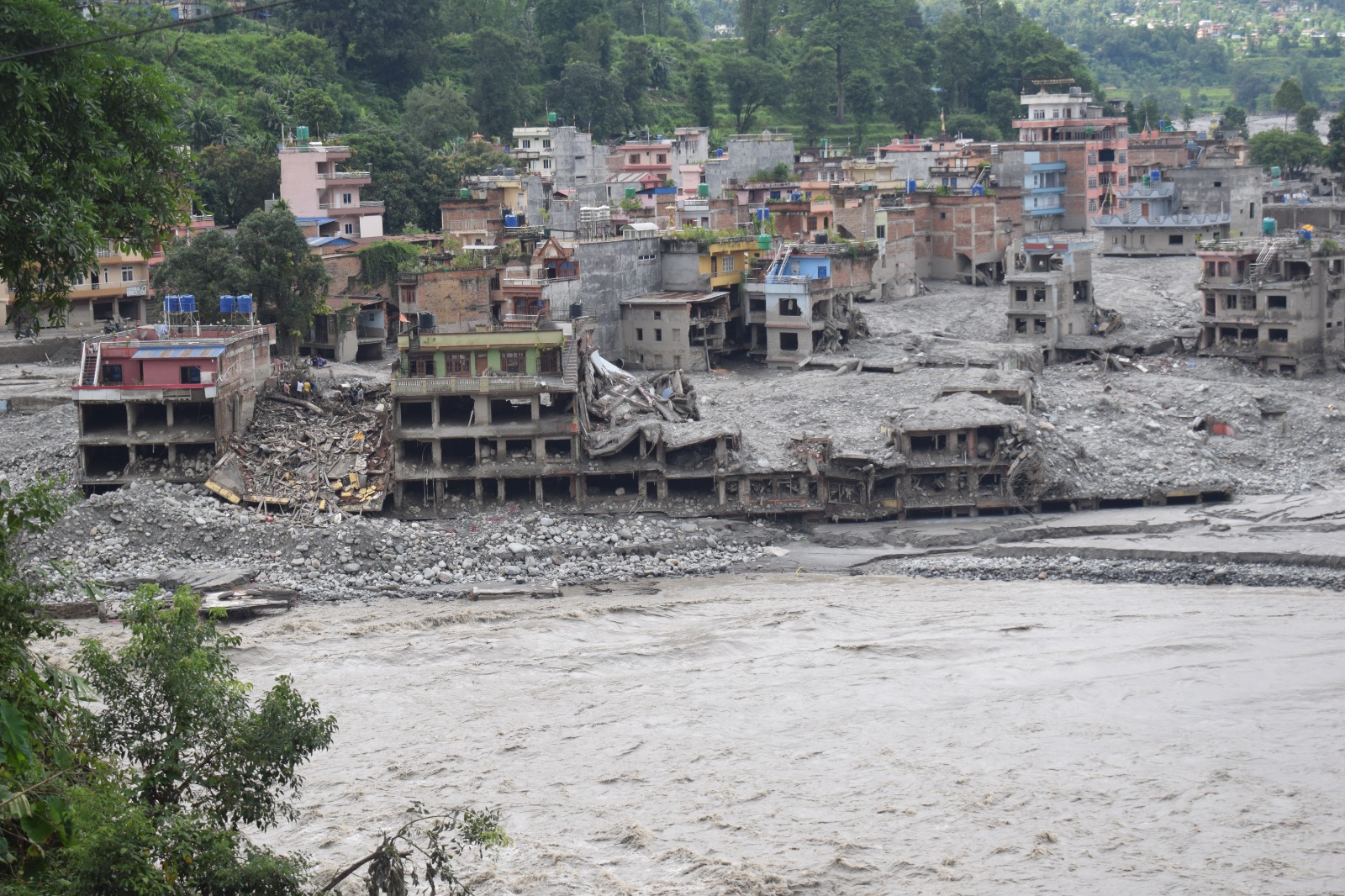
The aftermath of the catastrophic  flash flood that hit the Bhote Koshi River in Nepal’s Rasuwa district.
Photo: Xavier Network

DONATE NOW

Most of us have already seen verified videos and photos showing people and entire villages being swept away by the catastrophic flash floods and mudslides that have left more than 1,000 people dead and thousands missing on the Nepal-Tibet border on August 26.

Our prayers are with the victims and their families. We can also support them during this extremely challenging period.

Our Jesuit partners in Kathmandu have launched various relief efforts to help those affected by the catastrophic flash floods which scientists say were triggered by a massive glacial collapse in the Himalayas.
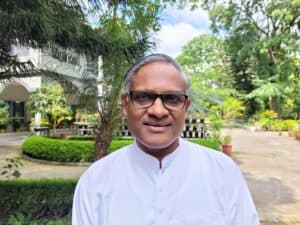
Fr. Shajumon Chakkalakkal, SJ, Provincial of the Darjeeling-Nepal Province

According to Fr. Shajumon Chakkalakkal, SJ, Provincial of the Darjeeling-Nepal Province, among those who have been deeply affected by the deluge include teachers and students in Jesuit schools in the area. CJI has partnered with several Jesuit institutions in Nepal since the first Canadian Jesuits went there several decades ago. 

“We are deeply concerned about two of our Jesuits in Tipling, a remote part of Nepal. They are totally cut off. We cannot reach them. Roads and bridges have been washed out,” said Fr. Shajumon in an email to CJI Executive Director Jenny Cafiso. The Jesuits are safe,  but lack food, electricity and internet connectivity, and it is not possible to reach them or for them to leave the area. “Many who had gone to work in the neighbouring district are missing or dead. They tell me all the shops are empty of supplies. If connectivity is not established, many will starve.”  
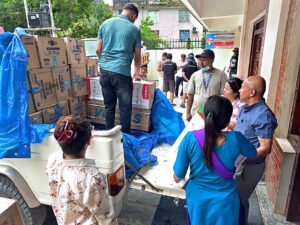

Photo: Fr. Armit Rai, SJ, of the Nepal Jesuit Society (third from left) leads the delivery of relief goods to victims of the flash floods. Photo: Darjeeling-Nepal Province

In a report, Fr. Agustus Ekka, SJ, Director of Fe y Alegria Nepal, said some of his colleagues have been searching for family members who are missing because of the disaster.  

“We are concerned for the people in the region affected by the flash floods, including the members of Fe y Alegria who are searching for their loved ones, and for the Jesuits working in this area,” said Cafiso. “The people of Nepal have already suffered from the devastating effects of previous earthquakes and from chronic poverty and instability. I have assured the Jesuit provincial and Fe y Alegria of our support as they respond to this new emergency.” 

There are also reports that the road in Tipling, which was built with support from the Xavier Network (of which CJI is a member), has been damaged and remains impassable. The Fe y Alegria schools located in the affected districts of Kavre, Dolakha, Dhading and Sindhupalchowk have not reported any major damage so far, although more detailed assessments are still needed, said Fr. Agustus.  

Various news outlets interviewed scientists who said that the flooding was likely caused, in part, by a massive glacier breaking off in the Himalayas and cascading down towards Nepal’s Bhotekoshi River. 

Author

  • CJI development
    CJI development
    View all posts
Tagged under: 2026, Fe y Alegria Nepal, Fr. Agustus Ekka, Fr. Shajumon Chakkalakkal, Jesuits, Nepal flashfloods, SJ

Planned Giving

Photo: Fe y Alegría Peru

Bridging Borders

Subscribe to our newsletter!

Ways to give

  • Donate online
  • One-time donations
  • Monthly donations
  • Securities donations
  • Planned giving

@canadianjesuitsinternational

Last weekend, CJI Executive Director Jenny Cafiso and International Programs Coordinator Juan Emilio Hernandez crossed the border from Haiti into the Dominican Republic, where they were warmly welcomed by Fr. Osvaldo Concepción, SJ, director of Centro Montalvo, a Jesuit-led organization and CJI partner. 
In La Rosa, in the municipality of Restauración, they met Marimenda—a migrant leader supporting women’s and farmers’ groups, as well as a community greenhouse. She is also defending her territory against the proposed Neita mining project, linked to Canadian company. Community advocates warn that mining in this border region could threaten shared water systems, including the Artibonite River, with serious environmental, social, and public-health consequences. 
Jenny and Juan also visited a community living with the devastating impacts of mining waste. Residents described losing access to safe drinking water and facing harm to their health, animals, and land contamination. Their struggle, ongoing since 2011, remains a powerful example of community resistance against extractive industries.
They ended their visit to the Dominican Republic by meeting with the team at Centro Montalvo, whose work advances social justice, human rights, migration advocacy, environmental action, youth leadership, and community-based research. CJI is supporting a Centro Montalvo project, Climate Justice: Community Action Against Extractivism. 

Learn more about Centro Montalvo: Click link in bio.
Last weekend, CJI Executive Director Jenny Cafiso and International Programs Coordinator Juan Emilio Hernandez crossed the border from Haiti into the Dominican Republic, where they were warmly welcomed by Fr. Osvaldo Concepción, SJ, director of Centro Montalvo, a Jesuit-led organization and CJI partner. 
In La Rosa, in the municipality of Restauración, they met Marimenda—a migrant leader supporting women’s and farmers’ groups, as well as a community greenhouse. She is also defending her territory against the proposed Neita mining project, linked to Canadian company. Community advocates warn that mining in this border region could threaten shared water systems, including the Artibonite River, with serious environmental, social, and public-health consequences. 
Jenny and Juan also visited a community living with the devastating impacts of mining waste. Residents described losing access to safe drinking water and facing harm to their health, animals, and land contamination. Their struggle, ongoing since 2011, remains a powerful example of community resistance against extractive industries.
They ended their visit to the Dominican Republic by meeting with the team at Centro Montalvo, whose work advances social justice, human rights, migration advocacy, environmental action, youth leadership, and community-based research. CJI is supporting a Centro Montalvo project, Climate Justice: Community Action Against Extractivism. 

Learn more about Centro Montalvo: Click link in bio.
Last weekend, CJI Executive Director Jenny Cafiso and International Programs Coordinator Juan Emilio Hernandez crossed the border from Haiti into the Dominican Republic, where they were warmly welcomed by Fr. Osvaldo Concepción, SJ, director of Centro Montalvo, a Jesuit-led organization and CJI partner. 
In La Rosa, in the municipality of Restauración, they met Marimenda—a migrant leader supporting women’s and farmers’ groups, as well as a community greenhouse. She is also defending her territory against the proposed Neita mining project, linked to Canadian company. Community advocates warn that mining in this border region could threaten shared water systems, including the Artibonite River, with serious environmental, social, and public-health consequences. 
Jenny and Juan also visited a community living with the devastating impacts of mining waste. Residents described losing access to safe drinking water and facing harm to their health, animals, and land contamination. Their struggle, ongoing since 2011, remains a powerful example of community resistance against extractive industries.
They ended their visit to the Dominican Republic by meeting with the team at Centro Montalvo, whose work advances social justice, human rights, migration advocacy, environmental action, youth leadership, and community-based research. CJI is supporting a Centro Montalvo project, Climate Justice: Community Action Against Extractivism. 

Learn more about Centro Montalvo: Click link in bio.
Last weekend, CJI Executive Director Jenny Cafiso and International Programs Coordinator Juan Emilio Hernandez crossed the border from Haiti into the Dominican Republic, where they were warmly welcomed by Fr. Osvaldo Concepción, SJ, director of Centro Montalvo, a Jesuit-led organization and CJI partner. 
In La Rosa, in the municipality of Restauración, they met Marimenda—a migrant leader supporting women’s and farmers’ groups, as well as a community greenhouse. She is also defending her territory against the proposed Neita mining project, linked to Canadian company. Community advocates warn that mining in this border region could threaten shared water systems, including the Artibonite River, with serious environmental, social, and public-health consequences. 
Jenny and Juan also visited a community living with the devastating impacts of mining waste. Residents described losing access to safe drinking water and facing harm to their health, animals, and land contamination. Their struggle, ongoing since 2011, remains a powerful example of community resistance against extractive industries.
They ended their visit to the Dominican Republic by meeting with the team at Centro Montalvo, whose work advances social justice, human rights, migration advocacy, environmental action, youth leadership, and community-based research. CJI is supporting a Centro Montalvo project, Climate Justice: Community Action Against Extractivism. 

Learn more about Centro Montalvo: Click link in bio.
Last weekend, CJI Executive Director Jenny Cafiso and International Programs Coordinator Juan Emilio Hernandez crossed the border from Haiti into the Dominican Republic, where they were warmly welcomed by Fr. Osvaldo Concepción, SJ, director of Centro Montalvo, a Jesuit-led organization and CJI partner. 
In La Rosa, in the municipality of Restauración, they met Marimenda—a migrant leader supporting women’s and farmers’ groups, as well as a community greenhouse. She is also defending her territory against the proposed Neita mining project, linked to Canadian company. Community advocates warn that mining in this border region could threaten shared water systems, including the Artibonite River, with serious environmental, social, and public-health consequences. 
Jenny and Juan also visited a community living with the devastating impacts of mining waste. Residents described losing access to safe drinking water and facing harm to their health, animals, and land contamination. Their struggle, ongoing since 2011, remains a powerful example of community resistance against extractive industries.
They ended their visit to the Dominican Republic by meeting with the team at Centro Montalvo, whose work advances social justice, human rights, migration advocacy, environmental action, youth leadership, and community-based research. CJI is supporting a Centro Montalvo project, Climate Justice: Community Action Against Extractivism. 

Learn more about Centro Montalvo: Click link in bio.
Last weekend, CJI Executive Director Jenny Cafiso and International Programs Coordinator Juan Emilio Hernandez crossed the border from Haiti into the Dominican Republic, where they were warmly welcomed by Fr. Osvaldo Concepción, SJ, director of Centro Montalvo, a Jesuit-led organization and CJI partner. 
In La Rosa, in the municipality of Restauración, they met Marimenda—a migrant leader supporting women’s and farmers’ groups, as well as a community greenhouse. She is also defending her territory against the proposed Neita mining project, linked to Canadian company. Community advocates warn that mining in this border region could threaten shared water systems, including the Artibonite River, with serious environmental, social, and public-health consequences. 
Jenny and Juan also visited a community living with the devastating impacts of mining waste. Residents described losing access to safe drinking water and facing harm to their health, animals, and land contamination. Their struggle, ongoing since 2011, remains a powerful example of community resistance against extractive industries.
They ended their visit to the Dominican Republic by meeting with the team at Centro Montalvo, whose work advances social justice, human rights, migration advocacy, environmental action, youth leadership, and community-based research. CJI is supporting a Centro Montalvo project, Climate Justice: Community Action Against Extractivism. 

Learn more about Centro Montalvo: Click link in bio.
Last weekend, CJI Executive Director Jenny Cafiso and International Programs Coordinator Juan Emilio Hernandez crossed the border from Haiti into the Dominican Republic, where they were warmly welcomed by Fr. Osvaldo Concepción, SJ, director of Centro Montalvo, a Jesuit-led organization and CJI partner. 
In La Rosa, in the municipality of Restauración, they met Marimenda—a migrant leader supporting women’s and farmers’ groups, as well as a community greenhouse. She is also defending her territory against the proposed Neita mining project, linked to Canadian company. Community advocates warn that mining in this border region could threaten shared water systems, including the Artibonite River, with serious environmental, social, and public-health consequences. 
Jenny and Juan also visited a community living with the devastating impacts of mining waste. Residents described losing access to safe drinking water and facing harm to their health, animals, and land contamination. Their struggle, ongoing since 2011, remains a powerful example of community resistance against extractive industries.
They ended their visit to the Dominican Republic by meeting with the team at Centro Montalvo, whose work advances social justice, human rights, migration advocacy, environmental action, youth leadership, and community-based research. CJI is supporting a Centro Montalvo project, Climate Justice: Community Action Against Extractivism. 

Learn more about Centro Montalvo: Click link in bio.
Last weekend, CJI Executive Director Jenny Cafiso and International Programs Coordinator Juan Emilio Hernandez crossed the border from Haiti into the Dominican Republic, where they were warmly welcomed by Fr. Osvaldo Concepción, SJ, director of Centro Montalvo, a Jesuit-led organization and CJI partner. 
In La Rosa, in the municipality of Restauración, they met Marimenda—a migrant leader supporting women’s and farmers’ groups, as well as a community greenhouse. She is also defending her territory against the proposed Neita mining project, linked to Canadian company. Community advocates warn that mining in this border region could threaten shared water systems, including the Artibonite River, with serious environmental, social, and public-health consequences. 
Jenny and Juan also visited a community living with the devastating impacts of mining waste. Residents described losing access to safe drinking water and facing harm to their health, animals, and land contamination. Their struggle, ongoing since 2011, remains a powerful example of community resistance against extractive industries.
They ended their visit to the Dominican Republic by meeting with the team at Centro Montalvo, whose work advances social justice, human rights, migration advocacy, environmental action, youth leadership, and community-based research. CJI is supporting a Centro Montalvo project, Climate Justice: Community Action Against Extractivism. 

Learn more about Centro Montalvo: Click link in bio.
Last weekend, CJI Executive Director Jenny Cafiso and International Programs Coordinator Juan Emilio Hernandez crossed the border from Haiti into the Dominican Republic, where they were warmly welcomed by Fr. Osvaldo Concepción, SJ, director of Centro Montalvo, a Jesuit-led organization and CJI partner. 
In La Rosa, in the municipality of Restauración, they met Marimenda—a migrant leader supporting women’s and farmers’ groups, as well as a community greenhouse. She is also defending her territory against the proposed Neita mining project, linked to Canadian company. Community advocates warn that mining in this border region could threaten shared water systems, including the Artibonite River, with serious environmental, social, and public-health consequences. 
Jenny and Juan also visited a community living with the devastating impacts of mining waste. Residents described losing access to safe drinking water and facing harm to their health, animals, and land contamination. Their struggle, ongoing since 2011, remains a powerful example of community resistance against extractive industries.
They ended their visit to the Dominican Republic by meeting with the team at Centro Montalvo, whose work advances social justice, human rights, migration advocacy, environmental action, youth leadership, and community-based research. CJI is supporting a Centro Montalvo project, Climate Justice: Community Action Against Extractivism. 

Learn more about Centro Montalvo: Click link in bio.
•
Follow
Last weekend, CJI Executive Director Jenny Cafiso and International Programs Coordinator Juan Emilio Hernandez crossed the border from Haiti into the Dominican Republic, where they were warmly welcomed by Fr. Osvaldo Concepción, SJ, director of Centro Montalvo, a Jesuit-led organization and CJI partner. In La Rosa, in the municipality of Restauración, they met Marimenda—a migrant leader supporting women’s and farmers’ groups, as well as a community greenhouse. She is also defending her territory against the proposed Neita mining project, linked to Canadian company. Community advocates warn that mining in this border region could threaten shared water systems, including the Artibonite River, with serious environmental, social, and public-health consequences. Jenny and Juan also visited a community living with the devastating impacts of mining waste. Residents described losing access to safe drinking water and facing harm to their health, animals, and land contamination. Their struggle, ongoing since 2011, remains a powerful example of community resistance against extractive industries. They ended their visit to the Dominican Republic by meeting with the team at Centro Montalvo, whose work advances social justice, human rights, migration advocacy, environmental action, youth leadership, and community-based research. CJI is supporting a Centro Montalvo project, Climate Justice: Community Action Against Extractivism. Learn more about Centro Montalvo: Click link in bio.
1 day ago
View on Instagram |
1/9
The regional meeting of young people from Indigenous communities in Latin America, hosted by the Indigenous Solidarity and Apostolate Network (RSAI) of the 
Conference of Jesuit Provincials in Latin America and the Caribbean (CPAL), a CJI partner, is now underway in Cusco, Peru. 

CJI Outreach Coordinator Juan Camilo Poveda is attending the assembly, which aims to understand the current realities of Indigenous young people "through their own voices." The process of consultation will include moments and spaces for reflection, conversations and other forms of participation. 

"The purpose is to gather intergenerational perspectives on identity, cultural changes, community life, current challenges, and expectations about the future of the territories," said RSAI.
The regional meeting of young people from Indigenous communities in Latin America, hosted by the Indigenous Solidarity and Apostolate Network (RSAI) of the 
Conference of Jesuit Provincials in Latin America and the Caribbean (CPAL), a CJI partner, is now underway in Cusco, Peru. 

CJI Outreach Coordinator Juan Camilo Poveda is attending the assembly, which aims to understand the current realities of Indigenous young people "through their own voices." The process of consultation will include moments and spaces for reflection, conversations and other forms of participation. 

"The purpose is to gather intergenerational perspectives on identity, cultural changes, community life, current challenges, and expectations about the future of the territories," said RSAI.
The regional meeting of young people from Indigenous communities in Latin America, hosted by the Indigenous Solidarity and Apostolate Network (RSAI) of the 
Conference of Jesuit Provincials in Latin America and the Caribbean (CPAL), a CJI partner, is now underway in Cusco, Peru. 

CJI Outreach Coordinator Juan Camilo Poveda is attending the assembly, which aims to understand the current realities of Indigenous young people "through their own voices." The process of consultation will include moments and spaces for reflection, conversations and other forms of participation. 

"The purpose is to gather intergenerational perspectives on identity, cultural changes, community life, current challenges, and expectations about the future of the territories," said RSAI.
The regional meeting of young people from Indigenous communities in Latin America, hosted by the Indigenous Solidarity and Apostolate Network (RSAI) of the 
Conference of Jesuit Provincials in Latin America and the Caribbean (CPAL), a CJI partner, is now underway in Cusco, Peru. 

CJI Outreach Coordinator Juan Camilo Poveda is attending the assembly, which aims to understand the current realities of Indigenous young people "through their own voices." The process of consultation will include moments and spaces for reflection, conversations and other forms of participation. 

"The purpose is to gather intergenerational perspectives on identity, cultural changes, community life, current challenges, and expectations about the future of the territories," said RSAI.
The regional meeting of young people from Indigenous communities in Latin America, hosted by the Indigenous Solidarity and Apostolate Network (RSAI) of the 
Conference of Jesuit Provincials in Latin America and the Caribbean (CPAL), a CJI partner, is now underway in Cusco, Peru. 

CJI Outreach Coordinator Juan Camilo Poveda is attending the assembly, which aims to understand the current realities of Indigenous young people "through their own voices." The process of consultation will include moments and spaces for reflection, conversations and other forms of participation. 

"The purpose is to gather intergenerational perspectives on identity, cultural changes, community life, current challenges, and expectations about the future of the territories," said RSAI.
The regional meeting of young people from Indigenous communities in Latin America, hosted by the Indigenous Solidarity and Apostolate Network (RSAI) of the 
Conference of Jesuit Provincials in Latin America and the Caribbean (CPAL), a CJI partner, is now underway in Cusco, Peru. 

CJI Outreach Coordinator Juan Camilo Poveda is attending the assembly, which aims to understand the current realities of Indigenous young people "through their own voices." The process of consultation will include moments and spaces for reflection, conversations and other forms of participation. 

"The purpose is to gather intergenerational perspectives on identity, cultural changes, community life, current challenges, and expectations about the future of the territories," said RSAI.
•
Follow
The regional meeting of young people from Indigenous communities in Latin America, hosted by the Indigenous Solidarity and Apostolate Network (RSAI) of the Conference of Jesuit Provincials in Latin America and the Caribbean (CPAL), a CJI partner, is now underway in Cusco, Peru. CJI Outreach Coordinator Juan Camilo Poveda is attending the assembly, which aims to understand the current realities of Indigenous young people "through their own voices." The process of consultation will include moments and spaces for reflection, conversations and other forms of participation. "The purpose is to gather intergenerational perspectives on identity, cultural changes, community life, current challenges, and expectations about the future of the territories," said RSAI.
2 days ago
View on Instagram |
2/9
On the International Day of Peace, Canadian Jesuits International (CJI) highlights the role played by its Jesuit partners in promoting a culture of safety, dignity, respect for human rights, and cooperation.
In Chiapas, Mexico, the Indigenous Rights Centre (CEDIAC) is training Tseltal communities in Indigenous normative system and leadership to strengthen peace and stability their communities. This means following traditional practices of governance, including conflict resolution.
The CJI-supported initiative combines a diploma course in Indigenous normative system, coordinated meetings among social, political, and church actors, and youth-led actions to strengthen access to justice within the community. In a region deeply affected by violence and institutional breakdown, these efforts help restore the social fabric by reaffirming Tseltal values and traditions. 
Young participants describe the workshops as transformative, motivating them to take on leadership roles and share their knowledge. 
As  UN Secretary-General António Guterres reminds us in his message marking this day, “peace isn’t just built in conference rooms—it is shaped by everyone, everywhere, every day.”
This year’s theme, Invest in Peace: For Everyone, Everywhere, Every Day, “ honours the 'everyday architects of peace'—people driving local action, laying the groundwork for stability, and building a lasting peace from the ground up.”
On the International Day of Peace, Canadian Jesuits International (CJI) highlights the role played by its Jesuit partners in promoting a culture of safety, dignity, respect for human rights, and cooperation.
In Chiapas, Mexico, the Indigenous Rights Centre (CEDIAC) is training Tseltal communities in Indigenous normative system and leadership to strengthen peace and stability their communities. This means following traditional practices of governance, including conflict resolution.
The CJI-supported initiative combines a diploma course in Indigenous normative system, coordinated meetings among social, political, and church actors, and youth-led actions to strengthen access to justice within the community. In a region deeply affected by violence and institutional breakdown, these efforts help restore the social fabric by reaffirming Tseltal values and traditions. 
Young participants describe the workshops as transformative, motivating them to take on leadership roles and share their knowledge. 
As  UN Secretary-General António Guterres reminds us in his message marking this day, “peace isn’t just built in conference rooms—it is shaped by everyone, everywhere, every day.”
This year’s theme, Invest in Peace: For Everyone, Everywhere, Every Day, “ honours the 'everyday architects of peace'—people driving local action, laying the groundwork for stability, and building a lasting peace from the ground up.”
On the International Day of Peace, Canadian Jesuits International (CJI) highlights the role played by its Jesuit partners in promoting a culture of safety, dignity, respect for human rights, and cooperation.
In Chiapas, Mexico, the Indigenous Rights Centre (CEDIAC) is training Tseltal communities in Indigenous normative system and leadership to strengthen peace and stability their communities. This means following traditional practices of governance, including conflict resolution.
The CJI-supported initiative combines a diploma course in Indigenous normative system, coordinated meetings among social, political, and church actors, and youth-led actions to strengthen access to justice within the community. In a region deeply affected by violence and institutional breakdown, these efforts help restore the social fabric by reaffirming Tseltal values and traditions. 
Young participants describe the workshops as transformative, motivating them to take on leadership roles and share their knowledge. 
As  UN Secretary-General António Guterres reminds us in his message marking this day, “peace isn’t just built in conference rooms—it is shaped by everyone, everywhere, every day.”
This year’s theme, Invest in Peace: For Everyone, Everywhere, Every Day, “ honours the 'everyday architects of peace'—people driving local action, laying the groundwork for stability, and building a lasting peace from the ground up.”
On the International Day of Peace, Canadian Jesuits International (CJI) highlights the role played by its Jesuit partners in promoting a culture of safety, dignity, respect for human rights, and cooperation.
In Chiapas, Mexico, the Indigenous Rights Centre (CEDIAC) is training Tseltal communities in Indigenous normative system and leadership to strengthen peace and stability their communities. This means following traditional practices of governance, including conflict resolution.
The CJI-supported initiative combines a diploma course in Indigenous normative system, coordinated meetings among social, political, and church actors, and youth-led actions to strengthen access to justice within the community. In a region deeply affected by violence and institutional breakdown, these efforts help restore the social fabric by reaffirming Tseltal values and traditions. 
Young participants describe the workshops as transformative, motivating them to take on leadership roles and share their knowledge. 
As  UN Secretary-General António Guterres reminds us in his message marking this day, “peace isn’t just built in conference rooms—it is shaped by everyone, everywhere, every day.”
This year’s theme, Invest in Peace: For Everyone, Everywhere, Every Day, “ honours the 'everyday architects of peace'—people driving local action, laying the groundwork for stability, and building a lasting peace from the ground up.”
•
Follow
On the International Day of Peace, Canadian Jesuits International (CJI) highlights the role played by its Jesuit partners in promoting a culture of safety, dignity, respect for human rights, and cooperation. In Chiapas, Mexico, the Indigenous Rights Centre (CEDIAC) is training Tseltal communities in Indigenous normative system and leadership to strengthen peace and stability their communities. This means following traditional practices of governance, including conflict resolution. The CJI-supported initiative combines a diploma course in Indigenous normative system, coordinated meetings among social, political, and church actors, and youth-led actions to strengthen access to justice within the community. In a region deeply affected by violence and institutional breakdown, these efforts help restore the social fabric by reaffirming Tseltal values and traditions. Young participants describe the workshops as transformative, motivating them to take on leadership roles and share their knowledge. As UN Secretary-General António Guterres reminds us in his message marking this day, “peace isn’t just built in conference rooms—it is shaped by everyone, everywhere, every day.” This year’s theme, Invest in Peace: For Everyone, Everywhere, Every Day, “ honours the 'everyday architects of peace'—people driving local action, laying the groundwork for stability, and building a lasting peace from the ground up.”
2 days ago
View on Instagram |
3/9
CJI Executive Director Jenny Cafiso and International Programs Coordinator Juan Emilio Hernandez ended their fruitful visit to Haiti with a meeting to evaluate the trip and identify the next steps and best ways to continue working together. 

Jenny described the visit to Haiti as “powerful,” highlighting their meeting with “courageous people facing a challenging world where the decisions of a few wxclude so many.” 

Merci beaucoup Fr. Stanley Charles, SJ ,Superior of the Jesuit Territory in Haiti, 
Fr. Maréus Tousséliat, SJ,  National Director of Fe y Alegría, 
Fr Germain Clerveau, SJ, Director SJM Haiti and all the Jesuits Ouanaminthe for welcoming CJI with such warmth and hospitality. It has been a great privilege to meet you and the people and communities you work with.
CJI Executive Director Jenny Cafiso and International Programs Coordinator Juan Emilio Hernandez ended their fruitful visit to Haiti with a meeting to evaluate the trip and identify the next steps and best ways to continue working together. 

Jenny described the visit to Haiti as “powerful,” highlighting their meeting with “courageous people facing a challenging world where the decisions of a few wxclude so many.” 

Merci beaucoup Fr. Stanley Charles, SJ ,Superior of the Jesuit Territory in Haiti, 
Fr. Maréus Tousséliat, SJ,  National Director of Fe y Alegría, 
Fr Germain Clerveau, SJ, Director SJM Haiti and all the Jesuits Ouanaminthe for welcoming CJI with such warmth and hospitality. It has been a great privilege to meet you and the people and communities you work with.
CJI Executive Director Jenny Cafiso and International Programs Coordinator Juan Emilio Hernandez ended their fruitful visit to Haiti with a meeting to evaluate the trip and identify the next steps and best ways to continue working together. 

Jenny described the visit to Haiti as “powerful,” highlighting their meeting with “courageous people facing a challenging world where the decisions of a few wxclude so many.” 

Merci beaucoup Fr. Stanley Charles, SJ ,Superior of the Jesuit Territory in Haiti, 
Fr. Maréus Tousséliat, SJ,  National Director of Fe y Alegría, 
Fr Germain Clerveau, SJ, Director SJM Haiti and all the Jesuits Ouanaminthe for welcoming CJI with such warmth and hospitality. It has been a great privilege to meet you and the people and communities you work with.
•
Follow
CJI Executive Director Jenny Cafiso and International Programs Coordinator Juan Emilio Hernandez ended their fruitful visit to Haiti with a meeting to evaluate the trip and identify the next steps and best ways to continue working together. Jenny described the visit to Haiti as “powerful,” highlighting their meeting with “courageous people facing a challenging world where the decisions of a few wxclude so many.” Merci beaucoup Fr. Stanley Charles, SJ ,Superior of the Jesuit Territory in Haiti, Fr. Maréus Tousséliat, SJ, National Director of Fe y Alegría, Fr Germain Clerveau, SJ, Director SJM Haiti and all the Jesuits Ouanaminthe for welcoming CJI with such warmth and hospitality. It has been a great privilege to meet you and the people and communities you work with.
5 days ago
View on Instagram |
4/9
Last night, CJI International Programs Coordinator Juan Emilio Hernandez and staff from American Jesuits International visited two Fe y Alegría schools in Haiti—part of a network of 15 schools supported by Jesuit institutions, including CJI and AJI. 
Together, these schools educate over 1,500 Haitian students from early childhood through secondary level. 
"Despite high temperatures, long walks to school, and countless challenges, the students greeted us with their brightest smiles. Their resilience and hope are truly inspiring," said Juan. "Special thanks to Fr. Maréus Tousséliat, S.J., National Director of Fe y Alegría, and to the principals, teachers, and students who welcomed us."
Last night, CJI International Programs Coordinator Juan Emilio Hernandez and staff from American Jesuits International visited two Fe y Alegría schools in Haiti—part of a network of 15 schools supported by Jesuit institutions, including CJI and AJI. 
Together, these schools educate over 1,500 Haitian students from early childhood through secondary level. 
"Despite high temperatures, long walks to school, and countless challenges, the students greeted us with their brightest smiles. Their resilience and hope are truly inspiring," said Juan. "Special thanks to Fr. Maréus Tousséliat, S.J., National Director of Fe y Alegría, and to the principals, teachers, and students who welcomed us."
Last night, CJI International Programs Coordinator Juan Emilio Hernandez and staff from American Jesuits International visited two Fe y Alegría schools in Haiti—part of a network of 15 schools supported by Jesuit institutions, including CJI and AJI. 
Together, these schools educate over 1,500 Haitian students from early childhood through secondary level. 
"Despite high temperatures, long walks to school, and countless challenges, the students greeted us with their brightest smiles. Their resilience and hope are truly inspiring," said Juan. "Special thanks to Fr. Maréus Tousséliat, S.J., National Director of Fe y Alegría, and to the principals, teachers, and students who welcomed us."
Last night, CJI International Programs Coordinator Juan Emilio Hernandez and staff from American Jesuits International visited two Fe y Alegría schools in Haiti—part of a network of 15 schools supported by Jesuit institutions, including CJI and AJI. 
Together, these schools educate over 1,500 Haitian students from early childhood through secondary level. 
"Despite high temperatures, long walks to school, and countless challenges, the students greeted us with their brightest smiles. Their resilience and hope are truly inspiring," said Juan. "Special thanks to Fr. Maréus Tousséliat, S.J., National Director of Fe y Alegría, and to the principals, teachers, and students who welcomed us."
Last night, CJI International Programs Coordinator Juan Emilio Hernandez and staff from American Jesuits International visited two Fe y Alegría schools in Haiti—part of a network of 15 schools supported by Jesuit institutions, including CJI and AJI. 
Together, these schools educate over 1,500 Haitian students from early childhood through secondary level. 
"Despite high temperatures, long walks to school, and countless challenges, the students greeted us with their brightest smiles. Their resilience and hope are truly inspiring," said Juan. "Special thanks to Fr. Maréus Tousséliat, S.J., National Director of Fe y Alegría, and to the principals, teachers, and students who welcomed us."
Last night, CJI International Programs Coordinator Juan Emilio Hernandez and staff from American Jesuits International visited two Fe y Alegría schools in Haiti—part of a network of 15 schools supported by Jesuit institutions, including CJI and AJI. 
Together, these schools educate over 1,500 Haitian students from early childhood through secondary level. 
"Despite high temperatures, long walks to school, and countless challenges, the students greeted us with their brightest smiles. Their resilience and hope are truly inspiring," said Juan. "Special thanks to Fr. Maréus Tousséliat, S.J., National Director of Fe y Alegría, and to the principals, teachers, and students who welcomed us."
Last night, CJI International Programs Coordinator Juan Emilio Hernandez and staff from American Jesuits International visited two Fe y Alegría schools in Haiti—part of a network of 15 schools supported by Jesuit institutions, including CJI and AJI. 
Together, these schools educate over 1,500 Haitian students from early childhood through secondary level. 
"Despite high temperatures, long walks to school, and countless challenges, the students greeted us with their brightest smiles. Their resilience and hope are truly inspiring," said Juan. "Special thanks to Fr. Maréus Tousséliat, S.J., National Director of Fe y Alegría, and to the principals, teachers, and students who welcomed us."
Last night, CJI International Programs Coordinator Juan Emilio Hernandez and staff from American Jesuits International visited two Fe y Alegría schools in Haiti—part of a network of 15 schools supported by Jesuit institutions, including CJI and AJI. 
Together, these schools educate over 1,500 Haitian students from early childhood through secondary level. 
"Despite high temperatures, long walks to school, and countless challenges, the students greeted us with their brightest smiles. Their resilience and hope are truly inspiring," said Juan. "Special thanks to Fr. Maréus Tousséliat, S.J., National Director of Fe y Alegría, and to the principals, teachers, and students who welcomed us."
Last night, CJI International Programs Coordinator Juan Emilio Hernandez and staff from American Jesuits International visited two Fe y Alegría schools in Haiti—part of a network of 15 schools supported by Jesuit institutions, including CJI and AJI. 
Together, these schools educate over 1,500 Haitian students from early childhood through secondary level. 
"Despite high temperatures, long walks to school, and countless challenges, the students greeted us with their brightest smiles. Their resilience and hope are truly inspiring," said Juan. "Special thanks to Fr. Maréus Tousséliat, S.J., National Director of Fe y Alegría, and to the principals, teachers, and students who welcomed us."
Last night, CJI International Programs Coordinator Juan Emilio Hernandez and staff from American Jesuits International visited two Fe y Alegría schools in Haiti—part of a network of 15 schools supported by Jesuit institutions, including CJI and AJI. 
Together, these schools educate over 1,500 Haitian students from early childhood through secondary level. 
"Despite high temperatures, long walks to school, and countless challenges, the students greeted us with their brightest smiles. Their resilience and hope are truly inspiring," said Juan. "Special thanks to Fr. Maréus Tousséliat, S.J., National Director of Fe y Alegría, and to the principals, teachers, and students who welcomed us."
•
Follow
Last night, CJI International Programs Coordinator Juan Emilio Hernandez and staff from American Jesuits International visited two Fe y Alegría schools in Haiti—part of a network of 15 schools supported by Jesuit institutions, including CJI and AJI. Together, these schools educate over 1,500 Haitian students from early childhood through secondary level. "Despite high temperatures, long walks to school, and countless challenges, the students greeted us with their brightest smiles. Their resilience and hope are truly inspiring," said Juan. "Special thanks to Fr. Maréus Tousséliat, S.J., National Director of Fe y Alegría, and to the principals, teachers, and students who welcomed us."
6 days ago
View on Instagram |
5/9
CJI Executive Director Jenny Cafiso and International Programs Coordinator Juan Emilio Hernandez today visited the office of Service Jésuite aux Migrants (SJM)/Jesuit Service for Migrants – Haiti, where CJI supports a project that provides humanitarian support for Haitian refugees and migrants. 

Jenny and Juan also visited a reception centre that provides food, temporary shelter, hygiene kits, transportation support, and legal and accompaniment services to people repatriated from the Dominican Republic. “It was heartbreaking to hear their testimonies, struggles, and the reasons why they were forced to leave and seek a better life,” said Juan. He added that SJM provides assistance that enables people to return home with dignity.

During their meeting Fr. Germain Clerveau, SJ, SJM Director, mentioned that SM is planning an agroecological project aimed at improving the lives of Haitians and reducing outward migration. 

#Jesuits
CJI Executive Director Jenny Cafiso and International Programs Coordinator Juan Emilio Hernandez today visited the office of Service Jésuite aux Migrants (SJM)/Jesuit Service for Migrants – Haiti, where CJI supports a project that provides humanitarian support for Haitian refugees and migrants. 

Jenny and Juan also visited a reception centre that provides food, temporary shelter, hygiene kits, transportation support, and legal and accompaniment services to people repatriated from the Dominican Republic. “It was heartbreaking to hear their testimonies, struggles, and the reasons why they were forced to leave and seek a better life,” said Juan. He added that SJM provides assistance that enables people to return home with dignity.

During their meeting Fr. Germain Clerveau, SJ, SJM Director, mentioned that SM is planning an agroecological project aimed at improving the lives of Haitians and reducing outward migration. 

#Jesuits
CJI Executive Director Jenny Cafiso and International Programs Coordinator Juan Emilio Hernandez today visited the office of Service Jésuite aux Migrants (SJM)/Jesuit Service for Migrants – Haiti, where CJI supports a project that provides humanitarian support for Haitian refugees and migrants. 

Jenny and Juan also visited a reception centre that provides food, temporary shelter, hygiene kits, transportation support, and legal and accompaniment services to people repatriated from the Dominican Republic. “It was heartbreaking to hear their testimonies, struggles, and the reasons why they were forced to leave and seek a better life,” said Juan. He added that SJM provides assistance that enables people to return home with dignity.

During their meeting Fr. Germain Clerveau, SJ, SJM Director, mentioned that SM is planning an agroecological project aimed at improving the lives of Haitians and reducing outward migration. 

#Jesuits
CJI Executive Director Jenny Cafiso and International Programs Coordinator Juan Emilio Hernandez today visited the office of Service Jésuite aux Migrants (SJM)/Jesuit Service for Migrants – Haiti, where CJI supports a project that provides humanitarian support for Haitian refugees and migrants. 

Jenny and Juan also visited a reception centre that provides food, temporary shelter, hygiene kits, transportation support, and legal and accompaniment services to people repatriated from the Dominican Republic. “It was heartbreaking to hear their testimonies, struggles, and the reasons why they were forced to leave and seek a better life,” said Juan. He added that SJM provides assistance that enables people to return home with dignity.

During their meeting Fr. Germain Clerveau, SJ, SJM Director, mentioned that SM is planning an agroecological project aimed at improving the lives of Haitians and reducing outward migration. 

#Jesuits
CJI Executive Director Jenny Cafiso and International Programs Coordinator Juan Emilio Hernandez today visited the office of Service Jésuite aux Migrants (SJM)/Jesuit Service for Migrants – Haiti, where CJI supports a project that provides humanitarian support for Haitian refugees and migrants. 

Jenny and Juan also visited a reception centre that provides food, temporary shelter, hygiene kits, transportation support, and legal and accompaniment services to people repatriated from the Dominican Republic. “It was heartbreaking to hear their testimonies, struggles, and the reasons why they were forced to leave and seek a better life,” said Juan. He added that SJM provides assistance that enables people to return home with dignity.

During their meeting Fr. Germain Clerveau, SJ, SJM Director, mentioned that SM is planning an agroecological project aimed at improving the lives of Haitians and reducing outward migration. 

#Jesuits
CJI Executive Director Jenny Cafiso and International Programs Coordinator Juan Emilio Hernandez today visited the office of Service Jésuite aux Migrants (SJM)/Jesuit Service for Migrants – Haiti, where CJI supports a project that provides humanitarian support for Haitian refugees and migrants. 

Jenny and Juan also visited a reception centre that provides food, temporary shelter, hygiene kits, transportation support, and legal and accompaniment services to people repatriated from the Dominican Republic. “It was heartbreaking to hear their testimonies, struggles, and the reasons why they were forced to leave and seek a better life,” said Juan. He added that SJM provides assistance that enables people to return home with dignity.

During their meeting Fr. Germain Clerveau, SJ, SJM Director, mentioned that SM is planning an agroecological project aimed at improving the lives of Haitians and reducing outward migration. 

#Jesuits
•
Follow
CJI Executive Director Jenny Cafiso and International Programs Coordinator Juan Emilio Hernandez today visited the office of Service Jésuite aux Migrants (SJM)/Jesuit Service for Migrants – Haiti, where CJI supports a project that provides humanitarian support for Haitian refugees and migrants. Jenny and Juan also visited a reception centre that provides food, temporary shelter, hygiene kits, transportation support, and legal and accompaniment services to people repatriated from the Dominican Republic. “It was heartbreaking to hear their testimonies, struggles, and the reasons why they were forced to leave and seek a better life,” said Juan. He added that SJM provides assistance that enables people to return home with dignity. During their meeting Fr. Germain Clerveau, SJ, SJM Director, mentioned that SM is planning an agroecological project aimed at improving the lives of Haitians and reducing outward migration. #Jesuits
1 week ago
View on Instagram |
6/9
CJI Executive Director Jenny Cafiso and International Programs Coordinator Juan Emilio Hernandez are now in Ouanaminthe, a town in Northeast Haiti. Upon arrival, they received a warm welcome from 
Fr. Stanley Charles, SJ, Superior of the Jesuit Territory in Haiti (second from left), and Fr. Mareus Tousséliat, SJ, Director of  Foi et Joie Haiti (Fe y Alegria). They later visited  Bédou, a locality in Ouanaminthe, where the Jesuits are planning to open a Centre for Integral Ecology, Formation and Spirituality. 
Jenny and Juan are travelling in Haiti to visit Jesuit-led projects supported by CJI. 

#Jesuits
CJI Executive Director Jenny Cafiso and International Programs Coordinator Juan Emilio Hernandez are now in Ouanaminthe, a town in Northeast Haiti. Upon arrival, they received a warm welcome from 
Fr. Stanley Charles, SJ, Superior of the Jesuit Territory in Haiti (second from left), and Fr. Mareus Tousséliat, SJ, Director of  Foi et Joie Haiti (Fe y Alegria). They later visited  Bédou, a locality in Ouanaminthe, where the Jesuits are planning to open a Centre for Integral Ecology, Formation and Spirituality. 
Jenny and Juan are travelling in Haiti to visit Jesuit-led projects supported by CJI. 

#Jesuits
CJI Executive Director Jenny Cafiso and International Programs Coordinator Juan Emilio Hernandez are now in Ouanaminthe, a town in Northeast Haiti. Upon arrival, they received a warm welcome from 
Fr. Stanley Charles, SJ, Superior of the Jesuit Territory in Haiti (second from left), and Fr. Mareus Tousséliat, SJ, Director of  Foi et Joie Haiti (Fe y Alegria). They later visited  Bédou, a locality in Ouanaminthe, where the Jesuits are planning to open a Centre for Integral Ecology, Formation and Spirituality. 
Jenny and Juan are travelling in Haiti to visit Jesuit-led projects supported by CJI. 

#Jesuits
CJI Executive Director Jenny Cafiso and International Programs Coordinator Juan Emilio Hernandez are now in Ouanaminthe, a town in Northeast Haiti. Upon arrival, they received a warm welcome from 
Fr. Stanley Charles, SJ, Superior of the Jesuit Territory in Haiti (second from left), and Fr. Mareus Tousséliat, SJ, Director of  Foi et Joie Haiti (Fe y Alegria). They later visited  Bédou, a locality in Ouanaminthe, where the Jesuits are planning to open a Centre for Integral Ecology, Formation and Spirituality. 
Jenny and Juan are travelling in Haiti to visit Jesuit-led projects supported by CJI. 

#Jesuits
CJI Executive Director Jenny Cafiso and International Programs Coordinator Juan Emilio Hernandez are now in Ouanaminthe, a town in Northeast Haiti. Upon arrival, they received a warm welcome from 
Fr. Stanley Charles, SJ, Superior of the Jesuit Territory in Haiti (second from left), and Fr. Mareus Tousséliat, SJ, Director of  Foi et Joie Haiti (Fe y Alegria). They later visited  Bédou, a locality in Ouanaminthe, where the Jesuits are planning to open a Centre for Integral Ecology, Formation and Spirituality. 
Jenny and Juan are travelling in Haiti to visit Jesuit-led projects supported by CJI. 

#Jesuits
•
Follow
CJI Executive Director Jenny Cafiso and International Programs Coordinator Juan Emilio Hernandez are now in Ouanaminthe, a town in Northeast Haiti. Upon arrival, they received a warm welcome from Fr. Stanley Charles, SJ, Superior of the Jesuit Territory in Haiti (second from left), and Fr. Mareus Tousséliat, SJ, Director of Foi et Joie Haiti (Fe y Alegria). They later visited Bédou, a locality in Ouanaminthe, where the Jesuits are planning to open a Centre for Integral Ecology, Formation and Spirituality. Jenny and Juan are travelling in Haiti to visit Jesuit-led projects supported by CJI. #Jesuits
1 week ago
View on Instagram |
7/9
On the International Day of Democracy, September 15, Canadian Jesuits International (CJI) stands in solidarity with its partners in the Global South who are working to strengthen people’s participation in governance and development , ensuring that the voices of those who are most excluded, are heard. 

CJI supports Jesuit-led projects that promote good governance, freedom of expression, access to human rights, justice, peace, and the rights of Indigenous Peoples. At a time when democracy is under threat worldwide, their initiatives are more important than ever.

Among them is a project by the Jesuit Centre for Theological Reflection (JCTR) in Zambia, which works to strengthen the capacity of local citizens to advocate for good governance, transparency and accountability at all levels of government. 

JCTR conducts awareness raising and advocacy training workshops on human rights-based approach to development and Catholic Social Teaching, and on social accountability tools. It also organizes dialogues between communities and government representatives. 

In a statement marking International Day of Democracy, United Nations Secretary-General António Guterres emphasized “the importance of bringing together people from across societies to enrich decision making, foster trust, and build more peaceful, inclusive, and resilient societies.”

#Jesuits #DayofDemocracy #Zambia
•
Follow
On the International Day of Democracy, September 15, Canadian Jesuits International (CJI) stands in solidarity with its partners in the Global South who are working to strengthen people’s participation in governance and development , ensuring that the voices of those who are most excluded, are heard. CJI supports Jesuit-led projects that promote good governance, freedom of expression, access to human rights, justice, peace, and the rights of Indigenous Peoples. At a time when democracy is under threat worldwide, their initiatives are more important than ever. Among them is a project by the Jesuit Centre for Theological Reflection (JCTR) in Zambia, which works to strengthen the capacity of local citizens to advocate for good governance, transparency and accountability at all levels of government. JCTR conducts awareness raising and advocacy training workshops on human rights-based approach to development and Catholic Social Teaching, and on social accountability tools. It also organizes dialogues between communities and government representatives. In a statement marking International Day of Democracy, United Nations Secretary-General António Guterres emphasized “the importance of bringing together people from across societies to enrich decision making, foster trust, and build more peaceful, inclusive, and resilient societies.” #Jesuits #DayofDemocracy #Zambia
1 week ago
View on Instagram |
8/9
On Sunday,  September 13, Canadian Jesuits International (CJI) Executive Director Jenny Cafiso and International Programs Coordinator Juan Emilio Hernandez met with Monsignor Joseph Gontrand Décoste, S.J., Bishop of the Diocese of Jérémie. 

Jenny and Juan are now on their way to Cap-Haïtien, Haiti’s historic northern city, to visit other CJI-supported projects. “Thanks to the Jesuits in Kafou Chal for hosting us during this couple of days specially to  Johnny Masséba, SJ, for taking excellent care of us,”
On Sunday,  September 13, Canadian Jesuits International (CJI) Executive Director Jenny Cafiso and International Programs Coordinator Juan Emilio Hernandez met with Monsignor Joseph Gontrand Décoste, S.J., Bishop of the Diocese of Jérémie. 

Jenny and Juan are now on their way to Cap-Haïtien, Haiti’s historic northern city, to visit other CJI-supported projects. “Thanks to the Jesuits in Kafou Chal for hosting us during this couple of days specially to  Johnny Masséba, SJ, for taking excellent care of us,”
•
Follow
On Sunday, September 13, Canadian Jesuits International (CJI) Executive Director Jenny Cafiso and International Programs Coordinator Juan Emilio Hernandez met with Monsignor Joseph Gontrand Décoste, S.J., Bishop of the Diocese of Jérémie. Jenny and Juan are now on their way to Cap-Haïtien, Haiti’s historic northern city, to visit other CJI-supported projects. “Thanks to the Jesuits in Kafou Chal for hosting us during this couple of days specially to Johnny Masséba, SJ, for taking excellent care of us,”
1 week ago
View on Instagram |
9/9
Follow us on Instagram!
  • Who we are
  • International Programs
  • Outreach
  • Ways to give
  • Resources
Donate Now!

Follow us

Subscribe to our newsletter!


 Our Privacy Policy

Contact

Canadian Jesuits International

70 Saint Mary St
Toronto, ON
M5S 1J3
Canada

Tel: 416.465.1824
Toll Free (Canada and USA): 1.800.448.2148

Email: [email protected]

Registered Charitable No: 11883 3623 RR0002

© Canadian Jesuits International 2026

TOP
Accessibility by WAH
  • English