Canadian Jesuits International

  • English
  • Who we are
    • Vision, mission and values
    • CJI history
    • The Society of Jesus (Jesuits)
    • CJI Board of Directors
    • CJI staff (some part-time)
    • A message from the Provincial of the Jesuits of Canada
    • Job opportunities
    • Tributes
  • International Programs
    • Right to Education
    • Ecology and Sustainability
    • Human Rights, Civic Participation, and Peacebuilding
    • Rights of Forcibly Displaced People; Humanitarian Assistance
    • Projects we support
    • Visit to International Partners
  • Outreach
    • Youth for Others
    • Y4O Advocacy Symposium
    • Community engagement
    • Advocacy
    • Catholic Social Teaching and Our Partners
    • Prayer
    • Your voices
  • Ways to give
    • Donate online
    • Donate via phone or mail
    • Monthly donations
    • Securities donations
    • Planned giving
    • Finances
    • CJI’s Privacy policy
  • Resources
    • Publications
      • Newsletters
      • Appeals
      • News
    • Multimedia
      • Video archive
      • Webinars
      • Lenten Reflections
    • Our Partners
      • Project Partners
      • Jesuit Organizations
Donate
  • Home
  • Appeals
  • The people of Venezuela need our help

The people of Venezuela need our help

25 June 2026 / Published in Appeals, News

The people of Venezuela need our help

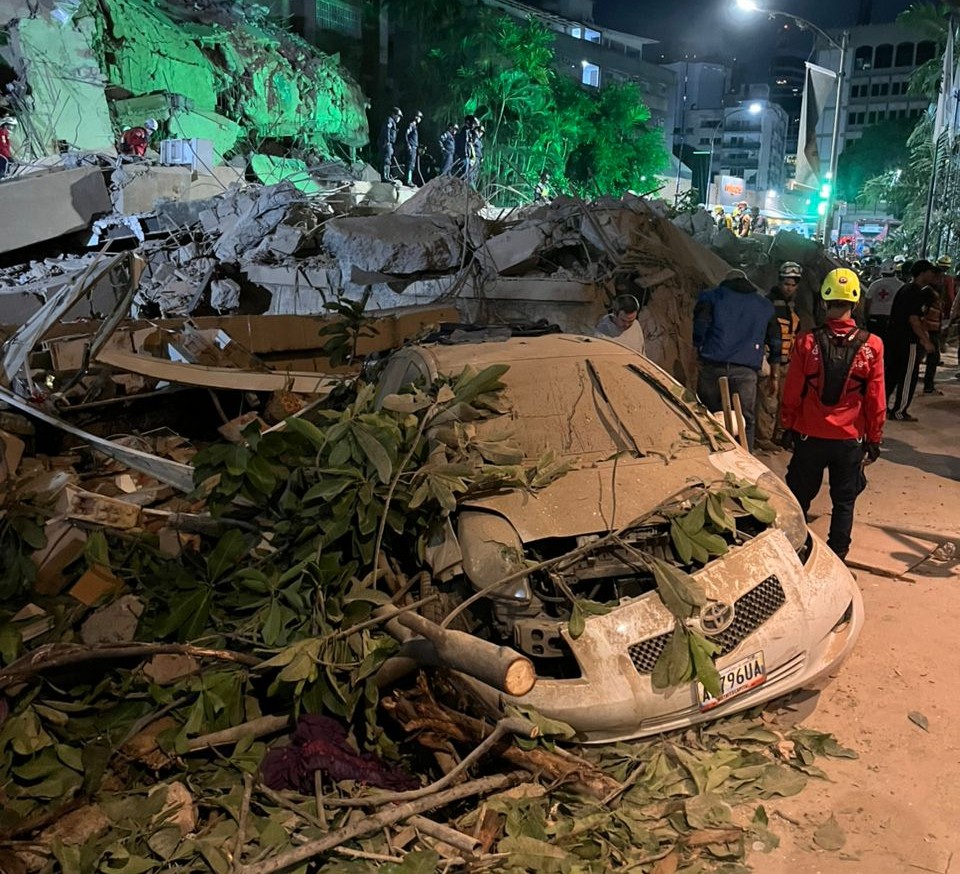
Photo: Contributed

Donate

(Please see reports and updates from CJI Jesuit partners at the bottom of the page.)

The people of Venezuela need us today. 

Our partners are already there. We need to act quickly.  

Canadian Jesuits International (CJI) is accepting donations to support humanitarian relief efforts in northern Venezuela. The region was hit by two deadly earthquakes on June 24, leaving thousands of people in urgent need of assistance and causing widespread destruction. The death toll has been rising as search efforts continue. 

Jesuit Refugee Service (JRS), Fe y Alegria,  and other CJI Jesuit partners in Venezuela are already on the ground: providing emergency support to individuals and families affected by the earthquakes, including temporary shelter, essential relief items, protection services, and psycho-social support. They are also conducting rapid assessments in the affected areas to identify the most urgent needs and ensure assistance continues to reach those most in need. Our partners have worked in Venezuela for many years, building experienced teams and well-established networks of people who are already responding to the emergency. 

JRS reports that countless people are facing uncertainty and loss. Livelihoods have been disrupted, and entire communities are struggling to recover from the shock of the life-changing disaster.  

Your donation will enable our partners to respond quickly to this emergency, provide life-saving assistance, and accompany affected communities as they begin the long process of recovery and rebuilding.

Please see the following updates sent by our Jesuit partners in Venezuela:

Values that guide the unified Jesuit response

Emergency Report: July 19, 2026

Emergency Report: July 15, 2026

 Emergency Report: July 11, 2026 

Emergency Report: July 8, 2026

Emergency Report: June 30, 2026

Donate

Author

  • CJI development
    CJI development
    View all posts
Tagged under: Canadian Jesuits International, earthquake relief, humanitarian appeal, jesuit refugee service, JRS, Venezuela earthquake

Planned Giving

Photo: Fe y Alegría Peru

Bridging Borders

Subscribe to our newsletter!

Ways to give

  • Donate online
  • One-time donations
  • Monthly donations
  • Securities donations
  • Planned giving

@canadianjesuitsinternational

On the International Day of the Girl Child, October 11, Canadian Jesuits International highlights the importance of girls’ education and the need to recognize education as a human right. 
CJI, which works with the poor and marginalized in the Global South, supports projects that enable young women and girls to receive safe, free and quality education. 

Our Jesuit partners in South Sudan deliver quality education at kindergartens, primary and secondary schools, focusing on students, especially girls from poor and marginalized communities (see photo). Girls in South Sudan are ore likely to childbirth than to complete secondary education. The project addresses the theme for this year’s commemoration of the event:
“End child marriage and invest in girls’ rights!”

“Every girl deserves a childhood. Every girl deserves the freedom to learn, to grow, to make her own choices and to define her own future. Yet millions of girls are still denied that freedom,” said the United Nations in a statement. “Each year, more than 12 million girls - roughly one every three seconds - are married before reaching adulthood, with the highest prevalence in sub-Saharan Africa (31 per cent).”

Child marriage violates girl’s s rights. It robs them of their childhood and their right to education, preventing them from achieving their potential as human beings. It also increases their chances of experiencing violence and poor health. 

Ensuring that all girls and young women have access to safe, free, and quality education must be a global development priority. Educating a girl not only empowers her to reach her full potential and access better employment opportunities, but also creates lasting benefits for her family, her community, and society as a whole.
•
Follow
On the International Day of the Girl Child, October 11, Canadian Jesuits International highlights the importance of girls’ education and the need to recognize education as a human right. CJI, which works with the poor and marginalized in the Global South, supports projects that enable young women and girls to receive safe, free and quality education. Our Jesuit partners in South Sudan deliver quality education at kindergartens, primary and secondary schools, focusing on students, especially girls from poor and marginalized communities (see photo). Girls in South Sudan are ore likely to childbirth than to complete secondary education. The project addresses the theme for this year’s commemoration of the event: “End child marriage and invest in girls’ rights!” “Every girl deserves a childhood. Every girl deserves the freedom to learn, to grow, to make her own choices and to define her own future. Yet millions of girls are still denied that freedom,” said the United Nations in a statement. “Each year, more than 12 million girls - roughly one every three seconds - are married before reaching adulthood, with the highest prevalence in sub-Saharan Africa (31 per cent).” Child marriage violates girl’s s rights. It robs them of their childhood and their right to education, preventing them from achieving their potential as human beings. It also increases their chances of experiencing violence and poor health. Ensuring that all girls and young women have access to safe, free, and quality education must be a global development priority. Educating a girl not only empowers her to reach her full potential and access better employment opportunities, but also creates lasting benefits for her family, her community, and society as a whole.
2 days ago
View on Instagram |
1/9
On Thursday 8 October, the staff at Canadian Jesuits International warmly welcomed Mura indigenous leaders from the Brazilian Amazon. The leaders are in Canada to seek solidarity and raise awareness of the ongoing resistance in their community to the proposed Autazes Potash Project in Brazil, which is backed by a Canadian mining company. 

The delegation, which also met with civil society representatives in Ottawa, said that the project threatens their territories, rivers, livelihoods and way of life. Ana Claudia and Felipe Gabriel, Mura Indigenous leaders representing the communities of Lago de Soares and Urucurituba, which are most affected by the project, shared how the mining company has disregarded the extensive protocol for free, prior and informed consent developed by Indigenous leaders in around 40 communities. Company representatives have instead sown discord and torn communities apart by pitting those who will be directly affected by the project and those that won’t; the company has also presented its own protocol that “misrepresents” the position of the Mura Indigenous peoples, they said. Canadians need to know that this is a “contentious” project, said the leaders. 

A report, Resistance: Mura Struggle Against Canadian Potash Mining in Brazil's Amazon. documents the potential human rights and environmental risks associated with the project: https://bit.ly/4hEceg0

The report was prepared jointly by the International Human Rights Program (IHRP) at the University of Toronto Henry N. R. Jackman School of Law, the Cardozo Law Institute in Holocaust and Human Rights (CLIHHR), the Federal University of Rio Grande do Sul Program in Law (PPGD/UFRGS), and the Observatory of Socio-Environmental Law and Human Rights in the Amazon (ODSDH) of Federal University of Amazonas (UFAM).

Representatives of the Conselho Indigenista Missionário (CIMI, Indigenous Missionary Council), have accompanied the delegation during their tour. CIMI was founded in 1972 by Catholic bishops of Brazil to support Indigenous peoples in their struggle for survival, the protection and defense of their territories, and respect for their dignity.
On Thursday 8 October, the staff at Canadian Jesuits International warmly welcomed Mura indigenous leaders from the Brazilian Amazon. The leaders are in Canada to seek solidarity and raise awareness of the ongoing resistance in their community to the proposed Autazes Potash Project in Brazil, which is backed by a Canadian mining company. 

The delegation, which also met with civil society representatives in Ottawa, said that the project threatens their territories, rivers, livelihoods and way of life. Ana Claudia and Felipe Gabriel, Mura Indigenous leaders representing the communities of Lago de Soares and Urucurituba, which are most affected by the project, shared how the mining company has disregarded the extensive protocol for free, prior and informed consent developed by Indigenous leaders in around 40 communities. Company representatives have instead sown discord and torn communities apart by pitting those who will be directly affected by the project and those that won’t; the company has also presented its own protocol that “misrepresents” the position of the Mura Indigenous peoples, they said. Canadians need to know that this is a “contentious” project, said the leaders. 

A report, Resistance: Mura Struggle Against Canadian Potash Mining in Brazil's Amazon. documents the potential human rights and environmental risks associated with the project: https://bit.ly/4hEceg0

The report was prepared jointly by the International Human Rights Program (IHRP) at the University of Toronto Henry N. R. Jackman School of Law, the Cardozo Law Institute in Holocaust and Human Rights (CLIHHR), the Federal University of Rio Grande do Sul Program in Law (PPGD/UFRGS), and the Observatory of Socio-Environmental Law and Human Rights in the Amazon (ODSDH) of Federal University of Amazonas (UFAM).

Representatives of the Conselho Indigenista Missionário (CIMI, Indigenous Missionary Council), have accompanied the delegation during their tour. CIMI was founded in 1972 by Catholic bishops of Brazil to support Indigenous peoples in their struggle for survival, the protection and defense of their territories, and respect for their dignity.
On Thursday 8 October, the staff at Canadian Jesuits International warmly welcomed Mura indigenous leaders from the Brazilian Amazon. The leaders are in Canada to seek solidarity and raise awareness of the ongoing resistance in their community to the proposed Autazes Potash Project in Brazil, which is backed by a Canadian mining company. 

The delegation, which also met with civil society representatives in Ottawa, said that the project threatens their territories, rivers, livelihoods and way of life. Ana Claudia and Felipe Gabriel, Mura Indigenous leaders representing the communities of Lago de Soares and Urucurituba, which are most affected by the project, shared how the mining company has disregarded the extensive protocol for free, prior and informed consent developed by Indigenous leaders in around 40 communities. Company representatives have instead sown discord and torn communities apart by pitting those who will be directly affected by the project and those that won’t; the company has also presented its own protocol that “misrepresents” the position of the Mura Indigenous peoples, they said. Canadians need to know that this is a “contentious” project, said the leaders. 

A report, Resistance: Mura Struggle Against Canadian Potash Mining in Brazil's Amazon. documents the potential human rights and environmental risks associated with the project: https://bit.ly/4hEceg0

The report was prepared jointly by the International Human Rights Program (IHRP) at the University of Toronto Henry N. R. Jackman School of Law, the Cardozo Law Institute in Holocaust and Human Rights (CLIHHR), the Federal University of Rio Grande do Sul Program in Law (PPGD/UFRGS), and the Observatory of Socio-Environmental Law and Human Rights in the Amazon (ODSDH) of Federal University of Amazonas (UFAM).

Representatives of the Conselho Indigenista Missionário (CIMI, Indigenous Missionary Council), have accompanied the delegation during their tour. CIMI was founded in 1972 by Catholic bishops of Brazil to support Indigenous peoples in their struggle for survival, the protection and defense of their territories, and respect for their dignity.
On Thursday 8 October, the staff at Canadian Jesuits International warmly welcomed Mura indigenous leaders from the Brazilian Amazon. The leaders are in Canada to seek solidarity and raise awareness of the ongoing resistance in their community to the proposed Autazes Potash Project in Brazil, which is backed by a Canadian mining company. 

The delegation, which also met with civil society representatives in Ottawa, said that the project threatens their territories, rivers, livelihoods and way of life. Ana Claudia and Felipe Gabriel, Mura Indigenous leaders representing the communities of Lago de Soares and Urucurituba, which are most affected by the project, shared how the mining company has disregarded the extensive protocol for free, prior and informed consent developed by Indigenous leaders in around 40 communities. Company representatives have instead sown discord and torn communities apart by pitting those who will be directly affected by the project and those that won’t; the company has also presented its own protocol that “misrepresents” the position of the Mura Indigenous peoples, they said. Canadians need to know that this is a “contentious” project, said the leaders. 

A report, Resistance: Mura Struggle Against Canadian Potash Mining in Brazil's Amazon. documents the potential human rights and environmental risks associated with the project: https://bit.ly/4hEceg0

The report was prepared jointly by the International Human Rights Program (IHRP) at the University of Toronto Henry N. R. Jackman School of Law, the Cardozo Law Institute in Holocaust and Human Rights (CLIHHR), the Federal University of Rio Grande do Sul Program in Law (PPGD/UFRGS), and the Observatory of Socio-Environmental Law and Human Rights in the Amazon (ODSDH) of Federal University of Amazonas (UFAM).

Representatives of the Conselho Indigenista Missionário (CIMI, Indigenous Missionary Council), have accompanied the delegation during their tour. CIMI was founded in 1972 by Catholic bishops of Brazil to support Indigenous peoples in their struggle for survival, the protection and defense of their territories, and respect for their dignity.
On Thursday 8 October, the staff at Canadian Jesuits International warmly welcomed Mura indigenous leaders from the Brazilian Amazon. The leaders are in Canada to seek solidarity and raise awareness of the ongoing resistance in their community to the proposed Autazes Potash Project in Brazil, which is backed by a Canadian mining company. 

The delegation, which also met with civil society representatives in Ottawa, said that the project threatens their territories, rivers, livelihoods and way of life. Ana Claudia and Felipe Gabriel, Mura Indigenous leaders representing the communities of Lago de Soares and Urucurituba, which are most affected by the project, shared how the mining company has disregarded the extensive protocol for free, prior and informed consent developed by Indigenous leaders in around 40 communities. Company representatives have instead sown discord and torn communities apart by pitting those who will be directly affected by the project and those that won’t; the company has also presented its own protocol that “misrepresents” the position of the Mura Indigenous peoples, they said. Canadians need to know that this is a “contentious” project, said the leaders. 

A report, Resistance: Mura Struggle Against Canadian Potash Mining in Brazil's Amazon. documents the potential human rights and environmental risks associated with the project: https://bit.ly/4hEceg0

The report was prepared jointly by the International Human Rights Program (IHRP) at the University of Toronto Henry N. R. Jackman School of Law, the Cardozo Law Institute in Holocaust and Human Rights (CLIHHR), the Federal University of Rio Grande do Sul Program in Law (PPGD/UFRGS), and the Observatory of Socio-Environmental Law and Human Rights in the Amazon (ODSDH) of Federal University of Amazonas (UFAM).

Representatives of the Conselho Indigenista Missionário (CIMI, Indigenous Missionary Council), have accompanied the delegation during their tour. CIMI was founded in 1972 by Catholic bishops of Brazil to support Indigenous peoples in their struggle for survival, the protection and defense of their territories, and respect for their dignity.
On Thursday 8 October, the staff at Canadian Jesuits International warmly welcomed Mura indigenous leaders from the Brazilian Amazon. The leaders are in Canada to seek solidarity and raise awareness of the ongoing resistance in their community to the proposed Autazes Potash Project in Brazil, which is backed by a Canadian mining company. 

The delegation, which also met with civil society representatives in Ottawa, said that the project threatens their territories, rivers, livelihoods and way of life. Ana Claudia and Felipe Gabriel, Mura Indigenous leaders representing the communities of Lago de Soares and Urucurituba, which are most affected by the project, shared how the mining company has disregarded the extensive protocol for free, prior and informed consent developed by Indigenous leaders in around 40 communities. Company representatives have instead sown discord and torn communities apart by pitting those who will be directly affected by the project and those that won’t; the company has also presented its own protocol that “misrepresents” the position of the Mura Indigenous peoples, they said. Canadians need to know that this is a “contentious” project, said the leaders. 

A report, Resistance: Mura Struggle Against Canadian Potash Mining in Brazil's Amazon. documents the potential human rights and environmental risks associated with the project: https://bit.ly/4hEceg0

The report was prepared jointly by the International Human Rights Program (IHRP) at the University of Toronto Henry N. R. Jackman School of Law, the Cardozo Law Institute in Holocaust and Human Rights (CLIHHR), the Federal University of Rio Grande do Sul Program in Law (PPGD/UFRGS), and the Observatory of Socio-Environmental Law and Human Rights in the Amazon (ODSDH) of Federal University of Amazonas (UFAM).

Representatives of the Conselho Indigenista Missionário (CIMI, Indigenous Missionary Council), have accompanied the delegation during their tour. CIMI was founded in 1972 by Catholic bishops of Brazil to support Indigenous peoples in their struggle for survival, the protection and defense of their territories, and respect for their dignity.
•
Follow
On Thursday 8 October, the staff at Canadian Jesuits International warmly welcomed Mura indigenous leaders from the Brazilian Amazon. The leaders are in Canada to seek solidarity and raise awareness of the ongoing resistance in their community to the proposed Autazes Potash Project in Brazil, which is backed by a Canadian mining company. The delegation, which also met with civil society representatives in Ottawa, said that the project threatens their territories, rivers, livelihoods and way of life. Ana Claudia and Felipe Gabriel, Mura Indigenous leaders representing the communities of Lago de Soares and Urucurituba, which are most affected by the project, shared how the mining company has disregarded the extensive protocol for free, prior and informed consent developed by Indigenous leaders in around 40 communities. Company representatives have instead sown discord and torn communities apart by pitting those who will be directly affected by the project and those that won’t; the company has also presented its own protocol that “misrepresents” the position of the Mura Indigenous peoples, they said. Canadians need to know that this is a “contentious” project, said the leaders. A report, Resistance: Mura Struggle Against Canadian Potash Mining in Brazil's Amazon. documents the potential human rights and environmental risks associated with the project: https://bit.ly/4hEceg0 The report was prepared jointly by the International Human Rights Program (IHRP) at the University of Toronto Henry N. R. Jackman School of Law, the Cardozo Law Institute in Holocaust and Human Rights (CLIHHR), the Federal University of Rio Grande do Sul Program in Law (PPGD/UFRGS), and the Observatory of Socio-Environmental Law and Human Rights in the Amazon (ODSDH) of Federal University of Amazonas (UFAM). Representatives of the Conselho Indigenista Missionário (CIMI, Indigenous Missionary Council), have accompanied the delegation during their tour. CIMI was founded in 1972 by Catholic bishops of Brazil to support Indigenous peoples in their struggle for survival, the protection and defense of their territories, and respect for their dignity.
3 days ago
View on Instagram |
2/9
From 18 October to 1 November 2026, Brex Arevalo, a Filipino environmentalist and climate justice advocate, will tour Canada as a guest speaker for the Canadian Jesuit International (CJI) fall campaign, Ecological Justice: It’s not complicated.

Arevalo will give free public talks in Montreal, Victoria, Vancouver, Toronto and Waterloo, which are being co-organized by CJI and various partner organisations. 

Learn more about Brex, the campaign and the events: Click link in bio.

#ecologicalcrisis #laudatosi #jesuit #cji #climatejustice #climateaction
From 18 October to 1 November 2026, Brex Arevalo, a Filipino environmentalist and climate justice advocate, will tour Canada as a guest speaker for the Canadian Jesuit International (CJI) fall campaign, Ecological Justice: It’s not complicated.

Arevalo will give free public talks in Montreal, Victoria, Vancouver, Toronto and Waterloo, which are being co-organized by CJI and various partner organisations. 

Learn more about Brex, the campaign and the events: Click link in bio.

#ecologicalcrisis #laudatosi #jesuit #cji #climatejustice #climateaction
•
Follow
From 18 October to 1 November 2026, Brex Arevalo, a Filipino environmentalist and climate justice advocate, will tour Canada as a guest speaker for the Canadian Jesuit International (CJI) fall campaign, Ecological Justice: It’s not complicated. Arevalo will give free public talks in Montreal, Victoria, Vancouver, Toronto and Waterloo, which are being co-organized by CJI and various partner organisations. Learn more about Brex, the campaign and the events: Click link in bio. #ecologicalcrisis #laudatosi #jesuit #cji #climatejustice #climateaction
3 days ago
View on Instagram |
3/9
In preparation for COP31 this November, the Jesuits for Climate Justice Campaign has prepared a Statement and Policy Brief, along with campaign resources and materials. 

"As people of faith, we reaffirm our urgent responsibility to protect our common home and defend climate justice for the most vulnerable," it stressed.

Click link in bio to read and download the statement and other materials.
In preparation for COP31 this November, the Jesuits for Climate Justice Campaign has prepared a Statement and Policy Brief, along with campaign resources and materials. 

"As people of faith, we reaffirm our urgent responsibility to protect our common home and defend climate justice for the most vulnerable," it stressed.

Click link in bio to read and download the statement and other materials.
In preparation for COP31 this November, the Jesuits for Climate Justice Campaign has prepared a Statement and Policy Brief, along with campaign resources and materials. 

"As people of faith, we reaffirm our urgent responsibility to protect our common home and defend climate justice for the most vulnerable," it stressed.

Click link in bio to read and download the statement and other materials.
In preparation for COP31 this November, the Jesuits for Climate Justice Campaign has prepared a Statement and Policy Brief, along with campaign resources and materials. 

"As people of faith, we reaffirm our urgent responsibility to protect our common home and defend climate justice for the most vulnerable," it stressed.

Click link in bio to read and download the statement and other materials.
In preparation for COP31 this November, the Jesuits for Climate Justice Campaign has prepared a Statement and Policy Brief, along with campaign resources and materials. 

"As people of faith, we reaffirm our urgent responsibility to protect our common home and defend climate justice for the most vulnerable," it stressed.

Click link in bio to read and download the statement and other materials.
In preparation for COP31 this November, the Jesuits for Climate Justice Campaign has prepared a Statement and Policy Brief, along with campaign resources and materials. 

"As people of faith, we reaffirm our urgent responsibility to protect our common home and defend climate justice for the most vulnerable," it stressed.

Click link in bio to read and download the statement and other materials.
•
Follow
In preparation for COP31 this November, the Jesuits for Climate Justice Campaign has prepared a Statement and Policy Brief, along with campaign resources and materials. "As people of faith, we reaffirm our urgent responsibility to protect our common home and defend climate justice for the most vulnerable," it stressed. Click link in bio to read and download the statement and other materials.
4 days ago
View on Instagram |
4/9
Fr. Dani Villanueva, SJ, General Coordinator of the International Federation of Fe y Alegría on October 2 underscored that support for grassroots, community-led movement for public education in poor and marginalized areas is an investment in the capacity of local communities to build their own futures. 

During a brief visit to Toronto, Fr. Villanueva spoke before a group of Canadian Jesuits International (CJI) supporters  and met with CJI staff.  He emphasized that Fe y Alegria, a CJI Jesuit partner with presence in 23 countries, does not “open” schools on its own initiative but responds to communities whose demand for quality education may not have been fully met by their governments.

Click link in bio to read fully story.

#Jesuit #education #feyalegria
Fr. Dani Villanueva, SJ, General Coordinator of the International Federation of Fe y Alegría on October 2 underscored that support for grassroots, community-led movement for public education in poor and marginalized areas is an investment in the capacity of local communities to build their own futures. 

During a brief visit to Toronto, Fr. Villanueva spoke before a group of Canadian Jesuits International (CJI) supporters  and met with CJI staff.  He emphasized that Fe y Alegria, a CJI Jesuit partner with presence in 23 countries, does not “open” schools on its own initiative but responds to communities whose demand for quality education may not have been fully met by their governments.

Click link in bio to read fully story.

#Jesuit #education #feyalegria
Fr. Dani Villanueva, SJ, General Coordinator of the International Federation of Fe y Alegría on October 2 underscored that support for grassroots, community-led movement for public education in poor and marginalized areas is an investment in the capacity of local communities to build their own futures. 

During a brief visit to Toronto, Fr. Villanueva spoke before a group of Canadian Jesuits International (CJI) supporters  and met with CJI staff.  He emphasized that Fe y Alegria, a CJI Jesuit partner with presence in 23 countries, does not “open” schools on its own initiative but responds to communities whose demand for quality education may not have been fully met by their governments.

Click link in bio to read fully story.

#Jesuit #education #feyalegria
Fr. Dani Villanueva, SJ, General Coordinator of the International Federation of Fe y Alegría on October 2 underscored that support for grassroots, community-led movement for public education in poor and marginalized areas is an investment in the capacity of local communities to build their own futures. 

During a brief visit to Toronto, Fr. Villanueva spoke before a group of Canadian Jesuits International (CJI) supporters  and met with CJI staff.  He emphasized that Fe y Alegria, a CJI Jesuit partner with presence in 23 countries, does not “open” schools on its own initiative but responds to communities whose demand for quality education may not have been fully met by their governments.

Click link in bio to read fully story.

#Jesuit #education #feyalegria
Fr. Dani Villanueva, SJ, General Coordinator of the International Federation of Fe y Alegría on October 2 underscored that support for grassroots, community-led movement for public education in poor and marginalized areas is an investment in the capacity of local communities to build their own futures. 

During a brief visit to Toronto, Fr. Villanueva spoke before a group of Canadian Jesuits International (CJI) supporters  and met with CJI staff.  He emphasized that Fe y Alegria, a CJI Jesuit partner with presence in 23 countries, does not “open” schools on its own initiative but responds to communities whose demand for quality education may not have been fully met by their governments.

Click link in bio to read fully story.

#Jesuit #education #feyalegria
Fr. Dani Villanueva, SJ, General Coordinator of the International Federation of Fe y Alegría on October 2 underscored that support for grassroots, community-led movement for public education in poor and marginalized areas is an investment in the capacity of local communities to build their own futures. 

During a brief visit to Toronto, Fr. Villanueva spoke before a group of Canadian Jesuits International (CJI) supporters  and met with CJI staff.  He emphasized that Fe y Alegria, a CJI Jesuit partner with presence in 23 countries, does not “open” schools on its own initiative but responds to communities whose demand for quality education may not have been fully met by their governments.

Click link in bio to read fully story.

#Jesuit #education #feyalegria
•
Follow
Fr. Dani Villanueva, SJ, General Coordinator of the International Federation of Fe y Alegría on October 2 underscored that support for grassroots, community-led movement for public education in poor and marginalized areas is an investment in the capacity of local communities to build their own futures. During a brief visit to Toronto, Fr. Villanueva spoke before a group of Canadian Jesuits International (CJI) supporters and met with CJI staff. He emphasized that Fe y Alegria, a CJI Jesuit partner with presence in 23 countries, does not “open” schools on its own initiative but responds to communities whose demand for quality education may not have been fully met by their governments. Click link in bio to read fully story. #Jesuit #education #feyalegria
6 days ago
View on Instagram |
5/9
Fr. @danivillanueva , SJ, General Coordinator of the International Federation of Fe y Alegría, made a brief visit to Toronto on October 2 to 4, which included a visit to Canadian Jesuits International (CJI), where he spoke to staff and met with some CJI donors. CJI supports five Fe y Alegría projects that provide preschool education, youth entrepreneurship and employment, and youth engagement for global leadership, among others. Story to follow...
•
Follow
Fr. @danivillanueva , SJ, General Coordinator of the International Federation of Fe y Alegría, made a brief visit to Toronto on October 2 to 4, which included a visit to Canadian Jesuits International (CJI), where he spoke to staff and met with some CJI donors. CJI supports five Fe y Alegría projects that provide preschool education, youth entrepreneurship and employment, and youth engagement for global leadership, among others. Story to follow...
7 days ago
View on Instagram |
6/9
See you in Montreal!  Register now: Click link in bio.

#Montreal #environment #ecology
See you in Montreal!  Register now: Click link in bio.

#Montreal #environment #ecology
•
Follow
See you in Montreal! Register now: Click link in bio. #Montreal #environment #ecology
1 week ago
View on Instagram |
7/9
On the National Day for Truth and Reconciliation Day, September 30, Canadian Jesuits International (CJI) expresses its solidarity with Indigenous peoples in Canada and honours residential school survivors, their families, and the children who were never able to return home. 
CJI recognizes the devastating and inter-generational  impacts of Canada’s residential school system and reaffirms its commitment to truth and reconciliation. It also joins calls for the full implementation of the UN Declaration on the Rights of Indigenous Peoples in Canada. 
As an international social justice organization, CJI supports projects in the Global South that support Indigenous peoples protect their lands, preserve their languages and cultures, and affirms their human rights, including self-determination. CJI also supports Indigenous-led peacebuilding efforts, and Indigenous women's leadership in Latin America, among others. 
Its Jesuit partners include the AC Indigenous Rights Centre (CEDIAC) in Chiapas, Mexico, which promotes conflict resolution through Indigenous reconciliation systems. 
 
CJI recognizes that Indigenous peoples hold traditional ecological knowledge critical to environmental protection. The Jesuit-based Solidarity Network of the Indigenous Apostolate helps protect our common home and supports Indigenous women leaders defending ancestral territories and cultures throughout Latin America. 

Photo by Tandem X Visuals on Unsplash/ Stuffed toys and shoes are laid out on the steps of Saskatchewan's Legislative Building in Regina to remember residential schools children who never made it back home.
•
Follow
On the National Day for Truth and Reconciliation Day, September 30, Canadian Jesuits International (CJI) expresses its solidarity with Indigenous peoples in Canada and honours residential school survivors, their families, and the children who were never able to return home. CJI recognizes the devastating and inter-generational impacts of Canada’s residential school system and reaffirms its commitment to truth and reconciliation. It also joins calls for the full implementation of the UN Declaration on the Rights of Indigenous Peoples in Canada. As an international social justice organization, CJI supports projects in the Global South that support Indigenous peoples protect their lands, preserve their languages and cultures, and affirms their human rights, including self-determination. CJI also supports Indigenous-led peacebuilding efforts, and Indigenous women's leadership in Latin America, among others. Its Jesuit partners include the AC Indigenous Rights Centre (CEDIAC) in Chiapas, Mexico, which promotes conflict resolution through Indigenous reconciliation systems. CJI recognizes that Indigenous peoples hold traditional ecological knowledge critical to environmental protection. The Jesuit-based Solidarity Network of the Indigenous Apostolate helps protect our common home and supports Indigenous women leaders defending ancestral territories and cultures throughout Latin America. Photo by Tandem X Visuals on Unsplash/ Stuffed toys and shoes are laid out on the steps of Saskatchewan's Legislative Building in Regina to remember residential schools children who never made it back home.
2 weeks ago
View on Instagram |
8/9
Around 40 Indigenous young people from Chile, Brazil, Paraguay, Bolivia, Peru, Ecuador, Guatemala and Mexico concluded their regional gathering in Cusco with a resolve to “build on the foundations” established by their ancestors and to “forge new paths towards ‘Buen Vivir’ (Good Living) in order to nurture and protect their communities and territories. 

CJI Outreach Coordinator Juan Camilo Poveda attended the assembly, which was organized by CJI Jesuit partners Indigenous Solidarity and Apostolate Network (RSAI) of the Conference of Jesuit Provincials in Latin America and the Caribbean (CPAL) and the Pan-Amazonian Jesuit Service (SJPAM). 

During the meeting held September 21 to 25, young people identified issues affecting them and their communities, including racism, discrimination and sexual violence; the devastating impact of hydroelectric power stations and extractive industries; the loss of language and culture; a lack of opportunities, and the effects of social media and AI. 

However, they also identified “seeds and fruits” that offer hope. CLICK LINK IN BIO to read full story.
Around 40 Indigenous young people from Chile, Brazil, Paraguay, Bolivia, Peru, Ecuador, Guatemala and Mexico concluded their regional gathering in Cusco with a resolve to “build on the foundations” established by their ancestors and to “forge new paths towards ‘Buen Vivir’ (Good Living) in order to nurture and protect their communities and territories. 

CJI Outreach Coordinator Juan Camilo Poveda attended the assembly, which was organized by CJI Jesuit partners Indigenous Solidarity and Apostolate Network (RSAI) of the Conference of Jesuit Provincials in Latin America and the Caribbean (CPAL) and the Pan-Amazonian Jesuit Service (SJPAM). 

During the meeting held September 21 to 25, young people identified issues affecting them and their communities, including racism, discrimination and sexual violence; the devastating impact of hydroelectric power stations and extractive industries; the loss of language and culture; a lack of opportunities, and the effects of social media and AI. 

However, they also identified “seeds and fruits” that offer hope. CLICK LINK IN BIO to read full story.
Around 40 Indigenous young people from Chile, Brazil, Paraguay, Bolivia, Peru, Ecuador, Guatemala and Mexico concluded their regional gathering in Cusco with a resolve to “build on the foundations” established by their ancestors and to “forge new paths towards ‘Buen Vivir’ (Good Living) in order to nurture and protect their communities and territories. 

CJI Outreach Coordinator Juan Camilo Poveda attended the assembly, which was organized by CJI Jesuit partners Indigenous Solidarity and Apostolate Network (RSAI) of the Conference of Jesuit Provincials in Latin America and the Caribbean (CPAL) and the Pan-Amazonian Jesuit Service (SJPAM). 

During the meeting held September 21 to 25, young people identified issues affecting them and their communities, including racism, discrimination and sexual violence; the devastating impact of hydroelectric power stations and extractive industries; the loss of language and culture; a lack of opportunities, and the effects of social media and AI. 

However, they also identified “seeds and fruits” that offer hope. CLICK LINK IN BIO to read full story.
Around 40 Indigenous young people from Chile, Brazil, Paraguay, Bolivia, Peru, Ecuador, Guatemala and Mexico concluded their regional gathering in Cusco with a resolve to “build on the foundations” established by their ancestors and to “forge new paths towards ‘Buen Vivir’ (Good Living) in order to nurture and protect their communities and territories. 

CJI Outreach Coordinator Juan Camilo Poveda attended the assembly, which was organized by CJI Jesuit partners Indigenous Solidarity and Apostolate Network (RSAI) of the Conference of Jesuit Provincials in Latin America and the Caribbean (CPAL) and the Pan-Amazonian Jesuit Service (SJPAM). 

During the meeting held September 21 to 25, young people identified issues affecting them and their communities, including racism, discrimination and sexual violence; the devastating impact of hydroelectric power stations and extractive industries; the loss of language and culture; a lack of opportunities, and the effects of social media and AI. 

However, they also identified “seeds and fruits” that offer hope. CLICK LINK IN BIO to read full story.
Around 40 Indigenous young people from Chile, Brazil, Paraguay, Bolivia, Peru, Ecuador, Guatemala and Mexico concluded their regional gathering in Cusco with a resolve to “build on the foundations” established by their ancestors and to “forge new paths towards ‘Buen Vivir’ (Good Living) in order to nurture and protect their communities and territories. 

CJI Outreach Coordinator Juan Camilo Poveda attended the assembly, which was organized by CJI Jesuit partners Indigenous Solidarity and Apostolate Network (RSAI) of the Conference of Jesuit Provincials in Latin America and the Caribbean (CPAL) and the Pan-Amazonian Jesuit Service (SJPAM). 

During the meeting held September 21 to 25, young people identified issues affecting them and their communities, including racism, discrimination and sexual violence; the devastating impact of hydroelectric power stations and extractive industries; the loss of language and culture; a lack of opportunities, and the effects of social media and AI. 

However, they also identified “seeds and fruits” that offer hope. CLICK LINK IN BIO to read full story.
Around 40 Indigenous young people from Chile, Brazil, Paraguay, Bolivia, Peru, Ecuador, Guatemala and Mexico concluded their regional gathering in Cusco with a resolve to “build on the foundations” established by their ancestors and to “forge new paths towards ‘Buen Vivir’ (Good Living) in order to nurture and protect their communities and territories. 

CJI Outreach Coordinator Juan Camilo Poveda attended the assembly, which was organized by CJI Jesuit partners Indigenous Solidarity and Apostolate Network (RSAI) of the Conference of Jesuit Provincials in Latin America and the Caribbean (CPAL) and the Pan-Amazonian Jesuit Service (SJPAM). 

During the meeting held September 21 to 25, young people identified issues affecting them and their communities, including racism, discrimination and sexual violence; the devastating impact of hydroelectric power stations and extractive industries; the loss of language and culture; a lack of opportunities, and the effects of social media and AI. 

However, they also identified “seeds and fruits” that offer hope. CLICK LINK IN BIO to read full story.
Around 40 Indigenous young people from Chile, Brazil, Paraguay, Bolivia, Peru, Ecuador, Guatemala and Mexico concluded their regional gathering in Cusco with a resolve to “build on the foundations” established by their ancestors and to “forge new paths towards ‘Buen Vivir’ (Good Living) in order to nurture and protect their communities and territories. 

CJI Outreach Coordinator Juan Camilo Poveda attended the assembly, which was organized by CJI Jesuit partners Indigenous Solidarity and Apostolate Network (RSAI) of the Conference of Jesuit Provincials in Latin America and the Caribbean (CPAL) and the Pan-Amazonian Jesuit Service (SJPAM). 

During the meeting held September 21 to 25, young people identified issues affecting them and their communities, including racism, discrimination and sexual violence; the devastating impact of hydroelectric power stations and extractive industries; the loss of language and culture; a lack of opportunities, and the effects of social media and AI. 

However, they also identified “seeds and fruits” that offer hope. CLICK LINK IN BIO to read full story.
Around 40 Indigenous young people from Chile, Brazil, Paraguay, Bolivia, Peru, Ecuador, Guatemala and Mexico concluded their regional gathering in Cusco with a resolve to “build on the foundations” established by their ancestors and to “forge new paths towards ‘Buen Vivir’ (Good Living) in order to nurture and protect their communities and territories. 

CJI Outreach Coordinator Juan Camilo Poveda attended the assembly, which was organized by CJI Jesuit partners Indigenous Solidarity and Apostolate Network (RSAI) of the Conference of Jesuit Provincials in Latin America and the Caribbean (CPAL) and the Pan-Amazonian Jesuit Service (SJPAM). 

During the meeting held September 21 to 25, young people identified issues affecting them and their communities, including racism, discrimination and sexual violence; the devastating impact of hydroelectric power stations and extractive industries; the loss of language and culture; a lack of opportunities, and the effects of social media and AI. 

However, they also identified “seeds and fruits” that offer hope. CLICK LINK IN BIO to read full story.
Around 40 Indigenous young people from Chile, Brazil, Paraguay, Bolivia, Peru, Ecuador, Guatemala and Mexico concluded their regional gathering in Cusco with a resolve to “build on the foundations” established by their ancestors and to “forge new paths towards ‘Buen Vivir’ (Good Living) in order to nurture and protect their communities and territories. 

CJI Outreach Coordinator Juan Camilo Poveda attended the assembly, which was organized by CJI Jesuit partners Indigenous Solidarity and Apostolate Network (RSAI) of the Conference of Jesuit Provincials in Latin America and the Caribbean (CPAL) and the Pan-Amazonian Jesuit Service (SJPAM). 

During the meeting held September 21 to 25, young people identified issues affecting them and their communities, including racism, discrimination and sexual violence; the devastating impact of hydroelectric power stations and extractive industries; the loss of language and culture; a lack of opportunities, and the effects of social media and AI. 

However, they also identified “seeds and fruits” that offer hope. CLICK LINK IN BIO to read full story.
Around 40 Indigenous young people from Chile, Brazil, Paraguay, Bolivia, Peru, Ecuador, Guatemala and Mexico concluded their regional gathering in Cusco with a resolve to “build on the foundations” established by their ancestors and to “forge new paths towards ‘Buen Vivir’ (Good Living) in order to nurture and protect their communities and territories. 

CJI Outreach Coordinator Juan Camilo Poveda attended the assembly, which was organized by CJI Jesuit partners Indigenous Solidarity and Apostolate Network (RSAI) of the Conference of Jesuit Provincials in Latin America and the Caribbean (CPAL) and the Pan-Amazonian Jesuit Service (SJPAM). 

During the meeting held September 21 to 25, young people identified issues affecting them and their communities, including racism, discrimination and sexual violence; the devastating impact of hydroelectric power stations and extractive industries; the loss of language and culture; a lack of opportunities, and the effects of social media and AI. 

However, they also identified “seeds and fruits” that offer hope. CLICK LINK IN BIO to read full story.
•
Follow
Around 40 Indigenous young people from Chile, Brazil, Paraguay, Bolivia, Peru, Ecuador, Guatemala and Mexico concluded their regional gathering in Cusco with a resolve to “build on the foundations” established by their ancestors and to “forge new paths towards ‘Buen Vivir’ (Good Living) in order to nurture and protect their communities and territories. CJI Outreach Coordinator Juan Camilo Poveda attended the assembly, which was organized by CJI Jesuit partners Indigenous Solidarity and Apostolate Network (RSAI) of the Conference of Jesuit Provincials in Latin America and the Caribbean (CPAL) and the Pan-Amazonian Jesuit Service (SJPAM). During the meeting held September 21 to 25, young people identified issues affecting them and their communities, including racism, discrimination and sexual violence; the devastating impact of hydroelectric power stations and extractive industries; the loss of language and culture; a lack of opportunities, and the effects of social media and AI. However, they also identified “seeds and fruits” that offer hope. CLICK LINK IN BIO to read full story.
2 weeks ago
View on Instagram |
9/9
Follow us on Instagram!
  • Who we are
  • International Programs
  • Outreach
  • Ways to give
  • Resources
Donate Now!

Follow us

Subscribe to our newsletter!


 Our Privacy Policy

Contact

Canadian Jesuits International

70 Saint Mary St
Toronto, ON
M5S 1J3
Canada

Tel: 416.465.1824
Toll Free (Canada and USA): 1.800.448.2148

Email: [email protected]

Registered Charitable No: 11883 3623 RR0002

© Canadian Jesuits International 2026

TOP
  • English