
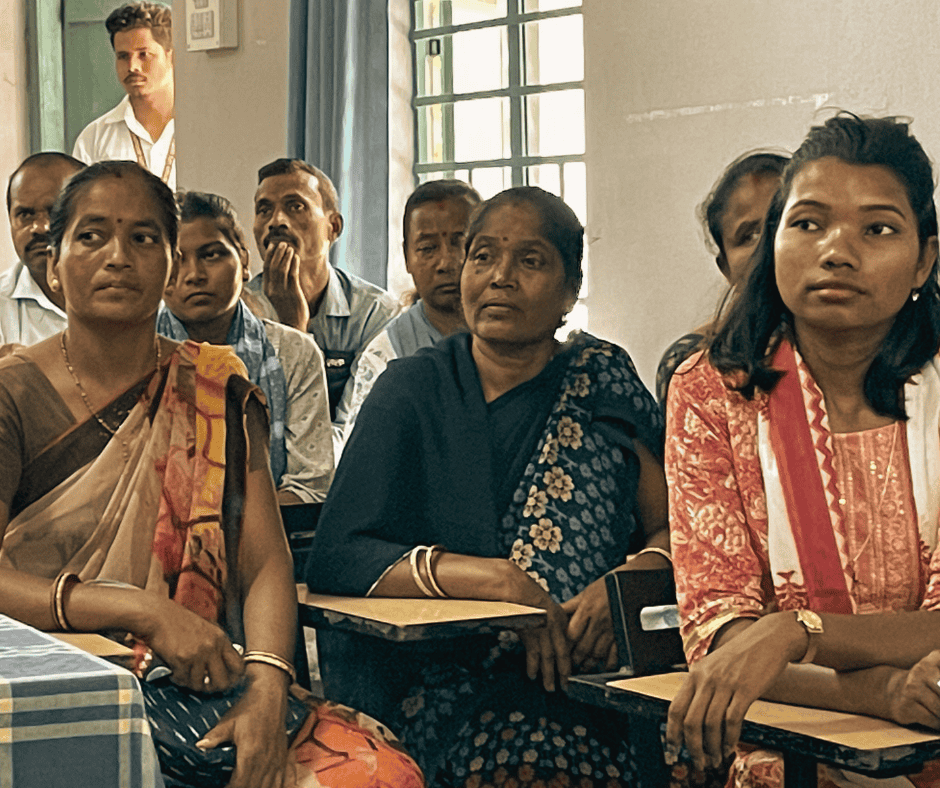
A rights training session for tea plantation workers organized by the Jesuit-run Human Life Development and Research Centre in India. Photo: Jenny Cafiso/CJI
On World Day of Social Justice, January 20, CJI reaffirms its commitment to advancing social well-being, gender equality, and justice for all.
CJI highlights the work of its partner, the Human Life Development and Research Centre (HLDRC), a project of the Jesuit Province of Darjeeling. Based in Matigara, India, HLDRC addresses injustices faced by tea plantation workers in North Bengal. These workers are often deprived of their rights and exploited by some plantation managers and government agencies. Many are denied fair wages, medical care, ration cards, and access to land ownership, among other basic entitlements.
HLDRC empowers tea plantation workers through rights-based advocacy, livelihood support, education, and leadership development. The organization strengthens community structures through initiatives such as women’s Self-Help Groups, youth associations, and grassroots leadership networks to foster long-term social and economic transformation in tea-growing communities.
The work of CJI and HLDRC aligns closely with this year’s social justice theme, “Social Protection and Decent Work for All,” which emphasizes the importance of policies that build “fairer and more resilient societies.” According to the United Nations, these include “strong social protection systems, the protection of labor rights, the promotion of social dialogue, and inclusive public services.”