By Samir Hatem
There have been times in my life where I have found myself crying to the Lord from “out of the depths.” These were moments when I had no idea what to do, except to surrender to God’s shelter, comfort, and protection. Like a parent, God takes us into his embrace when we surrender to Him.
But God is not the parent who merely “comforts” and “protects” us to the point of smothering. God is like a mother helping her toddler to walk, He may first grab us by the arms, then by the forearms, then by the palms of our hands. Finally, he merely touches our fingers, before stepping back and creating a distance.
Yes, ever since creation, God has taken a step back, to allow us to become. He is all-encompassing, but in his freedom, he desires for us to exist. He wants us to exist as ourselves, as individuals who can freely relate with him, with our neighbours, and with his creation. To give us life “to the full,” he maintains a certain distance. He never abandons us. His grace flows freely, but it is this distance that makes us whole.
Today we are all sending supplications to the Lord, out of the depths of multi-layered crises: environmental, political, financial, and personal. We are called to be like God: comforting, soothing, and protecting, while helping each other to grow in humanity and freedom. The good news is that this happens every day: within families, at schools, among neighbours, or even total strangers. Most of these acts remain unknown except to God. But sometimes we may notice the seeds of the Kingdom that is already here, and yet to come.
I can’t help but think about an initiative by the Kasisi Agricultural Training Centre (KATC), a Jesuit partner of CJI that promotes agroecology among small-scale farmers in Zambia. At KATC, farmers and their families achieve sustainable livelihoods through organic farming techniques. Agroecology is taught through short courses, or through a two-year diploma program in collaboration with the University of Zambia. The centre also promotes holistic and democratic rural development: study circles where farmers discuss issues of interest, biofertilizer enterprises that help farmers to gain income, and community seed banks to save the genetic diversity of the local communities.
By teaching and implementing sustainable livelihood, KATC aims to restore our relationship with our common home, from one of exploitation and annihilation, to one that respects its integrity, and its wholeness. It is a relationship that creates a respectful distance, that is more God-like. By helping people to obtain a means of independent and dignified livelihood, KATC goes beyond merely comforting and soothing, again, acting more God-like.
As we approach the passion of Christ, we are reminded that he did not impose his redemption on us. He left us the choice to interact with his saving grace. We pray that the Lord will enlighten our hearts so that we may do so.
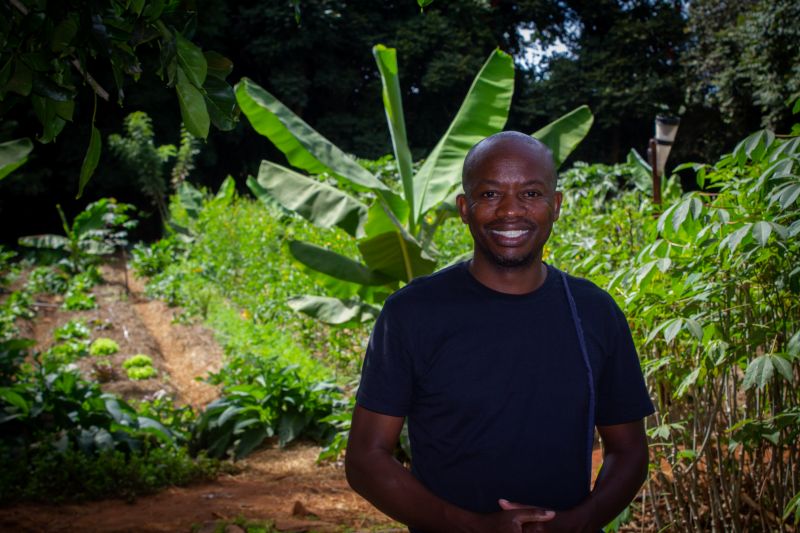
Samir Hatem is Operations Manager at Canadian Jesuits International.