
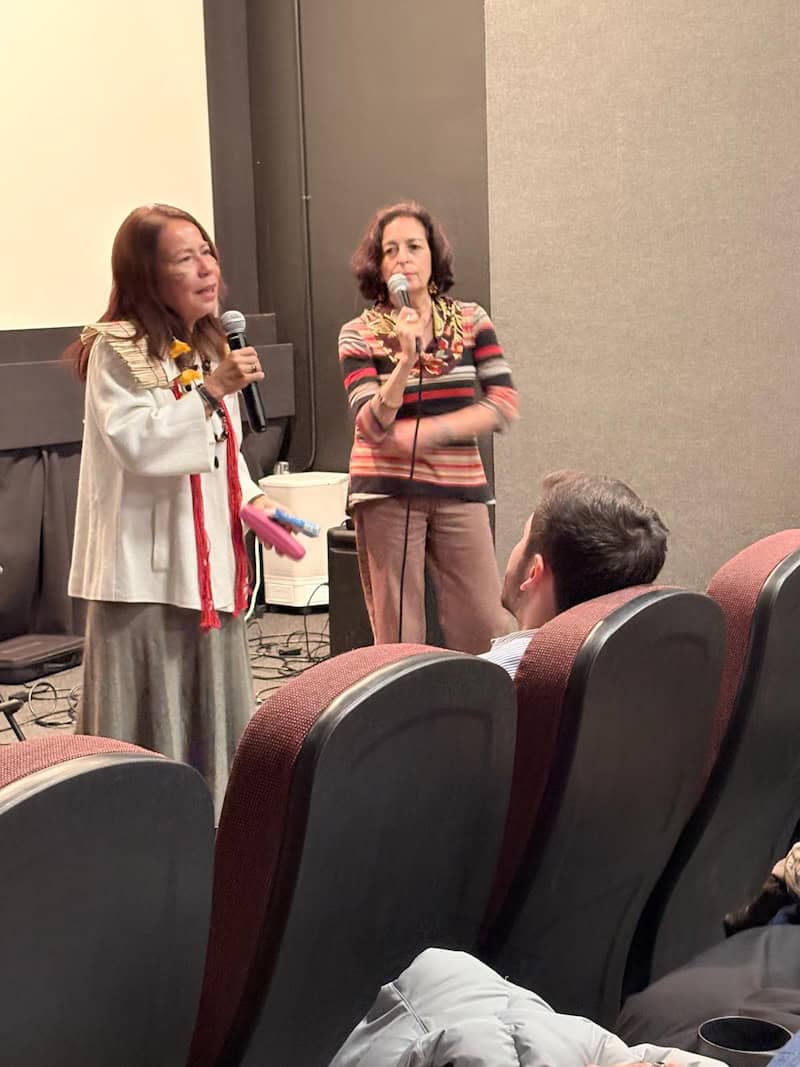
CJI guest speaker Sr. Laura Vicuña Pereira Manso and CJI Executive Director Jenny Cafiso at Toronto’s Carlton Cinema. Photo: T. Sison/CJI
An Indigenous religious leader from the Brazilian Amazon on Tuesday night delivered an impassioned appeal, urging global solidarity in the struggle to protect the Amazon rainforest and its Indigenous peoples.
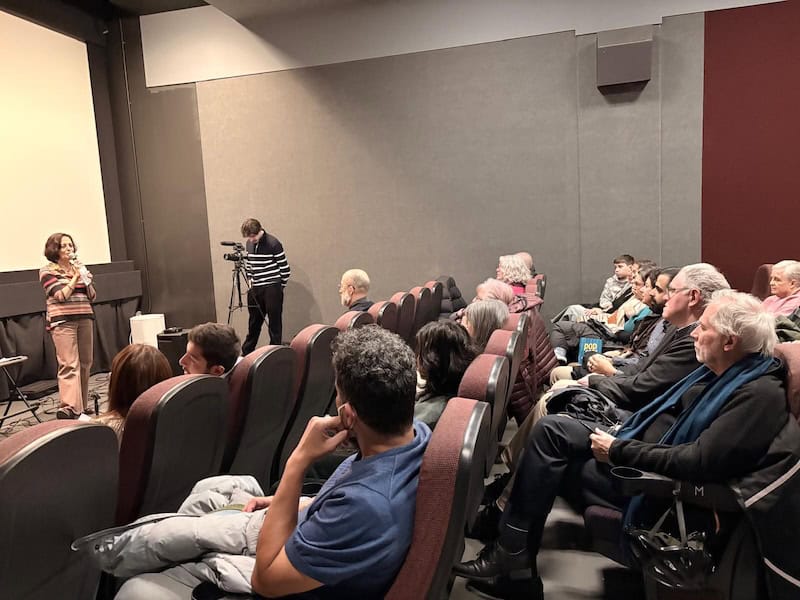
During a talk and film screening organized by Canadian Jesuits International (CJI) at Toronto’s Carlton Cinema, Sr. Laura Vicuña Pereira Manso, of the congregation of Franciscan Catechist Sisters, described the daily threats faced by land defenders and the urgent need to amplify Indigenous voices as environmental destruction accelerates in the Amazon. She described the Amazon as “a beautiful land, rich in biodiversity and social diversity,” but also a region under threat. Protecting it, she said, is everyone’s responsibility.
“I make a request from the depth of my heart,” she said. “Help us to take care of the Amazon. Help us to take care of the Indigenous people.”
As part of CJI’s education and advocacy campaign, Women at the Heart of Justice, Sr. Laura spent three weeks traveling to Winnipeg, Ottawa, Montreal, Guelph, Pickering, Waterloo, and Toronto. She emphasized the role of organizations like CJI in sharing stories of poor and marginalized people from remote regions of the world.
She referenced the documentary presented during the event, The Illusion of Abundance, which features three women land defenders from Peru, Honduras and Brazil. Their experiences, she said, mirror the struggles of countless others resisting violence linked to resource extraction. “These three examples of women can be multiplied by millions,” she said, adding that with their courage and perseverance, they have become “seeds of hope.”
Sr. Laura shared her own experiences of intimidation and surveillance. “I have drones moving over my house. I cannot walk freely because of the death threats that those of us defending these causes receive,” she said. Despite the fear, she insisted that defenders continue because “hope helps you to go forward.”
The threats faced by Indigenous activists, she stressed, are a continuation of past aggressions. “We are being exterminated, not just 100 years ago, but today,” she said. She cited the rise of mining projects, some of them owned by Canadian companies, that contribute to violence and the desecration of Indigenous lands.


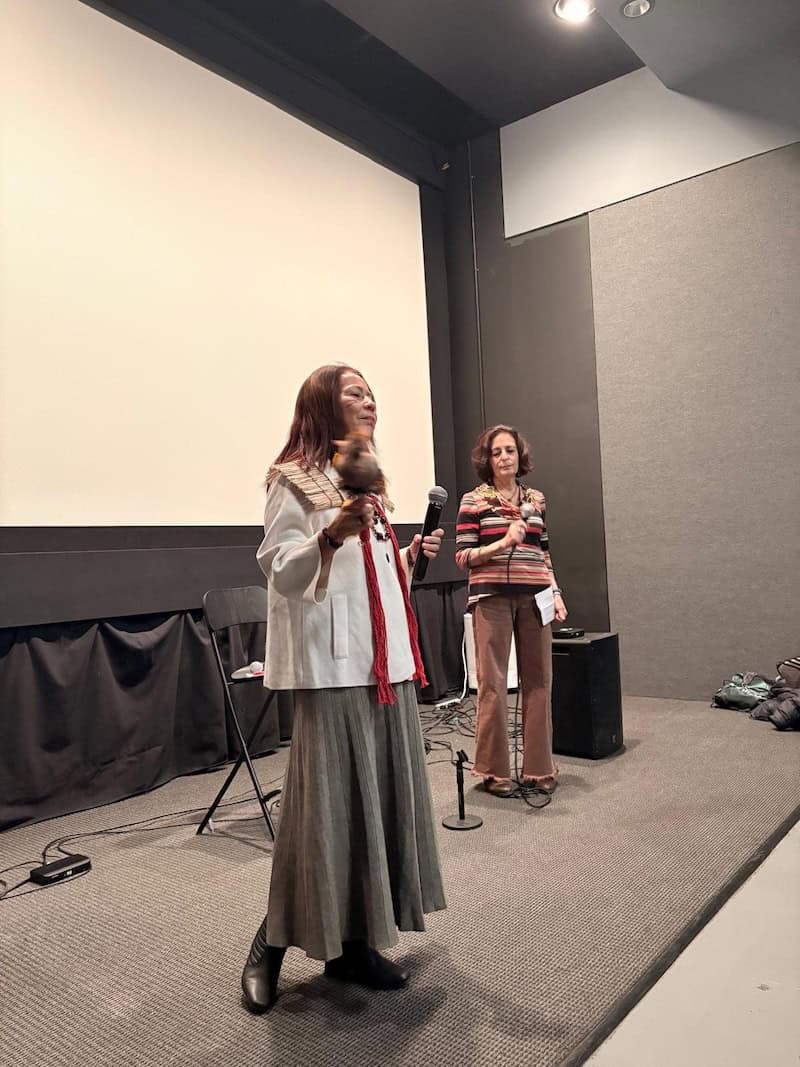
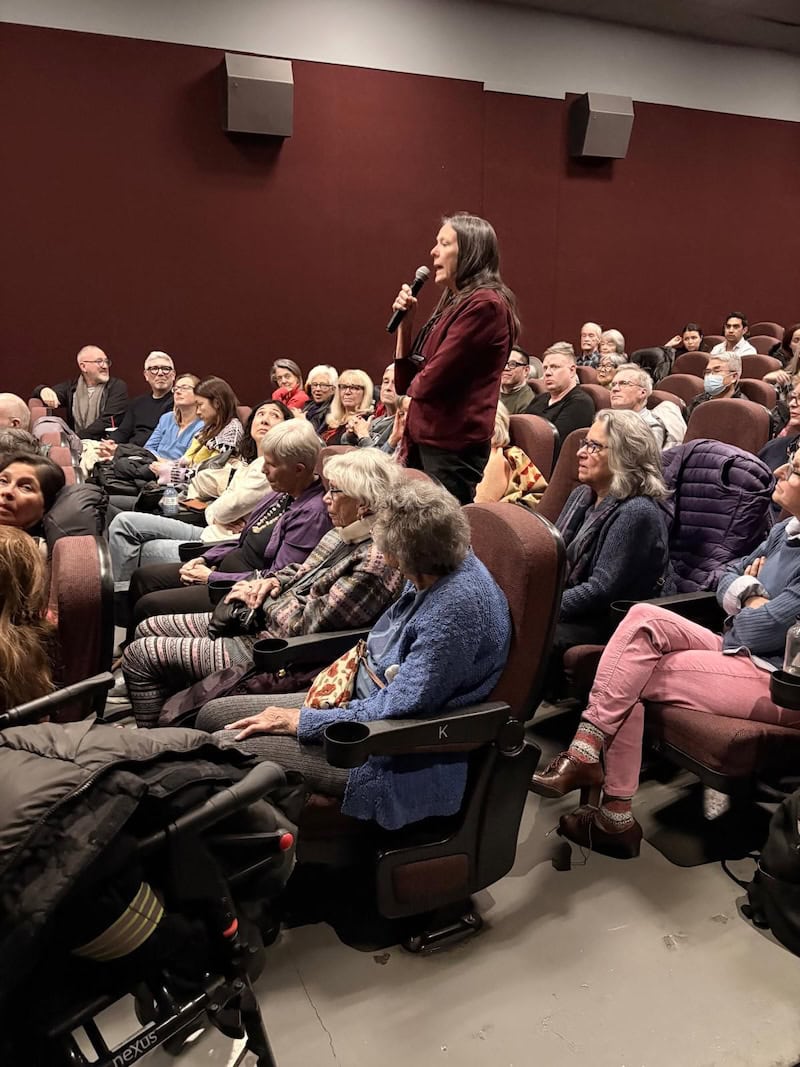
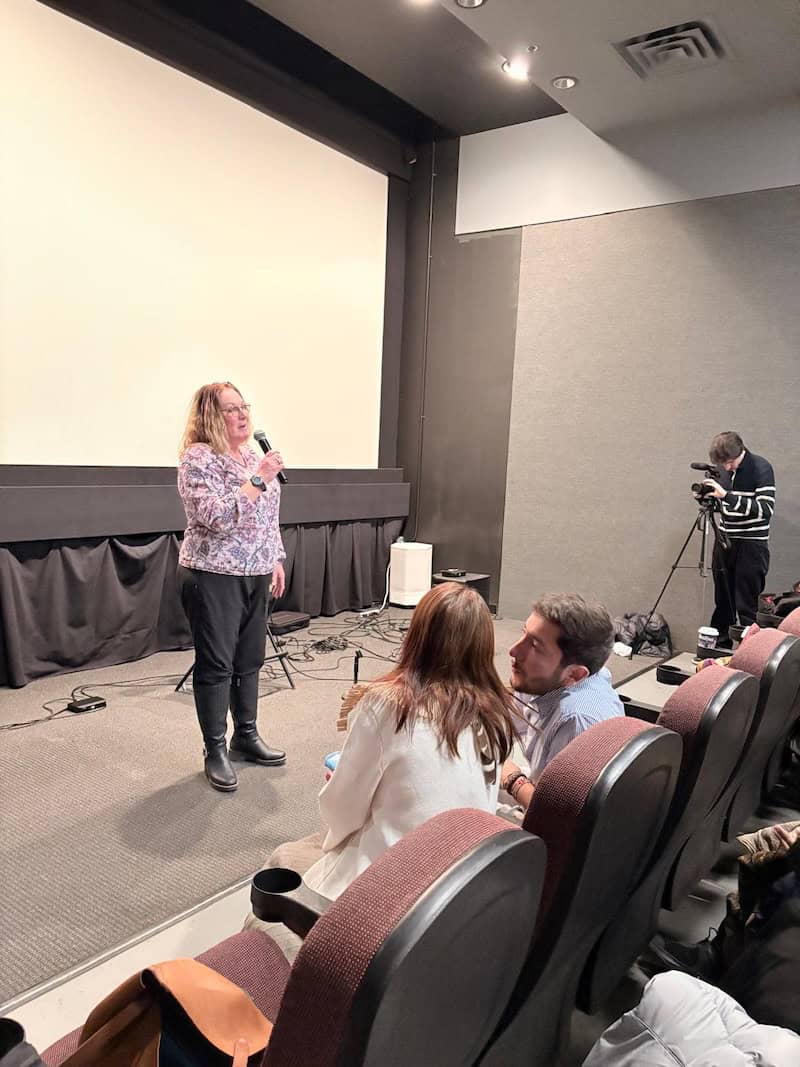
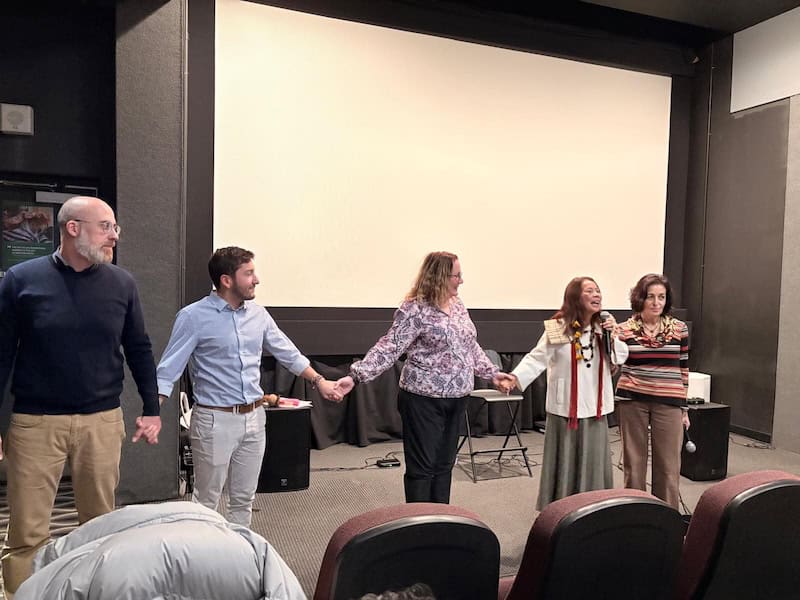
Sr. Laura highlighted CJI’s campaign, saying it resonates with movements around the world. Citing an African proverb, she said: “Small women doing small actions in small places make big changes in the world.” Saying that she came from a “very poor and humble family,” Sr. Laura described a childhood in which her parents hid their Indigenous identity to avoid discrimination. However, her mother, despite lacking formal education, became a respected leader in both social networks and the church, she said.
When asked about why churches did not seem present in the struggles of the communities featured in the film, Sr. Laura acknowledged the need for a “prophetic church.” However, she said that while the Church may not seem prophetic, there are nonetheless “prophets within the church” who speak out for justice and walk with the poor.
Reflecting on her tour across Canada, she expressed gratitude for encounters with Indigenous communities, young people, educators, and church organizations. She praised the young people she met, saying they carry “the potential of transformation” and must be supported in developing their humanity.
She also called for a more inclusive church, one that stands with marginalized communities and embraces its mission of justice. Meetings with men and women dedicated to building “the kingdom of God” around the world left her deeply moved, she said.
The speaker concluded by expressing thanks to the CJI team, who she said had become “like family” during her visit. She also acknowledged the audience who came “out of the cold” to hear her story.