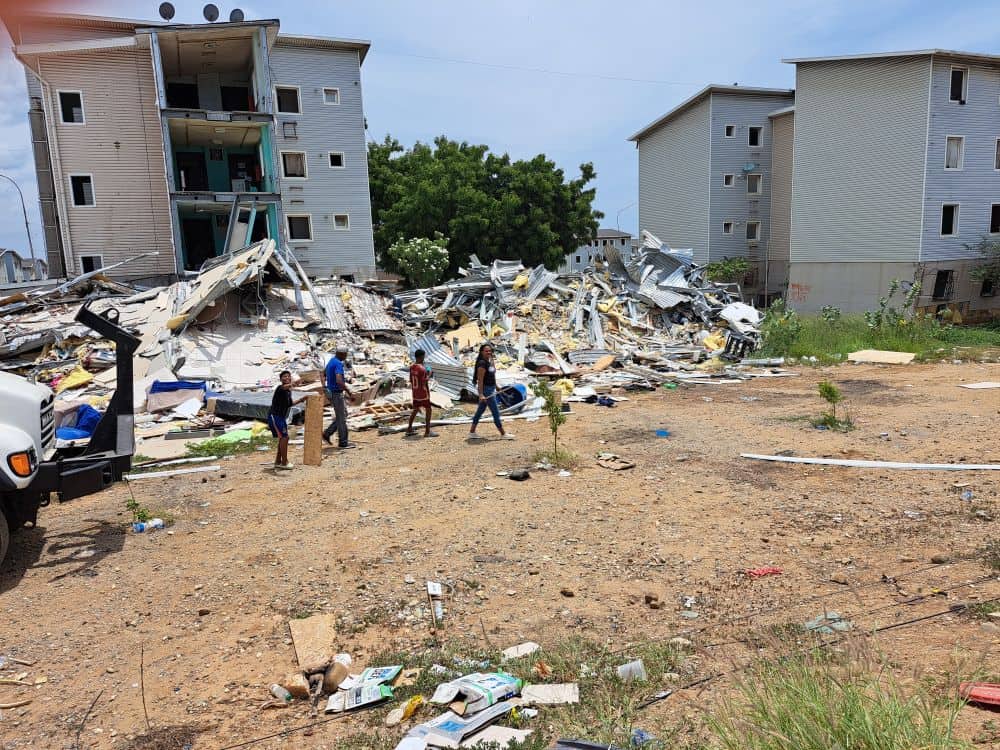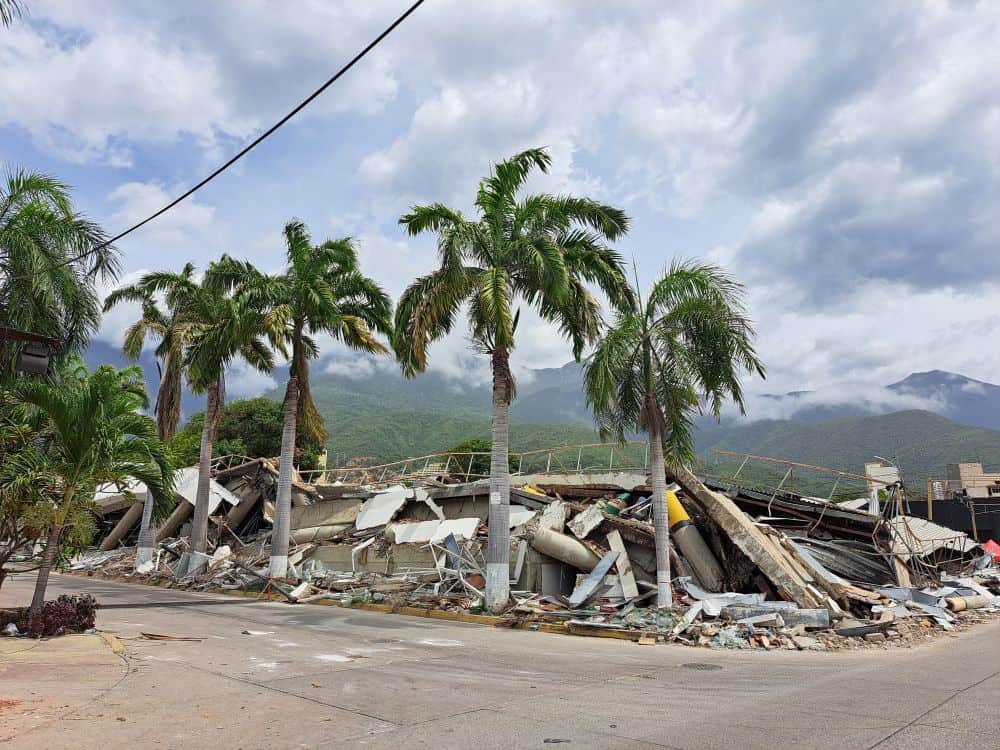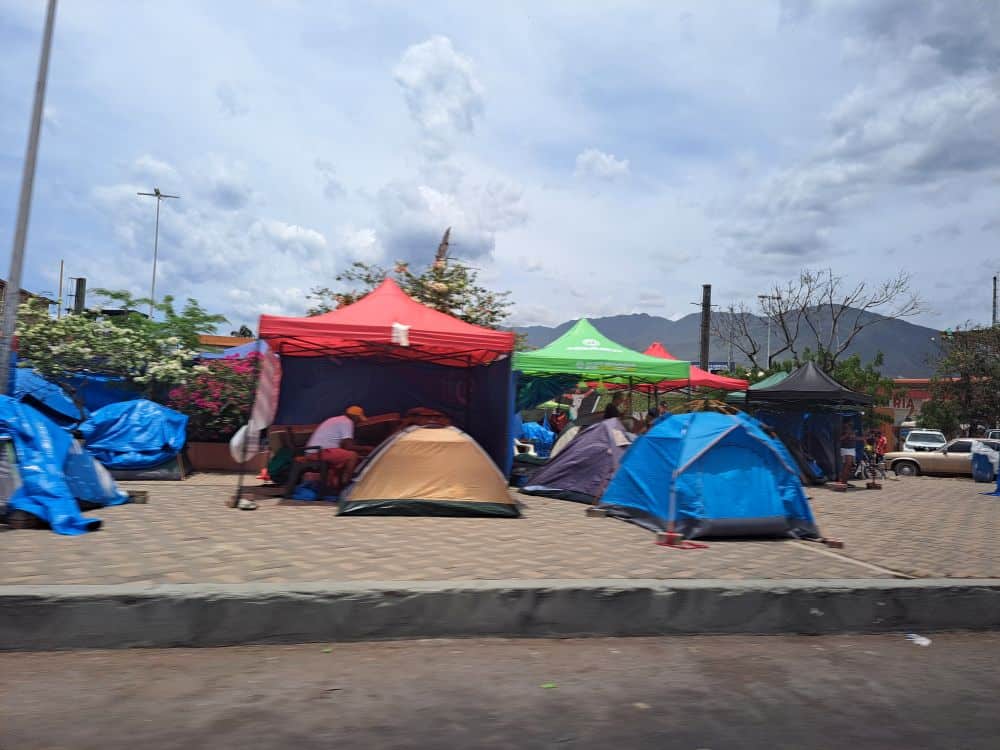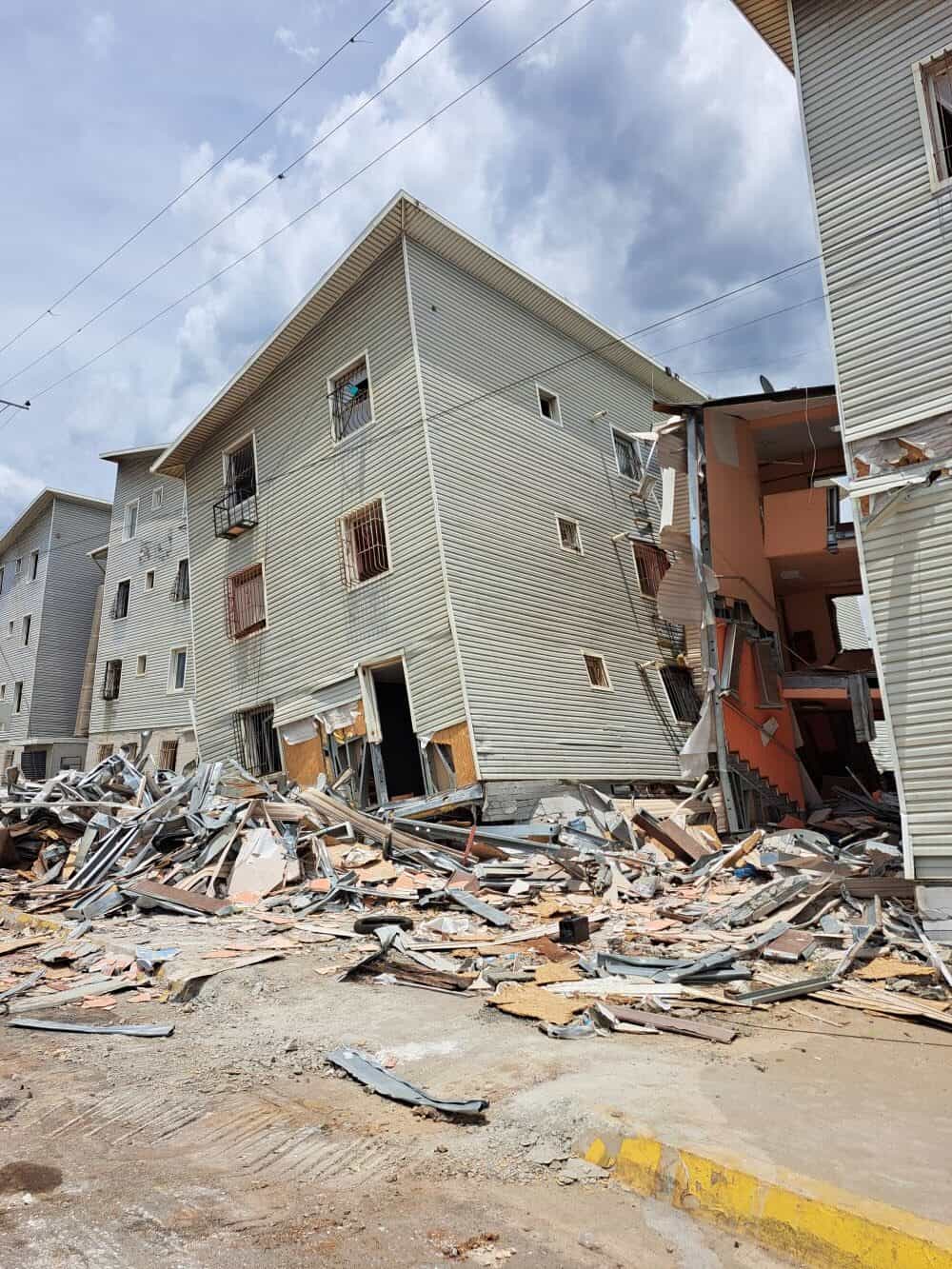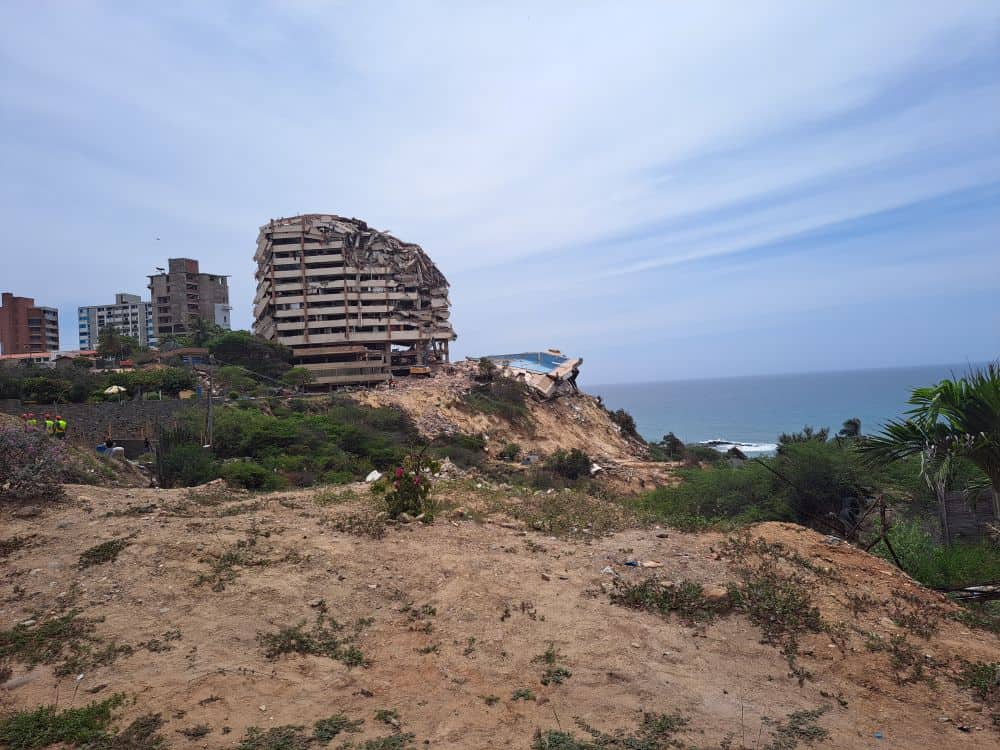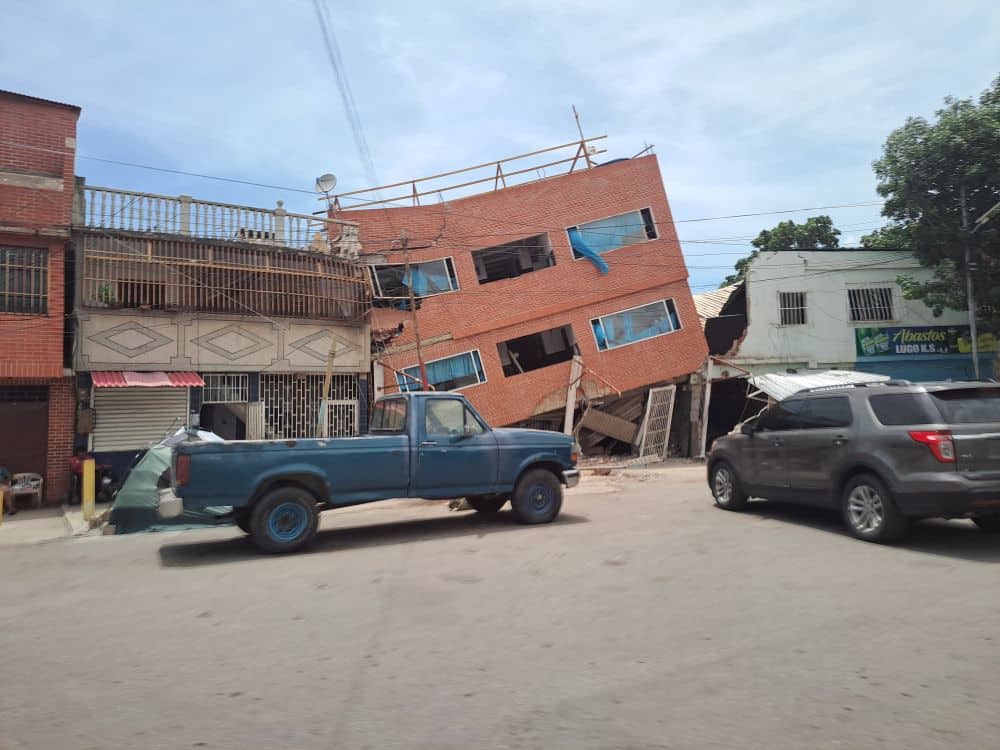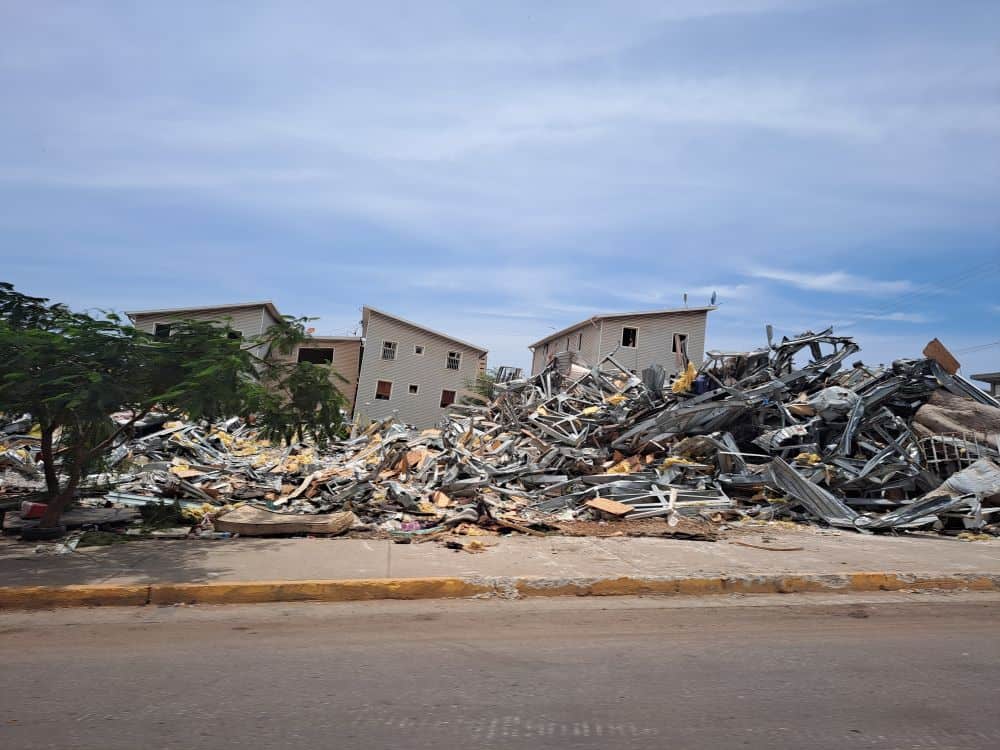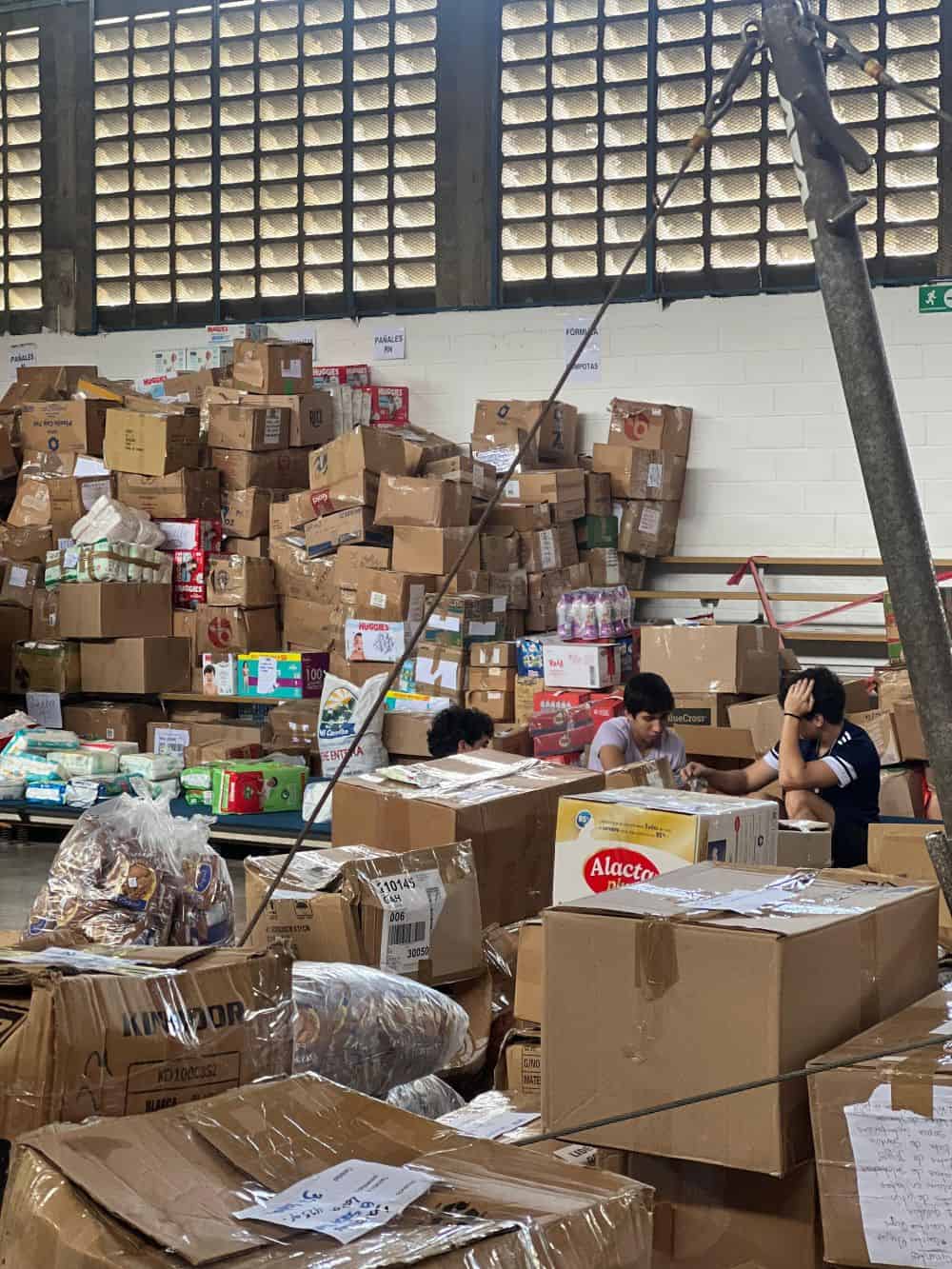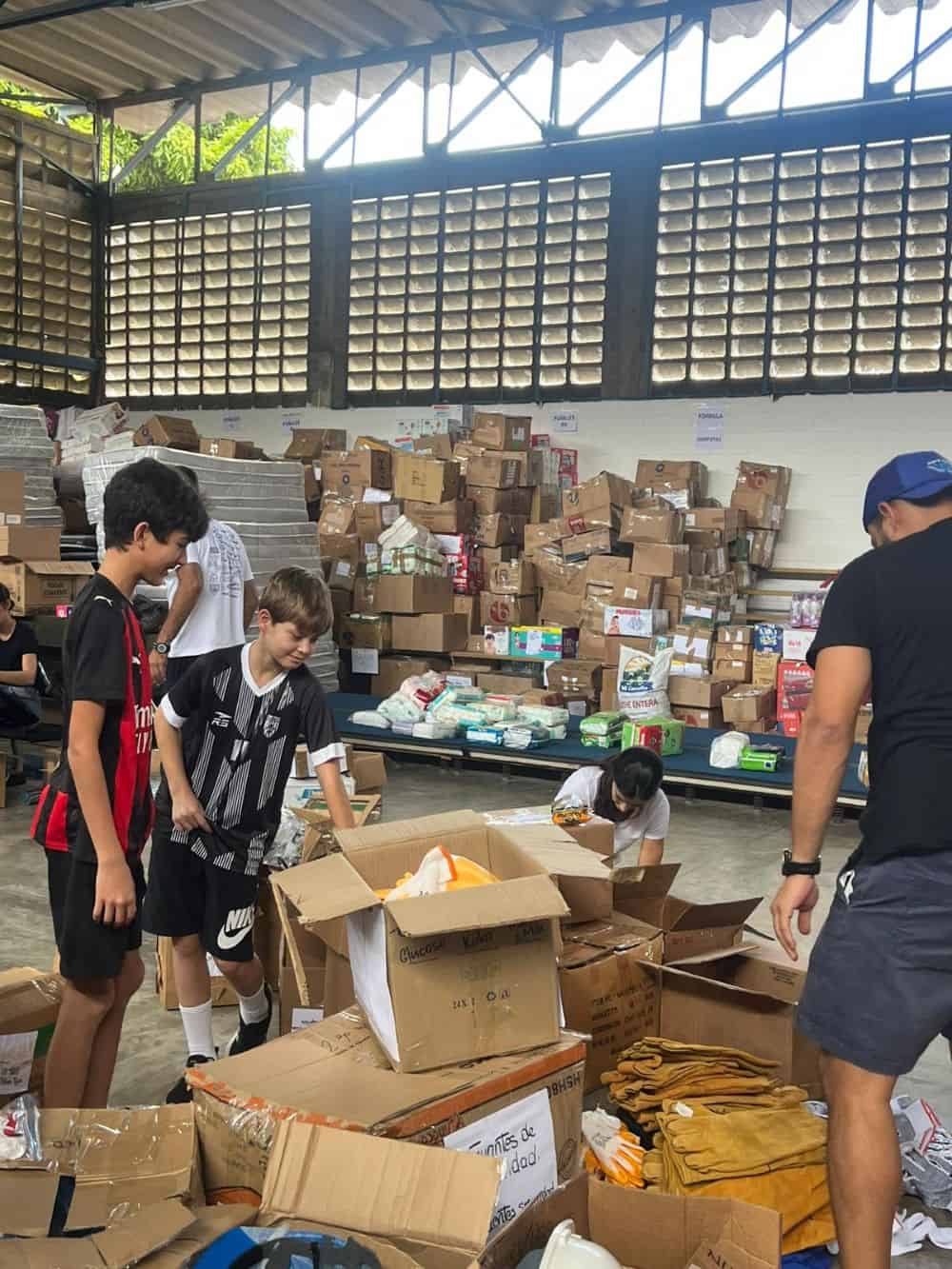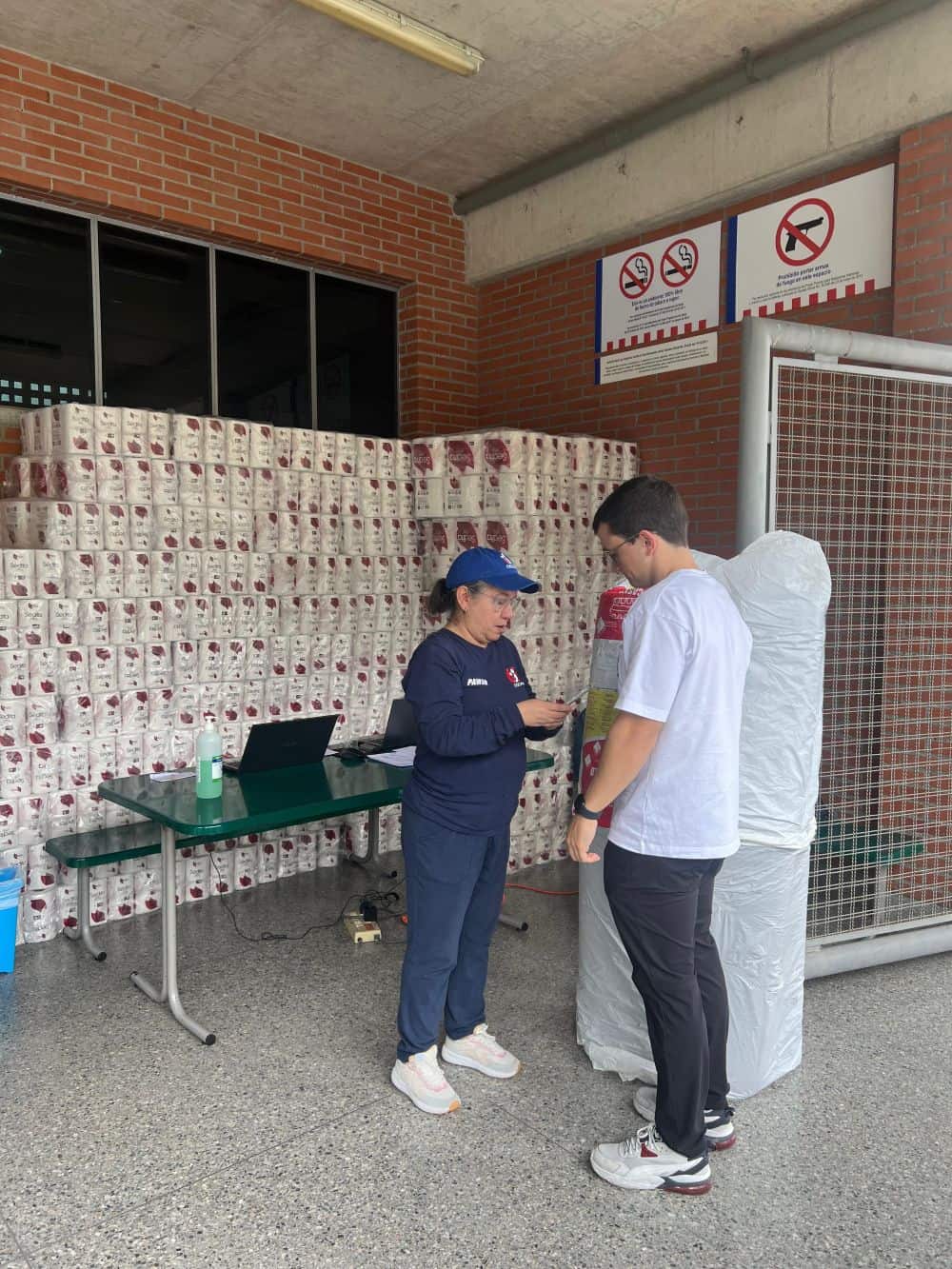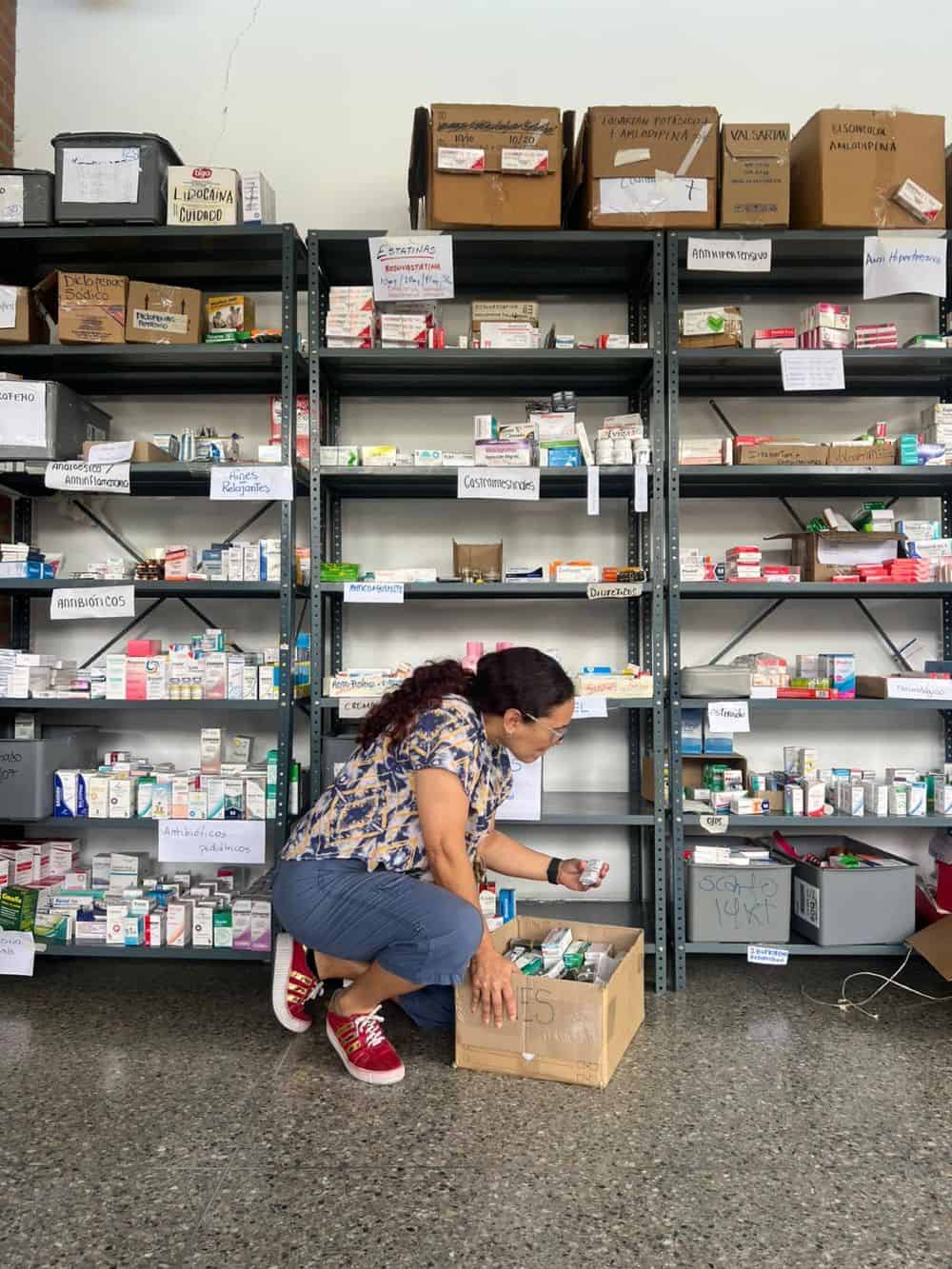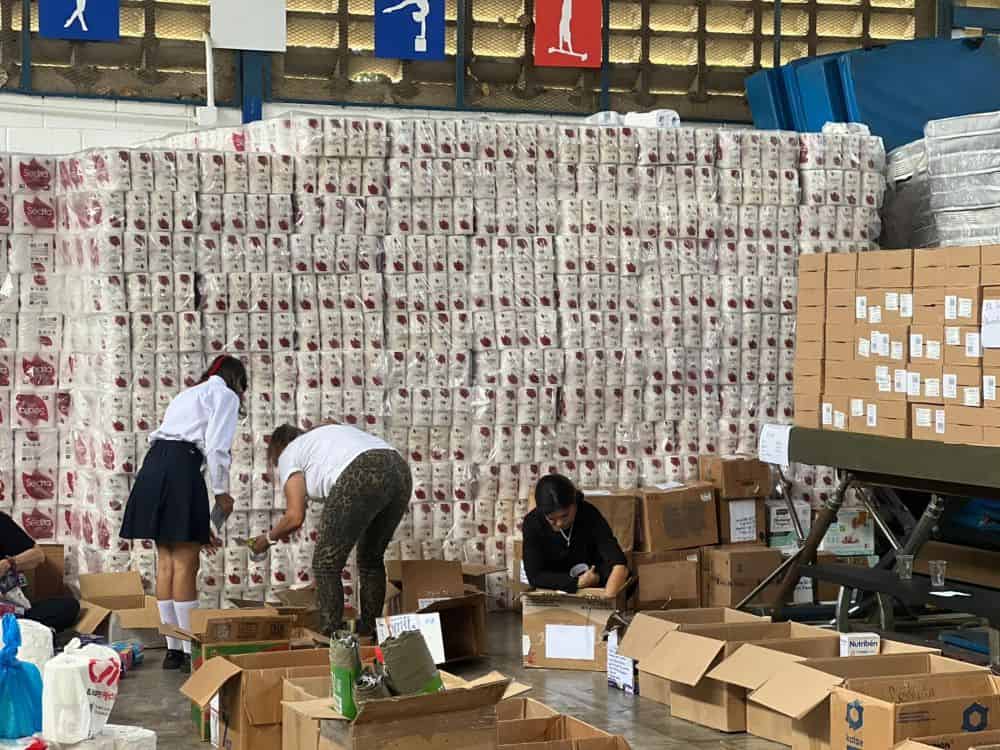
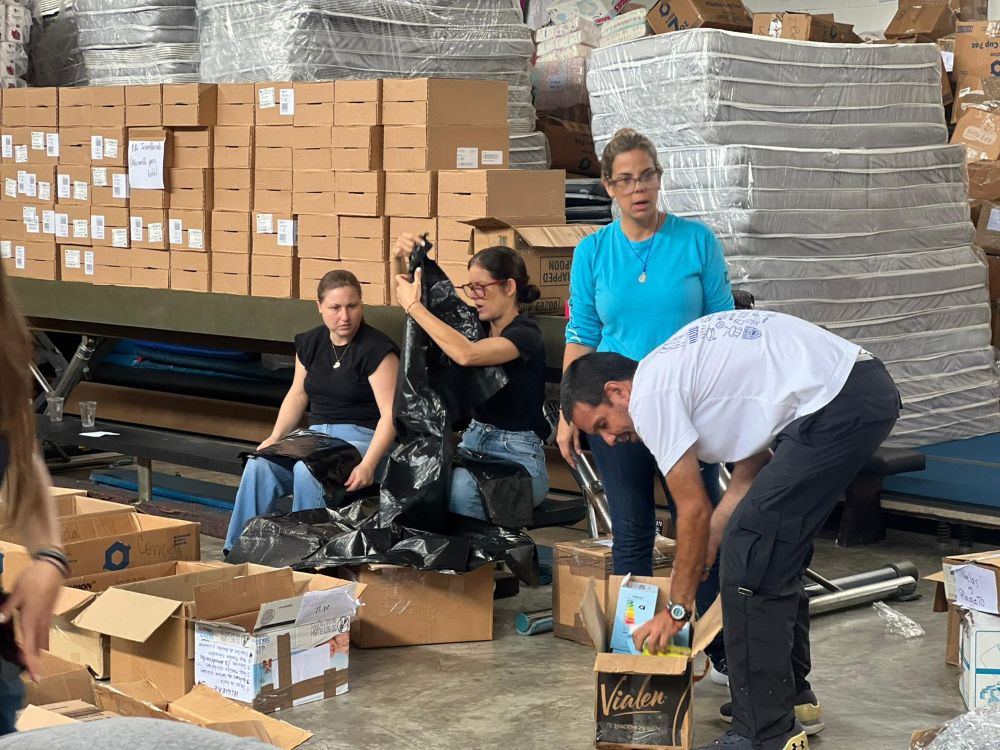
Volunteers prepare food, medicine, mattresses for distribution to victims of the earthquakes in Venezuela at one of multiple Jesuit collection centres. Photo: Xavier Network
Watch the webinar recording here.
A coordinated Jesuit-led response to Venezuela’s twin earthquakes is delivering aid to thousands, but church and humanitarian leaders said without sustained international support, both immediate relief efforts and long-term recovery could falter.
“The magnitude of this event is unique,” said Fr. Edgar Magallanes, SJ, Country Director of Jesuit Refugee Service (JRS) Venezuela, during a July 16 webinar co-sponsored by Canadian Jesuits International (CJI) and American Jesuits International (AJI). “The recovery process is not only long, but requires the participation of all actors.” [Both CJI and AJI have launched their own own appeals to support Jesuit efforts in Venezuela.]
Asunción Taboada Lanza, Emergency Coordinator of the Xavier Network and Juan Andrés Carderera, member of the Finance and Communications Team at Fe y Alegría Venezuela described a disaster of overwhelming scale. The June 24 earthquakes killed thousands of people, displaced families, and disrupted the education of tens of thousands of students. Communities are now facing deep uncertainty about their future.
Fr. Edgar Magallanes, SJ, Country Director, Jesuit Refugee Service Venezuela
For many, the emergency mode has shifted into a painful wait. Fr. Magallanes said that in La Guaira, Caraballeda and Catia La Mar, people initially hoped to find loved ones alive under the rubble, but now hope has turned to recovering bodies so they can “say goodbye with dignity.” Many survivors remain in shelters, churches, with relatives, or on the streets. “Where are we going to live now? What are we going to do for work now?” Fr. Edgar said, describing the questions families continue to face. “The internal displacement is a big phenomenon,” he added, citing that some JRS staff have been personally affected by the disaster.
The educational impact is equally devastating. Carderera said 93 Fe y Alegría schools and related centres have been affected, with 25 experiencing the highest levels of damage in Carabobo, Caracas, Miranda, La Guaira and Aragua. He said the situation directly affects 1,300 workers and around 12,000 families, while 15,000 students have had their education interrupted or put at serious risk. He said the loss of students, teachers and family members in communities such as Simón Bolívar in Caraballeda and the Jesús Cabrera Educational Complex has left a “deep emotional wound in communities.”
Asuncion Taboada Lanza, Emergency Coordinator, Xavier Network
Taboada Lanza stressed that the material need is so immense that “it’s not enough, it’s never enough,” and emphasized that people must be accompanied in a dignified way that respects their agency and decision-making. “People are victims of the earthquake but that doesn’t mean that they have lost their capacity to decide what they want to do, what they need, how they want to do things.”
Jesuit organizations, including Fe y Alegría, JRS and partner institutions, have mobilized a nationwide response. Initial efforts have focused on delivering humanitarian aid and assessing damage, while also laying the groundwork for longer-term recovery.
Fe y Alegría is working with 25 prioritized educational centres and supporting affected staff through listening, spiritual accompaniment and material aid. Fe y Alegría has identified 19,963 students and 1,743 teachers who will benefit from activities to help children return to school, with work planned across 28 schools in 14 communities. In some cases, those schools have been turned into temporary shelters. Parishes are also already providing psychological support with specialized social workers.
The aid distribution figures show the scale of the first response, but also how much remains to be done. About 1,500 kits have been distributed, containing food, household supplies, medicine, and hygiene products. JRS has hired 14 additional staff members. The broader Fe y Alegría response has already extended to 1,398 workers and 12,351 families, while 15,332 students at the 25 prioritized centers currently have interrupted school activities.
Additional aid has been mobilized through the Jesuit university, Universidad Católica Andrés Bello, which activated a collection centre one day after the back-to-back June 24 earthquakes. The university has since distributed approximately 39,089 units of supplies—about 161.9 metric tons—across more than 130 locations in four states, using roughly 229 transport dispatches.
Even with these efforts, speakers repeatedly warned that the response risks losing momentum as global attention shifts. Fr. Edgar expressed concern that “the visibility of this emergency will quickly decline on social media” and that international support may fade over time.
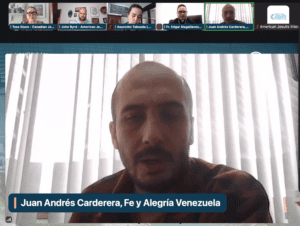
Juan Andres Carderera, Finance and Communications Team member, Fe y Alegria Venezuela
Carderera said reopening schools is the priority, but only after technical confirmation that structures are safe. He added that the response must also address the educational and emotional consequences of the disaster, including the risk that students will drop out if their schools cannot reopen soon, and economic uncertainty lingers.
Taboada Lanza said the Xavier Network is trying to unify its support so local Jesuit works do not have to manage the emergency on their own. She said the network, which includes 14 Jesuit development organizations including CJI and AJI, provides funding and technical expertise and aims to channel international solidarity into a single, coordinated response led by the province. She said the response is built in phases: immediate distribution of food, mattresses, hygiene kits and other non-food items, followed by psycho-social support, safe educational spaces, protection measures, and livelihood recovery.
She said the crisis in Venezuela is “a crisis on top of a crisis” and that people do not need a return to normal, but “a better normal.” That, she said, means a long-term response rooted in community, not a short-term project that disappears when the news cycle moves on.
Carderera expressed how international solidarity has meant to Venezuelans. “The recovery is long, but we’re not walking alone. The work between organizations and the solidarity between people at the grassroots level is not only necessary, but has moved us as a nation very, very deeply.”
The following photos and videos of the earthquake aftermath and response were sent by CJI partners, the Unidos en la Mision Venezuela, and the Xavier Network’s Emergency Coordinator Asunción Taboada Lanza: