The collective struggle for the Amazon: Defending Indigenous land, life and rights
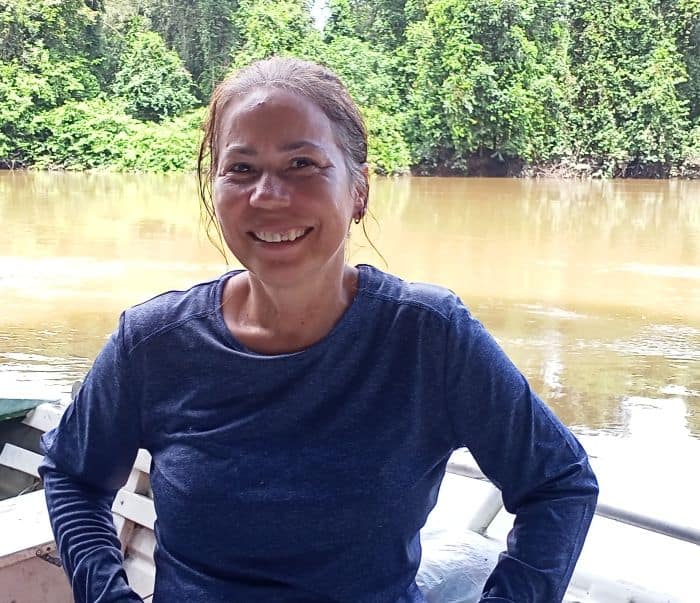
Sister Laura Vicuña Pereira Manso, along the Jaci Paraná River, in the Karipuna Indigenous territory, where she works with Brazil’s Indigenous people who have been fighting to protect their land for generations.
Photo: Submitted
By Sr. Laura Vicuña Pereira
I come from a humble family of migrant parents who hid their Indigenous identity throughout their lives due to discrimination. Working directly with Indigenous peoples, witnessing the devastation of the Amazon, and seeing the commitment of the Church—especially grassroots church communities—helped me to claim my Kariri Indigenous identity.
My people were displaced from their traditional territory, so they had to redefine their way of being and coexist in a society that denies diversity.
My late mother — a simple yet wise woman and a great leader in the church and in social circles — taught me that “we are all the church; we are all equal, and therefore we must fight for a just world and a more inclusive church.” I learned how to work and promote community life, uniting faith, and service to the poorest of the poor — God's favourites.
Working with Indigenous peoples for over 25 years has broadened my perspective on their reality, the challenges they face, and the alternatives they seek to have a full life for all. I speak from my experience of living in the state of Rondônia, in the Brazilian Amazon, and working with the Karipuna people in the last seven years.
From the perspective of Indigenous peoples, the struggle for life, land and rights is a systemic issue. The Brazilian state is not interested in fulfilling its constitutional duty to demarcate, protect, and monitor Indigenous lands to ensure the physical, cultural, and territorial existence of Indigenous peoples. Backed by economic and political sectors with self-serving agendas, the Brazilian state is doing everything in its power to make Indigenous lands available to the market, particularly the agro-industrial sector, mining companies, and land grabbers. The historical enemies of Indigenous peoples are legitimized by the state’s failure to comply with the Federal Constitution and public policies on territorial oversight and protection.
The Amazon is a symbol of a woman, a feminine force with a fragile ecosystem that is vulnerable to predatory systems. Her sacred womb, her waterways, her forest rich in biodiversity, in its flora and fauna, and her network of villages that lived in a way that guaranteed the continuity of this living ecosystem have all been devastated. This ecosystem is vital for all humanity.
My experience as a missionary is closely tied to the struggles of Indigenous peoples defending their territories and rights. I have learned from simple women, including my late mother and other women, who made it possible for me to voice our struggles in defence of life, land, and rights. I would like to highlight Katiká Karipuna, a strong woman and charismatic woman who inspires her children and her people to continue to resist and fight for present and future generations.
There have been challenges along the way, most of which we overcame with the support of entities and organizations that stood alongside us in our struggle. This collective support enables us to continue fighting, without becoming discouraged and to continue denouncing ongoing violations of the right to life and land.
The Church in the Amazon is our ally in defending the land and the lives of the people. In the final document of the Amazon Synod, Indigenous peoples stated that “they want the Church to accompany them, to walk with them, and not to impose on them a particular way of being, a specific form of development that has little to do with their cultures, traditions and spiritualities. They know how to take care of the Amazon, how to love and protect it; what they need is for the Church to support them.”
Note: Canadian Jesuits International (CJI) supports the work of Jesuits in the Amazon. This fall, Sister Laura will visit Canada as guest speaker of CJI’s fall advocacy campaign, Women at the heart of justice.
Post Author
Author
VOL 60 NO 3 | Fall 2025

Planned Giving
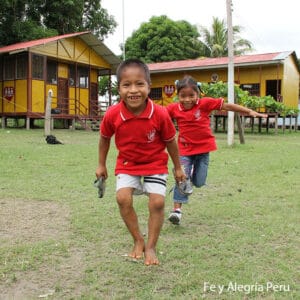
Photo: Fe y Alegría Peru
@canadianjesuitsinternational


Today, CJI guest speaker Brex Arevalo, a Filipino environmental activist from the Philippines, highlighted the important role young people play in the fight for ecological justice with students at Holy Trinity High School and St. Peter’s High School in Ottawa.
Brex shared the stories of young people Manila who opposed a plan for a waste incinerator in urban poor communities. Brex is speaking at various events in Canada as part of CJI’s 2026 fall campaign, Ecological Justice: It’s not complicated. Learn more: https://bit.ly/4if8T5S
The students engaged in a thoughtful conversation about what they can do now. Questions ranged from careers in the environmental sector and alternatives to plastic, to how young people can participate safely and effectively in protests.
Brex explained that, for communities on the front lines, the issue is clear: reduce waste, reduce consumption, and move toward zero waste. Hazardous burning of waste and plastics is harming people’s health, land, and livelihoods, leaving no time for approaches that do not address the root causes. He also cautioned that incineration, often marketed as “waste-to-energy,” thermal treatment, or waste combustion, is a false solution to managing the waste created by overconsumption.
Thank you to the students and staff for their curiosity, energy, and commitment to caring for our common home.
#Ottawa #Jesuits #ecologicaljustice #climatejustice #wildwildwaste #waste
3 hours ago


Kim Gottfried Piché, CJI Social Justice Animator, shared this summary and reflection from last night's event at Saint Paul University in Ottawa, Margins at the Centre: Navigating a Just Transition in the Wild Wild Waste, which featured guest speaker, Brex Arevalo, an environmental activist from the Philippines.
"Brex’s talk at Saint-Paul University was timely as the city is debating whether to accept a proposal for a waste-to-energy incineration plant that will abolish the three-item garbage limit that the City of Ottawa has put into effect in an effort to curb waste production as the Trail Road landfill approaches its capacity.
The participants were engaged and asked important questions around the zero waste hierarchy presented in Brex’s talk. Should citizens push for an extension of producer responsibility for waste produced (top down of the hierarchy)? Or should we tackle the challenge from the bottom-up perspective of reducing our waste and consumption? One participant suggested that perhaps we should focus on the middle of the hierarchy by engaging culture and youth about zero waste practice. Many expressed an interest in learning about the origins of the Quebec Week of Waste Reduction and how it has evolved for over 26 years.
Brex shared that for the marginalized urban communities, also known as the waste sorters in Manila or the “climate champions: as they are called, the issue of this ecological justice debate is simple. Reduce waste, reduce consumption, go zero waste. They don’t have the time to approach the issue any other way because hazardous burning of waste and plastics is destroying their health, their land and their livelihoods. Incineration (also known as waste to energy, thermal treatment, waste combustion) is a false solution to managing waste produced by overconsumption, Brex said.
The talk at Saint Paul University was thought-provoking and led us to consider deeper aspects of the issue, such as waste colonization and ecological debt of the Global North who consume excessively and export their toxic, unsorted and hazardous waste to less-affluent countries in the Global South."
5 hours ago


About 170 @loyolamontreal students welcomed CJI guest speaker Brex Arevalo and participated in a solidarity activity on ecological justice as part of CJI’s Fall 2026 campaign.
Brex, a Filipino environmental activist and researcher, underscored the importance of bringing marginalized people at the centre of decision-making, especially on issues that affect them, such as the environment.
Brex talked about the impact of incineration on urban poor communities, and noted how Canada is among the countries who ship an enormous amount of waste to the Philippines, Malaysia, Indonesia, and Vietnam.
#montreal #jesuits #jesuitschools
1 day ago
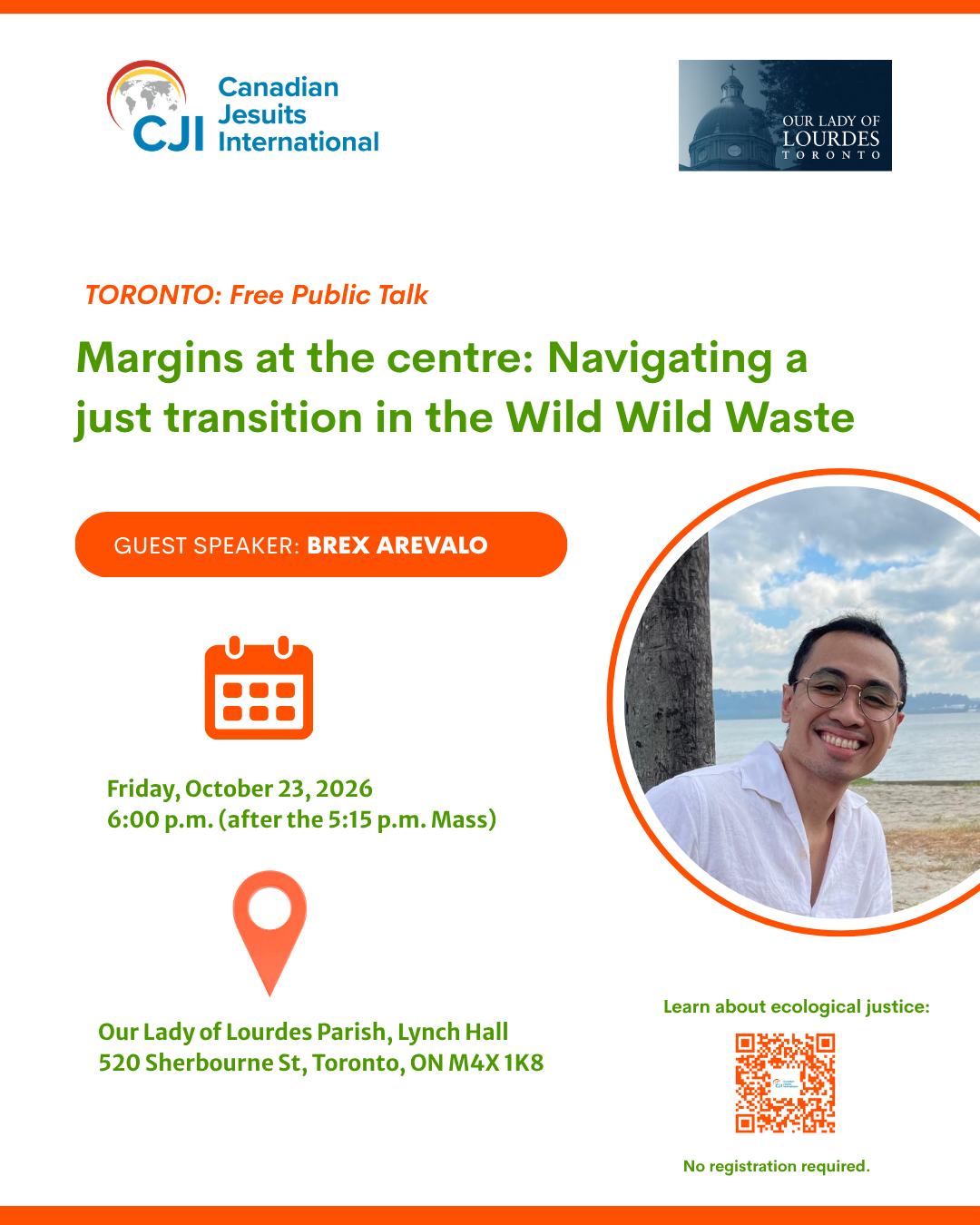
Don't miss this CJI and @lourdestoronto parish event in TORONTO this Friday, October 23, at 6 p.m.
Brex Arevalo is an environmental planner, climate justice advocate, and researcher who has dedicated his career to promoting environmental and social justice in the Asia-Pacific region.
After spending years at Ecojesuit — the global communications platform and online resource centre for the Global Ignatian Advocacy Network — where his work was guided by Ignatian values, Brex now works with urban poor communities in Manila, Philippines, as Climate and Anti-Incineration Campaigner for the Global Alliance for Incinerator Alternatives (GAIA). He supports the advocacy efforts of these communities, whose homes, livelihoods, and dignity are threatened by a destructive waste-burning facility.
He also advocates for policies that support a safe and just energy transition in the Global South.
1 day ago


Today, CJI guest speaker @brexarevalo spoke to @mcgillu students and Newman Centre staff about his journey to becoming an ecological justice activist, emphasizing the importance of Ignatian values.
He discussed the ecological injustices suffered by marginalized communities and noted how waste workers are at the forefront of efforts to address environmental concerns in Manila.
He also underscored the important role that young people can play in these initiatives.
After Brex’ talk, the conversation centred around the challenges of ecological conversion for decision-makers and the general public. The students were keen to discuss how they could address these issues at the formation stage, and the conversation was fruitful.
Fr Anthony Atansi, the Newman Centre chaplain, expressed his gratitude, commenting on how the event incorporated the Centre's spiritual, intellectual, and social legacy.
Brex is touring Canada as part of CJI’s Fall 2026 campaign, Ecological Justice: It’s not Complicated. An environmental planner, climate justice advocate, and researcher, he has dedicated his career to promoting environmental and social justice in the Asia-Pacific region.He works with marginalized communities, civil society organizations, and policymakers to promote equitable and sustainable solutions to environmental challenges.
CJI’s ecological justice campaign highlights how care for our common home cannot be separated from human dignity, social justice and peace.
Learn more about the campaign and other speaking events: Click link in bio.
#mcgill #newmancentre #montreal #jesuits #cji
2 days ago


Canadian Jesuits International (CJI) International Programs Coordinator Juan Emilio Hernandez is representing CJI at the 50th Congress of Fe y Alegria International in Peru.
CJI is supporting Fe y Alegria projects, including its preschool education program in the Democratic Republic of Congo, Chad, Madagascar, and Haiti; bilingual and ecological education in the Amazon; and an entrepreneurship and employment program for young people in Central America and Cuba.
Juan Emilio had an opportunity to meet with Fe y Alegria partners, including Irma Lucia Mariño Vargas, director of the Integral Ecology and Panamazonia Initiative of the International Federation of Fe y Alegría.
Click link in bio to visit our website and learn more about our partnership with Fe y Alegria.
#jesuits #peru #education #feylalegria
2 days ago
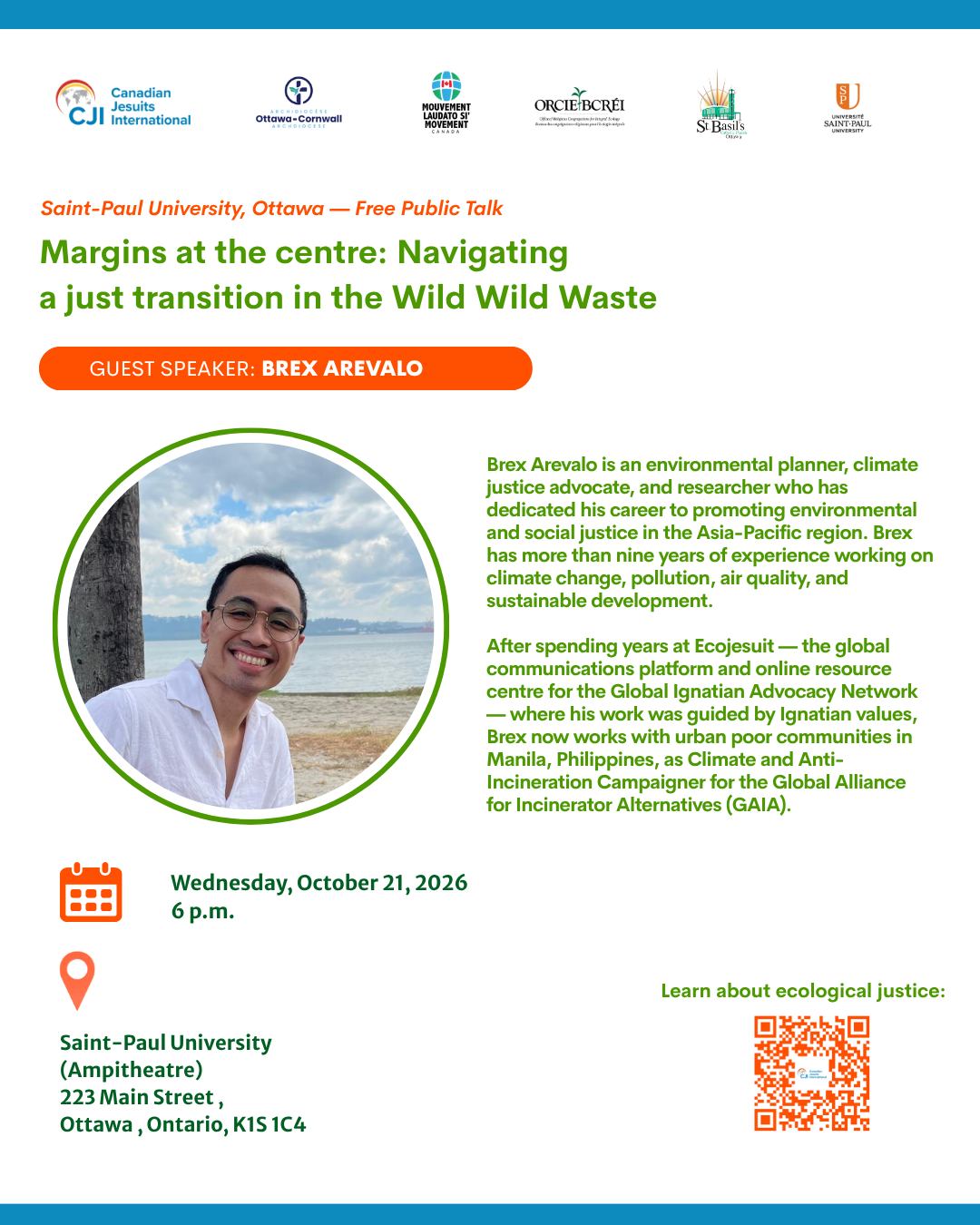


Today, visiting Filipino environmental planner, climate justice advocate and researcher Brex Arevalo urged Canadians to consider the “triple planetary crisis” of climate change, biodiversity loss and pollution, as well as the issue of waste produced in significant amounts by countries like Canada.
“The triple planetary crisis persists because of Wild Wild Waste: a world of excess and decay founded on fossil-fuelled capital. Its insatiable appetite for growth, often dubbed 'progress', prioritises profit over everything else,” he said. “Corruption and disregard for communities thrive here.”
Brex spoke at an event co-organized by Canadian Jesuits International (CJI) and the Archdiocese of Montreal’s Office for English Pastoral Services, Margins at the centre: Navigating a just transition in the Wild Wild Waste. He is touring Canada as part of CJI’s Fall 2026 campaign, Ecological Justice: It’s not Complicated.
Brex also discussed “the fraud of recycling,” noting that “despite their long-standing knowledge that recycling plastic is neither technically nor economically viable, petrochemical companies have engaged in fraudulent marketing and public education campaigns designed to mislead the public about the viability of plastic recycling as a solution to plastic waste.” Only about 9% of plastic waste is recycled, he said, adding that people may not realize it, but plastics are “99% fossil fuel derived.”
He also talked about Waste-to-Energy (WTE) incineration as “a false solution to waste and climate change,” citing how it produces toxic ash, wastewaster, emits hazardous hemicals, and does not produce renewable energy, among other things. More often than not, they are also typically constructed in or near marginalized communities “with no meaningful participation,” he said.
Brex said churches, church-backed organizations and civil society organizations “are with communities in defending against” incineration projects.
Learn more about Brex and CJI’s Fall campaign, including other events across Canada: Click link in bio.
3 days ago
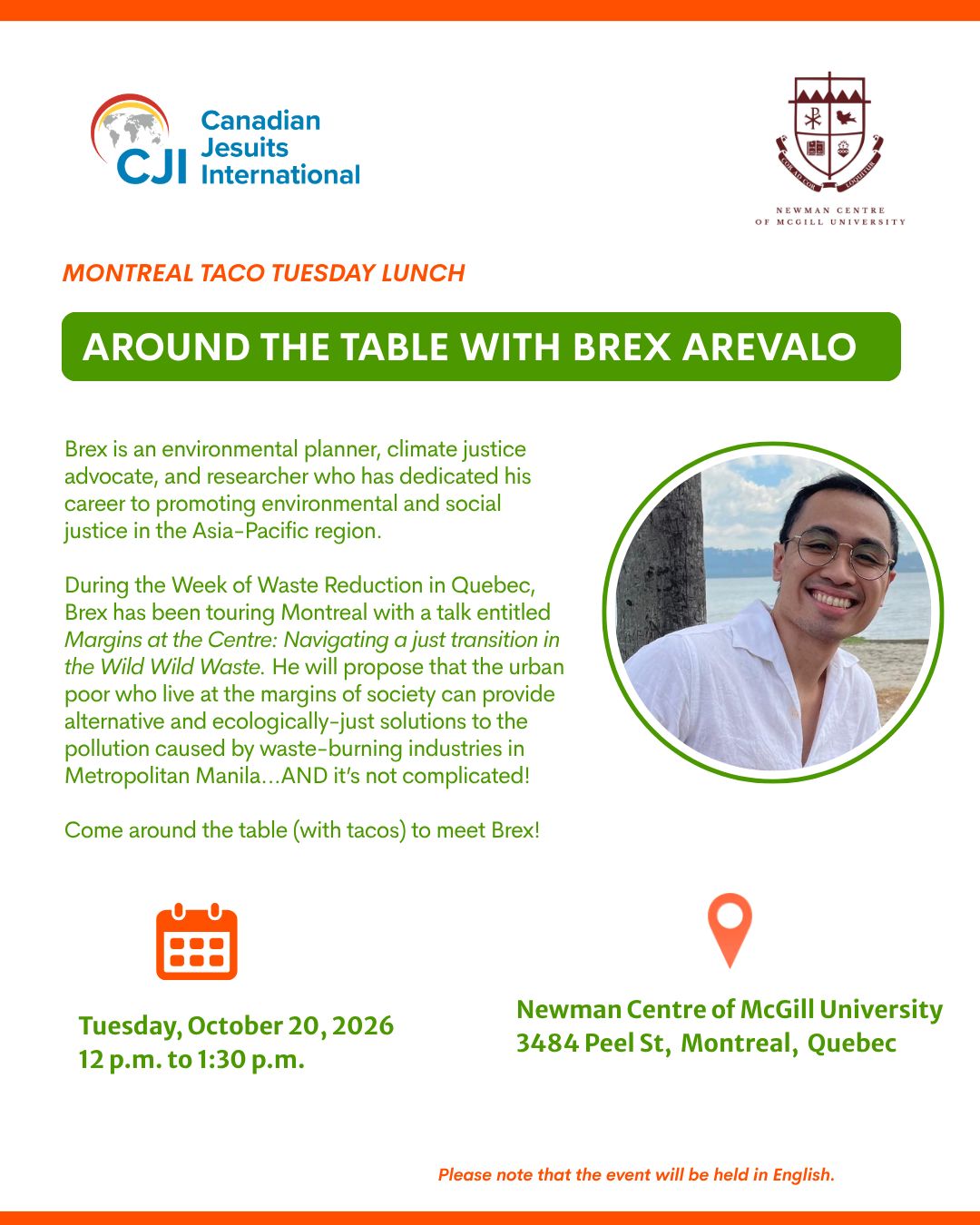
Happening tomorrow in Montreal! Hope to see you there!
#montreal #mcgill #jesuit #climatejustice #ecologicaljustice #wildwildwaste
3 days ago
Canadian Jesuits International
70 Saint Mary St
Toronto, ON
M5S 1J3
Canada
Tel: 416.465.1824
Toll Free (Canada and USA): 1.800.448.2148
Email: [email protected]
Registered Charitable No: 11883 3623 RR0002