

‘A profound journey of faith, service, and transformation’ at Jesu Ashram
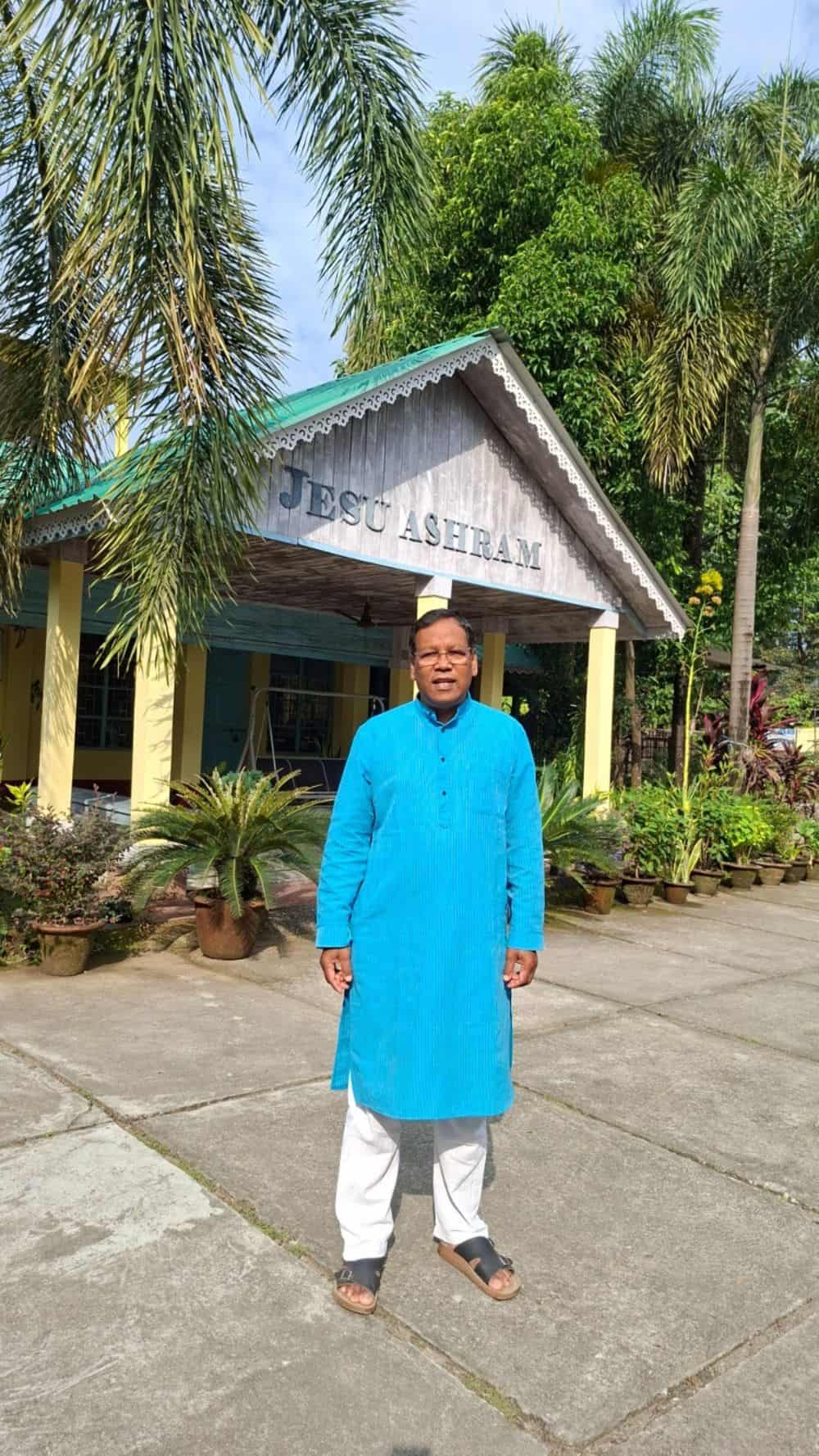
Fr. Julius Kujur, SJ, is known to many Jesu Ashram supporters for his dedication, compassion, and servant leadership. Photo: Jesu Ashram
For more than 20 years, Fr. Julius Kujur, SJ, had been a steadfast and inspiring presence at Jesu Ashram, where he served as Director. Jesu Ashram is a health care centre of the Darjeeling-Nepal Jesuit Province that provides free medical treatment and care to the poorest, especially those living with leprosy, tuberculosis, and other ailments.
Fr. Julius served Jesu Ashram as Director from 2001 to 2015 and again from 2018 until February 2026. In between he held other key positions in the Jesuit Province of India. After his productive years at Jesu Ashram in Matigara, West Bengal, he has assumed a new role as the Superior of St. Xavier college of North Bengal.
What are your reflections on your time at Jesu Ashram?
It has been a profound journey of faith, service, and transformation. My time at Jesu Ashram has been full of compassion, challenge, and grace. Serving patients with tuberculosis and leprosy deepened my vocation through personal encounters with suffering and loneliness. Becoming the director in 2001 brought with it feelings of fear and inadequacy amid financial and administrative burdens. But the courage of the patients and constant prayer strengthened me. God’s providence guided our mission. I look back with profound gratitude.
Which accomplishments are you and the staff most proud of?
We are most proud of the strong faith and dedication that sustain our mission. Staff members serve with love, creating a clean, peaceful, and dignified home for patients. This environment of mutual trust, understanding, and compassion promotes healing. Our commitment has earned goodwill from the community and government officials.
How has the support of CJI and its donors made a difference, and why must it continue?
Poverty and inequality in India create a very difficult context in which Jesu Ashram continues its mission of service for the poor. Many people still struggle to obtain adequate food, clean drinking water, and safe housing. Poverty is exacerbated by unemployment, a lack of job security, and an absence of social security. The contrast between wealth and poverty is stark. In big cities we see luxurious houses, good schools, and modern hospitals. Yet in tea plantation areas, many families live in old, overcrowded and damp houses with leaking roofs. They only receive water at certain times of the day. When they fall ill, they rely on overcrowded government hospitals, whose doctors and nurses are overworked. Although Jesu Ashram cannot meet every need, it strives to serve the poor, and its work continues with the generous support of CJI and other benefactors. CJI’s consistent support alleviates financial anxiety, enabling us to focus on patient care, outreach programs, surgeries, repairs, and dignified end-of-life care.
What does the future look like for Jesu Ashram?
The leadership of my successor, Fr. Matthew Siju, SJ, has given me great confidence and hope for the future. He speaks to the poor with genuine love and visits patients to understand their needs and well-being. He meets with the nurses and doctors, showing respect and concern for everyone involved in the mission. He demonstrates creativity, initiative, and dedication. He is highly qualified, having completed a master's in social work, and he is currently pursuing a master’s in hospital management.
Vol 61 No 2 | Spring & Summer 2026

International

Canada in solidarity



Canadian Jesuits International
70 Saint Mary St
Toronto, ON
M5S 1J3
Canada
Tel: 416.465.1824
Toll Free (Canada and USA): 1.800.448.2148
Email: [email protected]
Registered Charitable No: 11883 3623 RR0002