
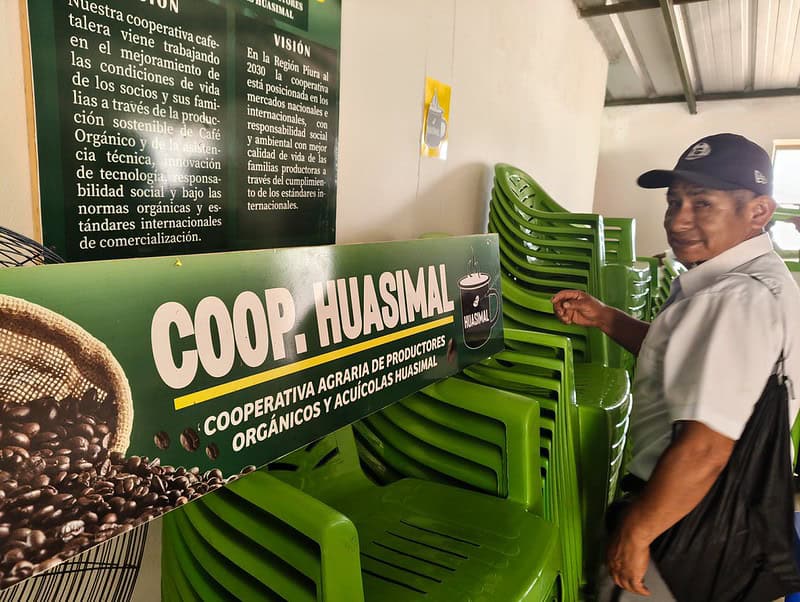
A cooperative in Peru, which is a member of Comparte, produces organic coffee. Photo: Red Comparte/CPAL
On the International Day of Cooperatives, July 4, Canadian Jesuits International (CJI) reaffirms its support for the democratic ownership model, which allows people to come together in solidarity to build sustainable enterprises that meet their needs and support their communities.
CJI highlights the role that its long-time Jesuit partner, Comparte, plays in building alternative and supportive socio-economic models in 11 countries:Bolivia, Brazil, Colombia, Cuba, Ecuador, El Salvador, Guatemala, Mexico, Nicaragua, Paraguay, Peru and Spain.
Comparte (meaning “to share”) is a network of the Jesuit Conference of Provincials in Latin America and the Caribbean (CPAL), which believes that the world can and should be changed so that everyone, especially the poor and marginalized, can enjoy the benefits of a just and sustainable economy.
Its current project aims to improve the sustainability of 116 economic initiatives managed by producer organizations involved in diverse industries, including agriculture (coffee, cocoa, honey), livestock (poultry, guinea pigs), services (savings/credit groups, sustainable tourism), and manufacturing (textiles, footwear). Learn more here.
The theme of this year’s celebration, “Cooperatives for a Peaceful World,” recognizes the contribution of cooperative enterprises to social justice, inclusion, and solidarity.
Cooperatives are people-centred institutions that can foster trust, reinforce social cohesion, and unite communities around common needs and aspirations, says the UN. In a world characterized by conflict, inequality, polarization and declining trust, the theme is a reminder that peace requires more than the absence of violence; it also calls for inclusion, fairness, dialogue and economic security, says the UN.