By Tess Sison
In 2025, 129 journalists and media workers were killed and more than 300 were imprisoned worldwide, according to the Committee to Protect Journalists. It marked another record-high year of fatalities in over three decades. This horrifying trend shows no sign of stopping. Reporters Without Borders has an online barometer that tracks abuses against journalists and media workers in real time. In January this year, it showed that four journalists have already been killed, 454 have been detained, 19 have been held hostage, and 130 have been reported missing.
It is a sad testament to our times that despite centuries of progress, people who expose “unfruitful works of darkness,” are being targeted and still must sacrifice their lives so that we can have a better world.
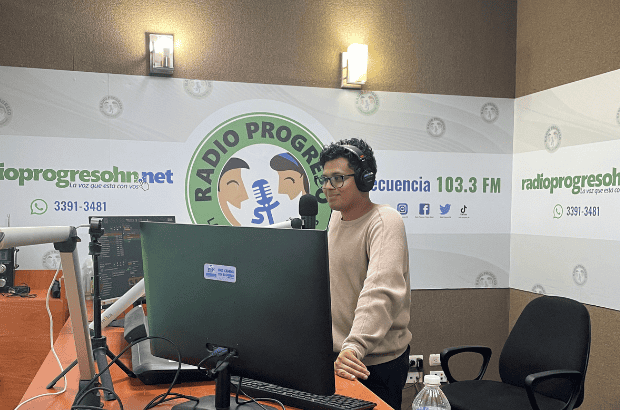
When I reflect on this biblical passage, I immediately think of journalists and others who courageously speak truth to power. I think of CJI’s partner in Honduras, ERIC-Radio Progreso, whom I had the privilege of visiting with a colleague in 2025. This Jesuit-led centre empowers poor rural communities through research, reflection, and communication. ERIC-Radio Progreso operates Radio Progreso, a rare independent voice for impoverished and marginalized Hondurans in a country where most media outlets are controlled by powerful interests. Some Radio Progreso journalists have been killed, and others continue to be harassed and threatened.
Some biblical scholars believe this passage offers a guide on how to live a life that is not only “pleasing to the Lord,” but also reflects God’s loving nature. According to them, this begins with an honest self-examination of whether our actions and inaction contribute to harming or helping our fellow human beings and our world. Reproving darkness can also mean refusing to take part in unethical and unjust activities, practices and behaviours.
In an era of rising global instability, the importance of truth-telling cannot be overstated. Every second of every day, most of us are bombarded with an overwhelming amount of “content” from competing sources, and they range from verified information to deliberate falsehoods. This deluge of truth, half-truth, and lies has caused what experts call “information ignorance,” and has led to societal polarization. Our societies are more divided than ever, and freedoms and rights are being sacrificed.
In this context, the responsibility for truth-telling no longer lies solely with journalists. It is not just our individual duty to seek out reliable sources of information and pass on accurate information. Rather, we are called upon to embody truth, and practice love, honesty, and justice. We are being asked not only to “take no part in the unfruitful works of darkness but instead expose them.” It is a call to bear witness and to speak out against actions that degrade all living beings and our common home.
Tess Sison is the Communications Coordinator at Canadian Jesuits International.